

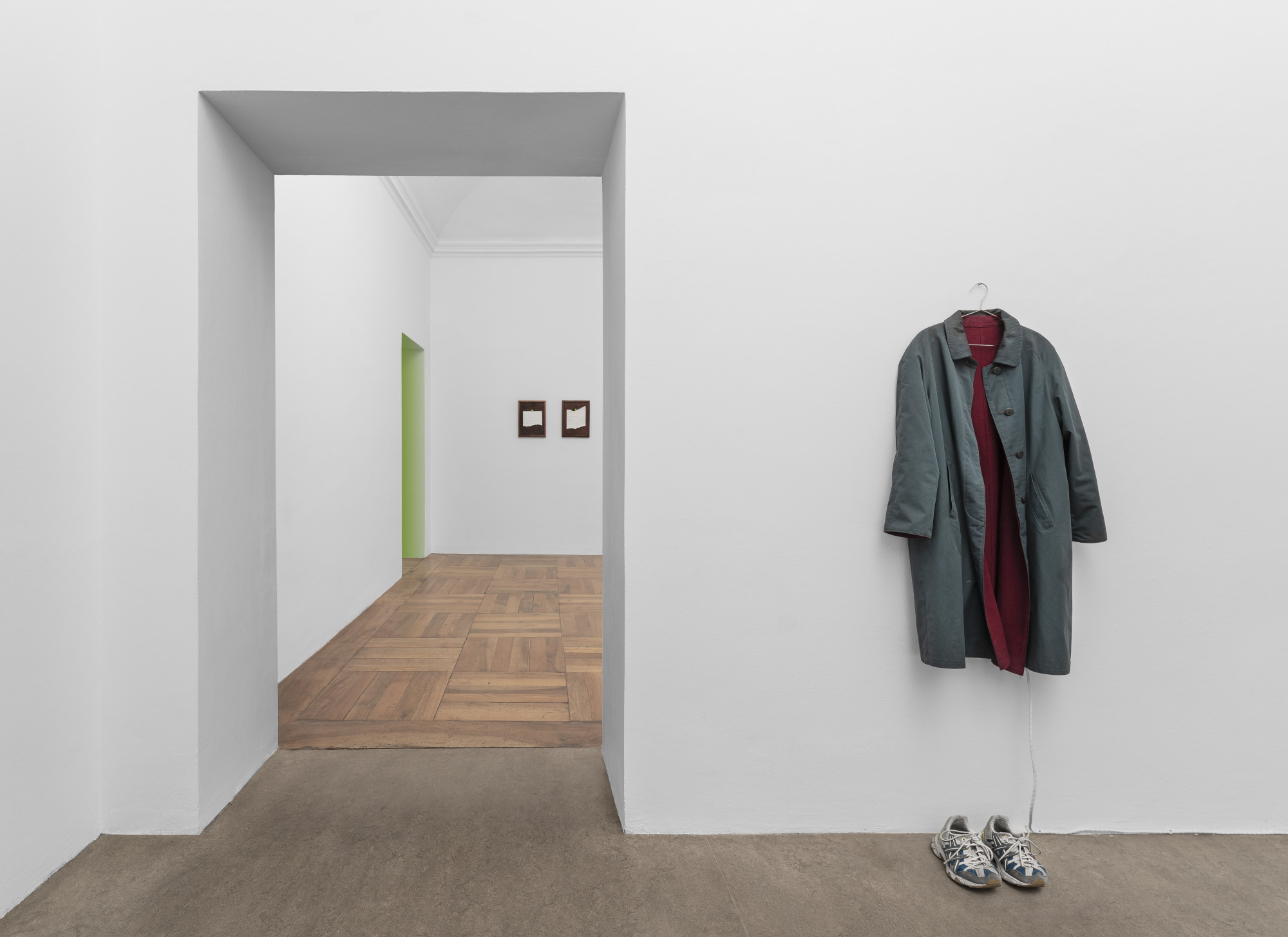
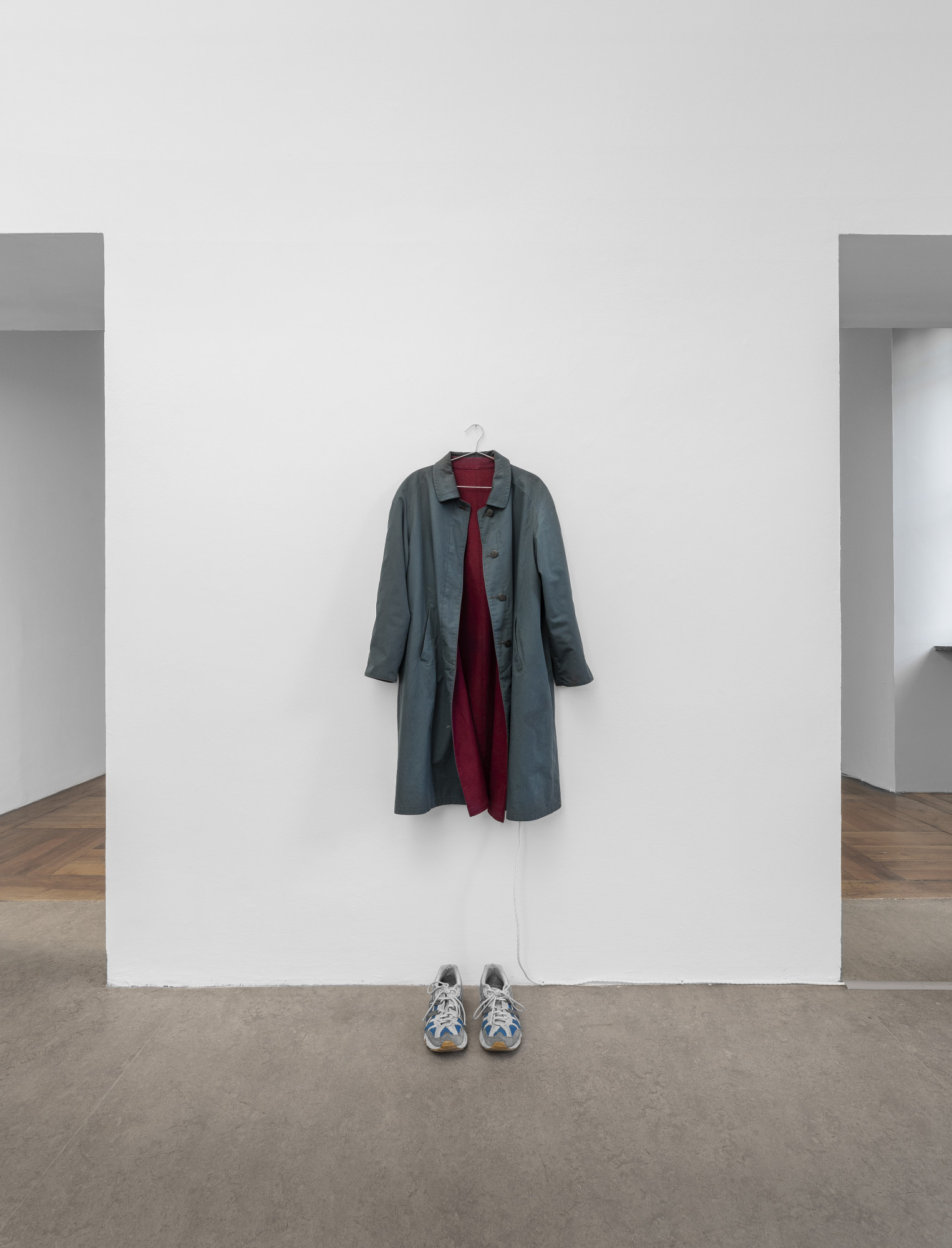







Galleria Simóndi is pleased to present A Melody from the Outside, the first solo exhibition at the gallery by Roberto Casti (Iglesias, 1992), artist and musician who lives and works between Milan and Iglesias.
A key concept in his practice is interdependence, which inextricably links the individual to the community, the human being to the planet they inhabit, and the audience to the artwork or the artistic event. Environmental and often marginal elements—sound, light, production waste, dust—become devices for rethinking the complexity and precariousness of existence, challenging an anthropocentric vision of reality.
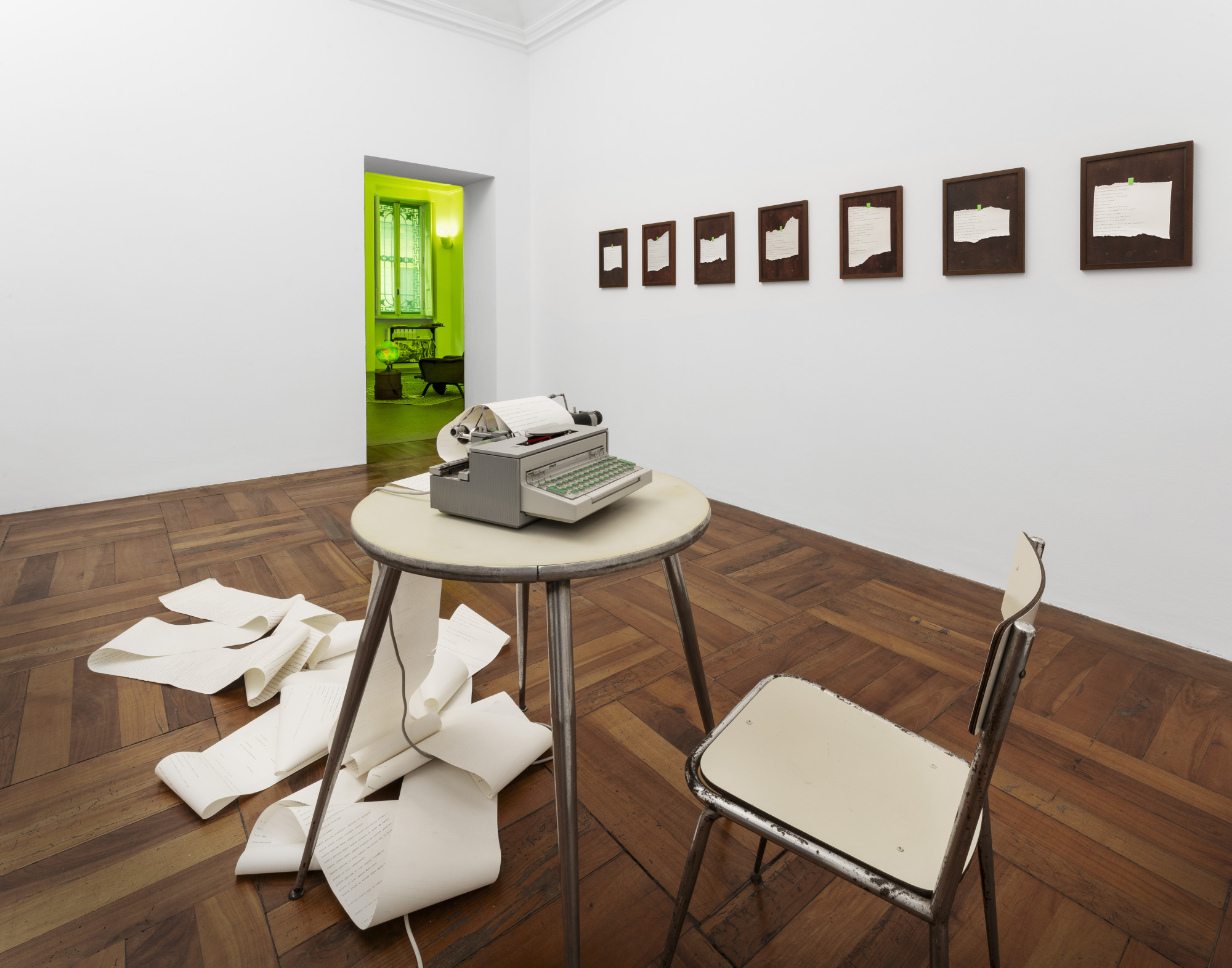
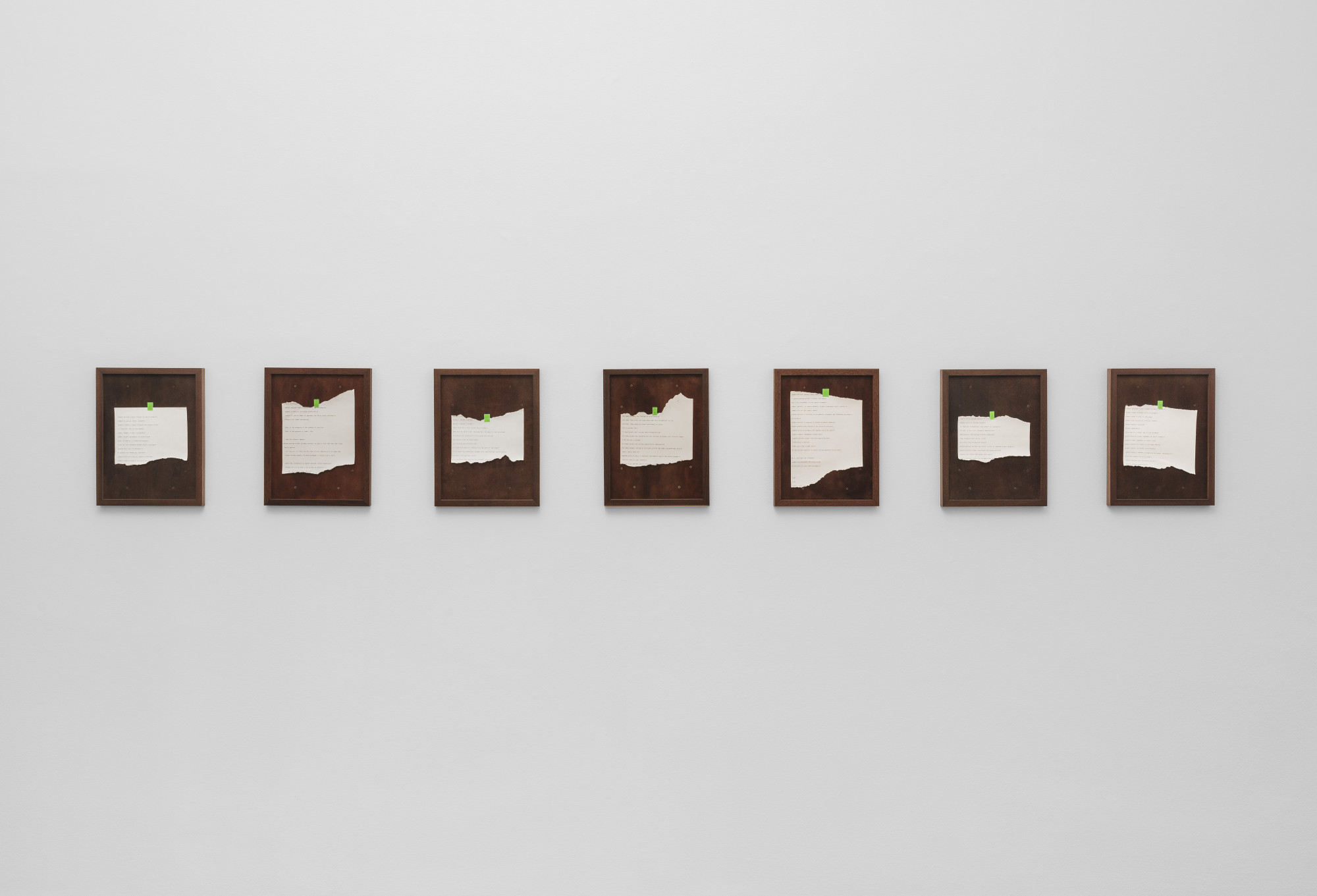
The following text was written cooperatively according to the principle of the exquisite corpse: only at the end of the process were we able to read it in its entirety. The reflections were prompted by the last words of each paragraph, highlighted in green. The choice of this method is linked to the work of Roberto Casti, who often builds a bridge to the outside, understood as that which remains unknown and seemingly elusive: approaching the thoughts of the Other without fully knowing them thus becomes a form of shared play, an exercise in proximity that connects and, at the same time, brings people closer.
ROBERTO CASTI: I hear a melody coming from outside. Sometimes it consists of eerie metallic sounds, like those of indoor water-pipes; sometimes of creaks and electrical buzzes; occasionally it takes the form of cracks and mould on the ceiling, sometimes it resembles the sinister sounds of animal paws coming from the attic. This composition is a sort of ghost track, embedded in the sounds of my daily life—inside the house—and those of the city, of the urban backdrop. A sort of bridge between two seemingly distinct worlds that, paradoxically, helps awaken a dormant consciousness; it helps me remember that this place, my home, is the same complex field that lies outside—beyond the insulated walls and the square meters, beyond the armoured doors and soundproof windows. It is an alignment (as Eduardo Kohn would say), an expansion of the individual point of view, an attempt to cling to something other than oneself. And it is this bridge that creates a world.
As when I listen and translate a soundscape into something different (1), but preserving the same complexities, I place myself within this world, even if only briefly, while letting go of my individual integrity.
FRANCESCA SIMONDI: The soundscape, by its very nature, is a complex web of elements in which sound triggers memories, recollections, and emotions. Some places remain etched in our memory through their music. When I think of Istanbul, for example, a richly toned soundscape comes to life: a complex melody, woven from the muezzin's calls to prayer overlapping in the urban space, the cries of seagulls flying over the Galata Bridge, the layered sounds of Taksim, a shifting threshold between tradition and modernity, and the bustle of the bazaars, where haggling becomes rhythm and cadence.
In this sense, our thoughts turn to R. Murray Schafer’s The Soundscape: Our Sonic Environment and the Tuning of the World, in which the author regards the world as a macrocosmic musical composition. His text echoes both the contemplative experience described in Thoreau’s Walden, where listening to nature becomes a practice of knowledge, and John Cage's radical gesture in 4'33'', in which silence reveals itself to be anything but absence, instead opening onto a multiplicity of latent sounds. The soundscape, then, is not only what surrounds us, but what we choose—or learn—to listen to.
RC: To listen, you must open a window, a breach that suddenly erases the domestic walls and dissolves my physicality – or rather, binds it inextricably to something other than me. My gaze is no longer connected to my mind, my molecules are those of the air and the things before me, my vibration is a universal tremor. A spatio-temporal awareness that may last very little, but which helps us feel part of a complexity that we cannot truly grasp. And so, our domestic rooms – from seemingly neutral places, shaped by the idea of possession and private property – become haunted places (2), in which individual (and human) pre-eminence fails.
FS: Reflecting on the concept of a haunted place and, at the same time, that of possession and private property brings me back to a thought I often return to, especially when I'm in places I feel are mine, like my home or gallery. I wonder how many lives—human, plant, and animal—have stratified into the memory of that space: how many passages, how many tears, how many moments of joy or anger a place has collected over the years, and even centuries, when perhaps it didn't yet exist in its architectural form, but was simply soil, earth. And inevitably I think that one day we too will be part of that memory, fragments of a vast and impalpable whole. I reflect on the meaning of life, simultaneously dense and ephemeral, on its inevitable and necessary flow.
RC: And it is precisely this flow, composed of individual fragments of a common but elusive present, that becomes a flow of collective awareness that suddenly overflows the walls of my living room. Of course, the house is still my refuge, but it is also a place of critical alignment (3) with the outside, of continuous rethinking of reality. By forgetting to exercise a daily alignment with the outside, I risk falling into the trap of normality – the same one that renders us helpless in the face of pandemics, wars, genocides and climate disasters. Events that suddenly highlight the relationships of interdependence in which we are unconsciously immersed. The house is suddenly invaded from the outside: it can become a constraint, a place of terror; it can suddenly cease to exist, annihilated by air raids or natural disasters; or transform into an even more precarious structure—like a tent—or into an open space, defined only by objects functional to survival, such as mattresses and sleeping bags.
Capturing this strange melody that haunts me here, in this place seemingly far from the rubble and devastation, means exercising an awareness necessary for building a new home: a place with shifting foundations and broad, layered roots, a network that exchanges not only energy and information, but also desires for resistance and ideals of future coexistence.
FS: My work often requires me to listen to and experience firsthand stories of war and devastation from distant places, which thus suddenly become close.
I just finished speaking with a Lebanese artist friend who, in recent months, with great difficulty, managed to bring her mother, who was in Beirut, her home, her land of origin, to Europe. Her entire family is now fragmented.
And as I was listening to her voice, shot through with weariness and pain, I realized how those fractures (4) are never confined exclusively to a geographical elsewhere, but rather insinuate themselves into relationships, bodies, and everyday life. It is perhaps precisely in this gap—between distance and proximity—that the “strange melody” you speak of takes shape: a call we cannot ignore, because it concerns us, even when we believe we are immune to it.
__________________________________________________________
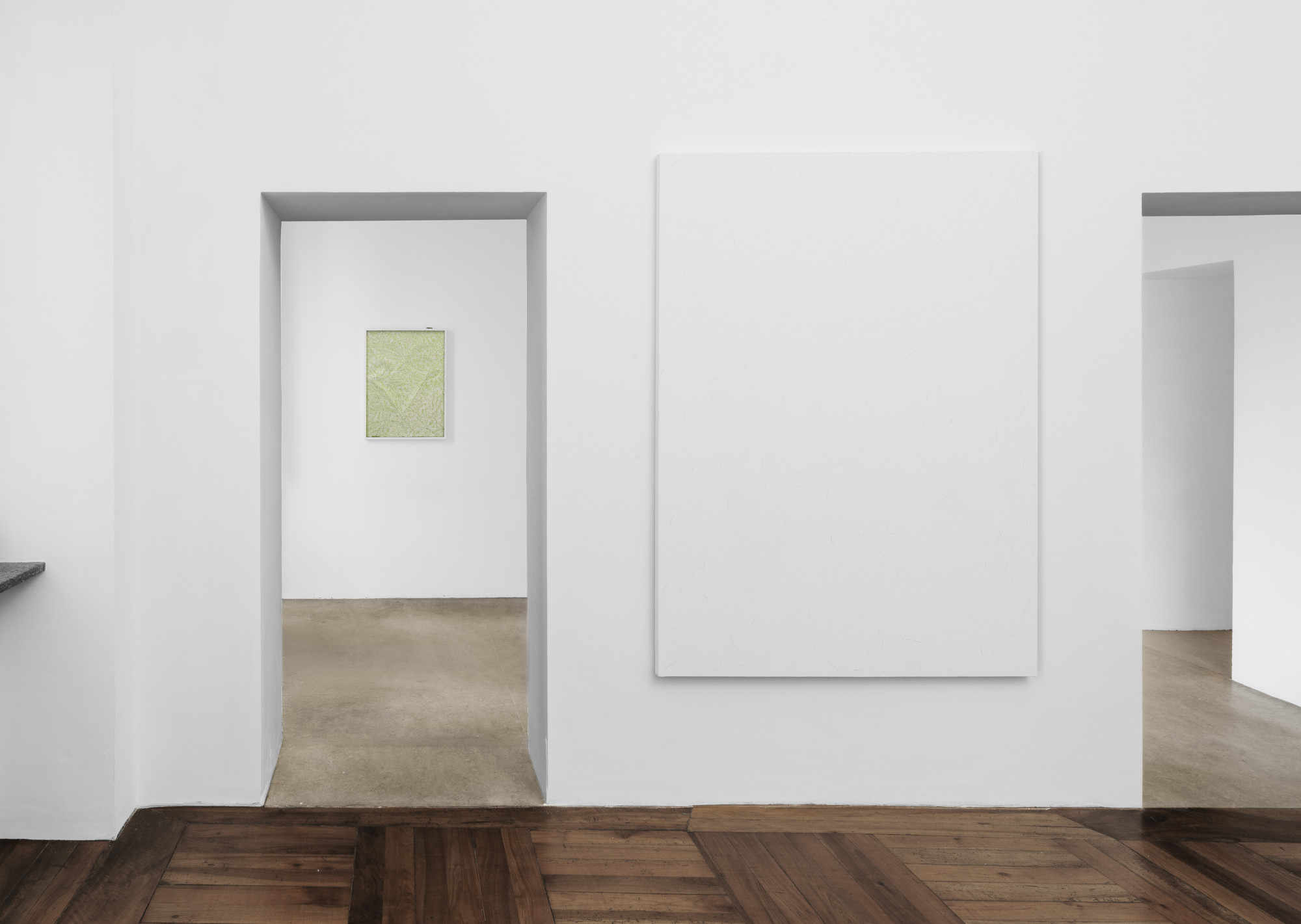
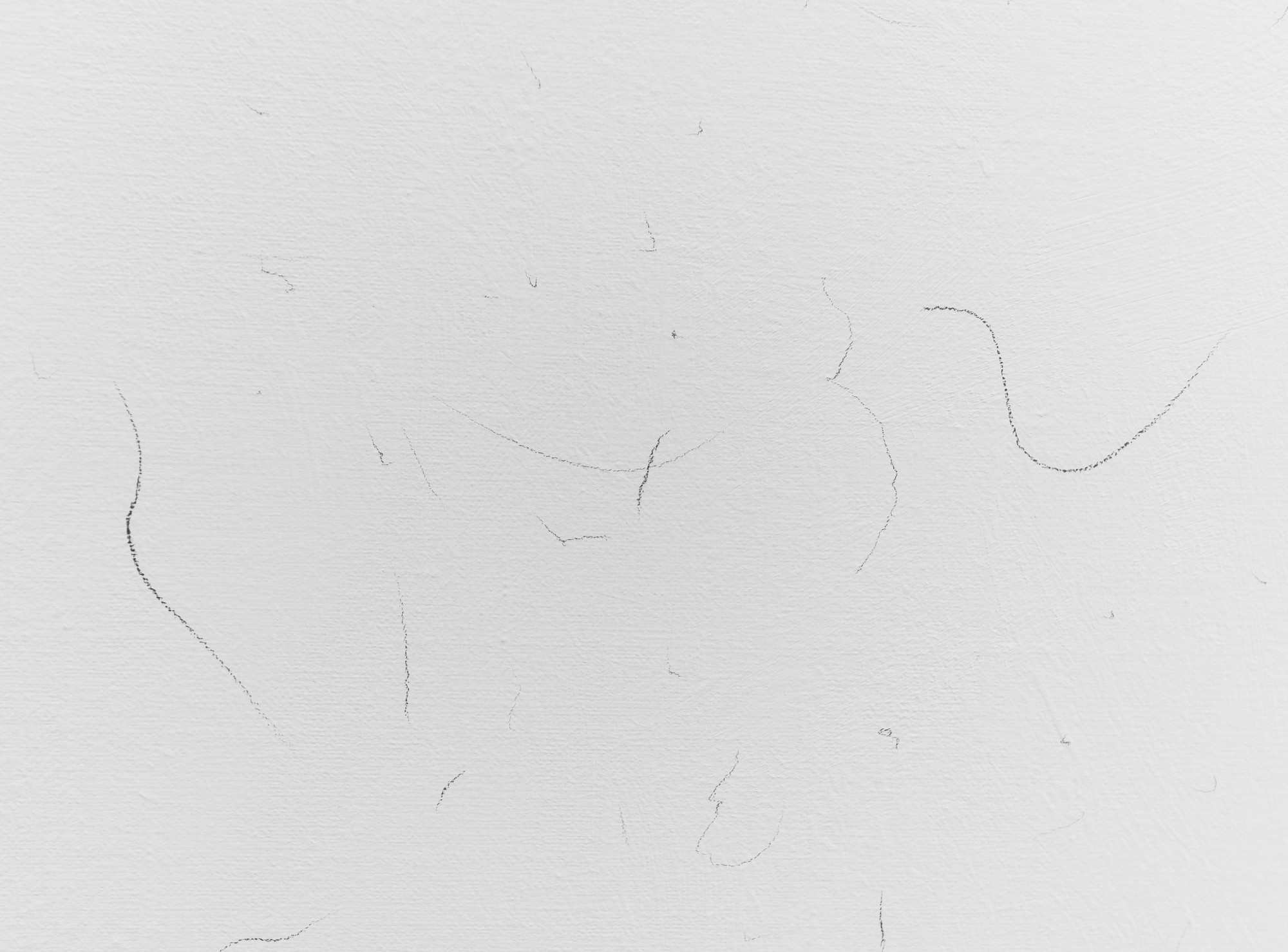
(1) ARIA is a series that the artist creates starting from listening to the noises coming from outside his studio. Through the translation of sound into a graphic sign, Roberto Casti uses graphite to mark time and movements in space on the canvas, giving life to an apparent white monochrome that reveals the complexity of its compositional elements only upon close observation.
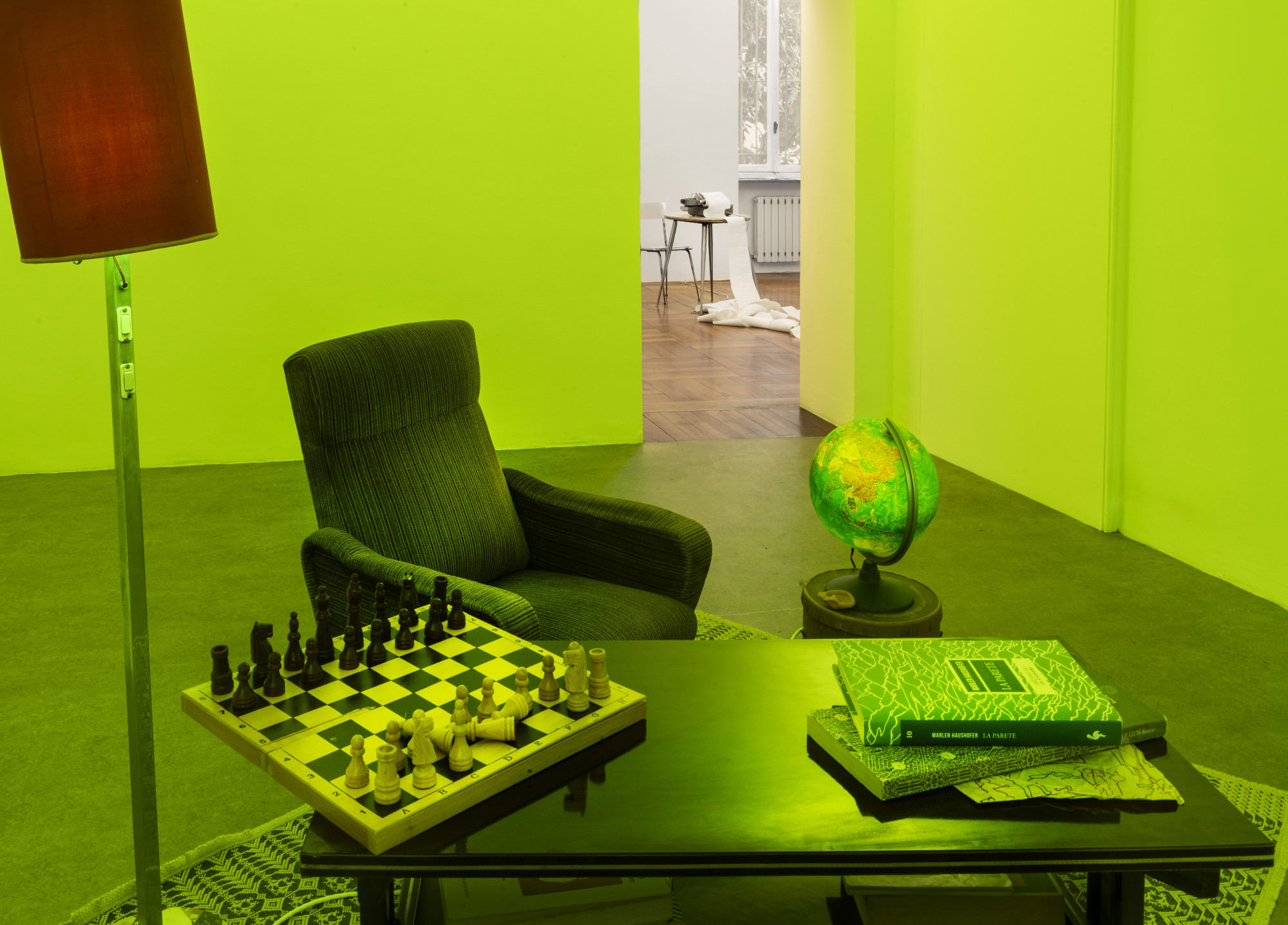
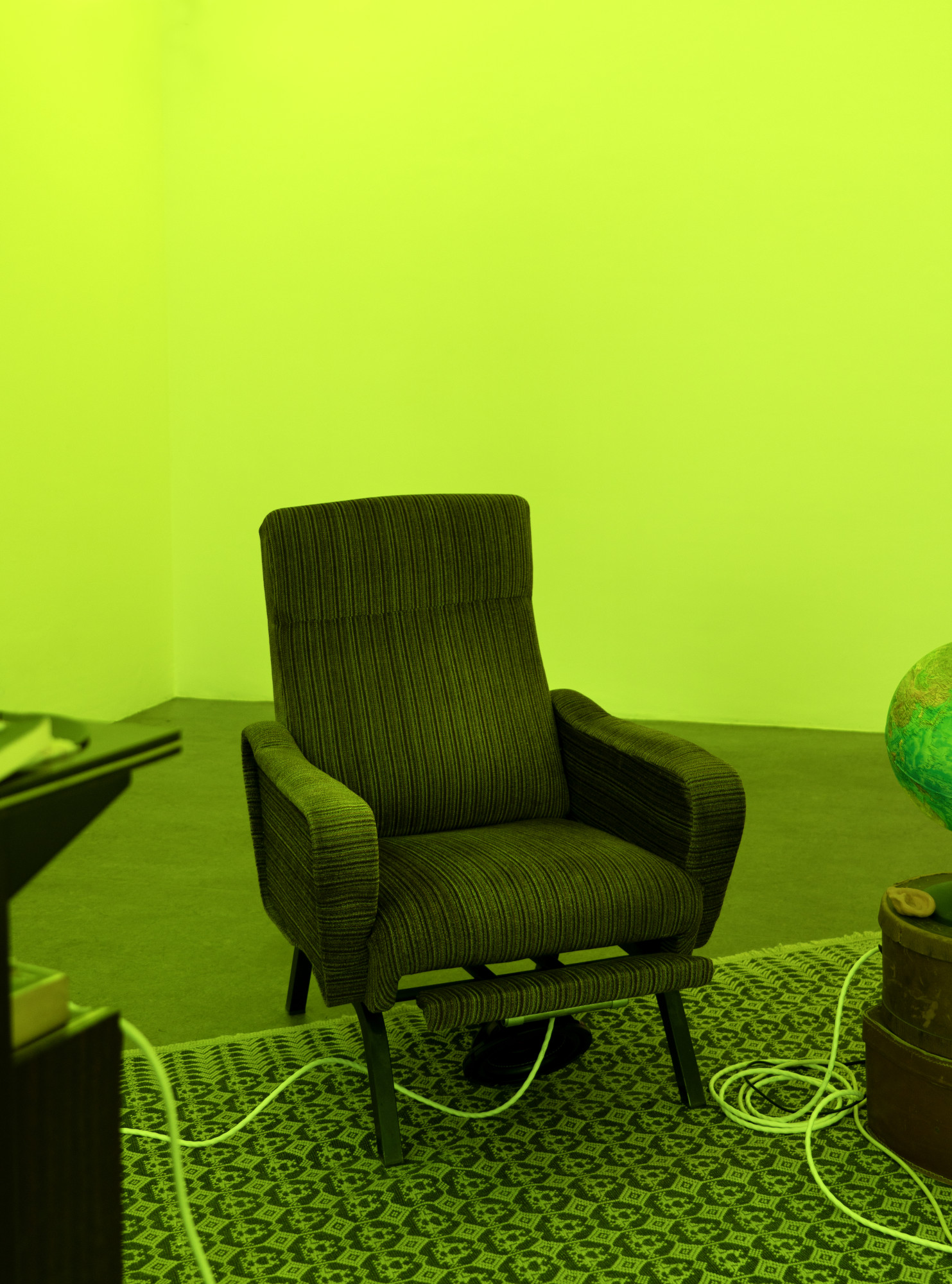
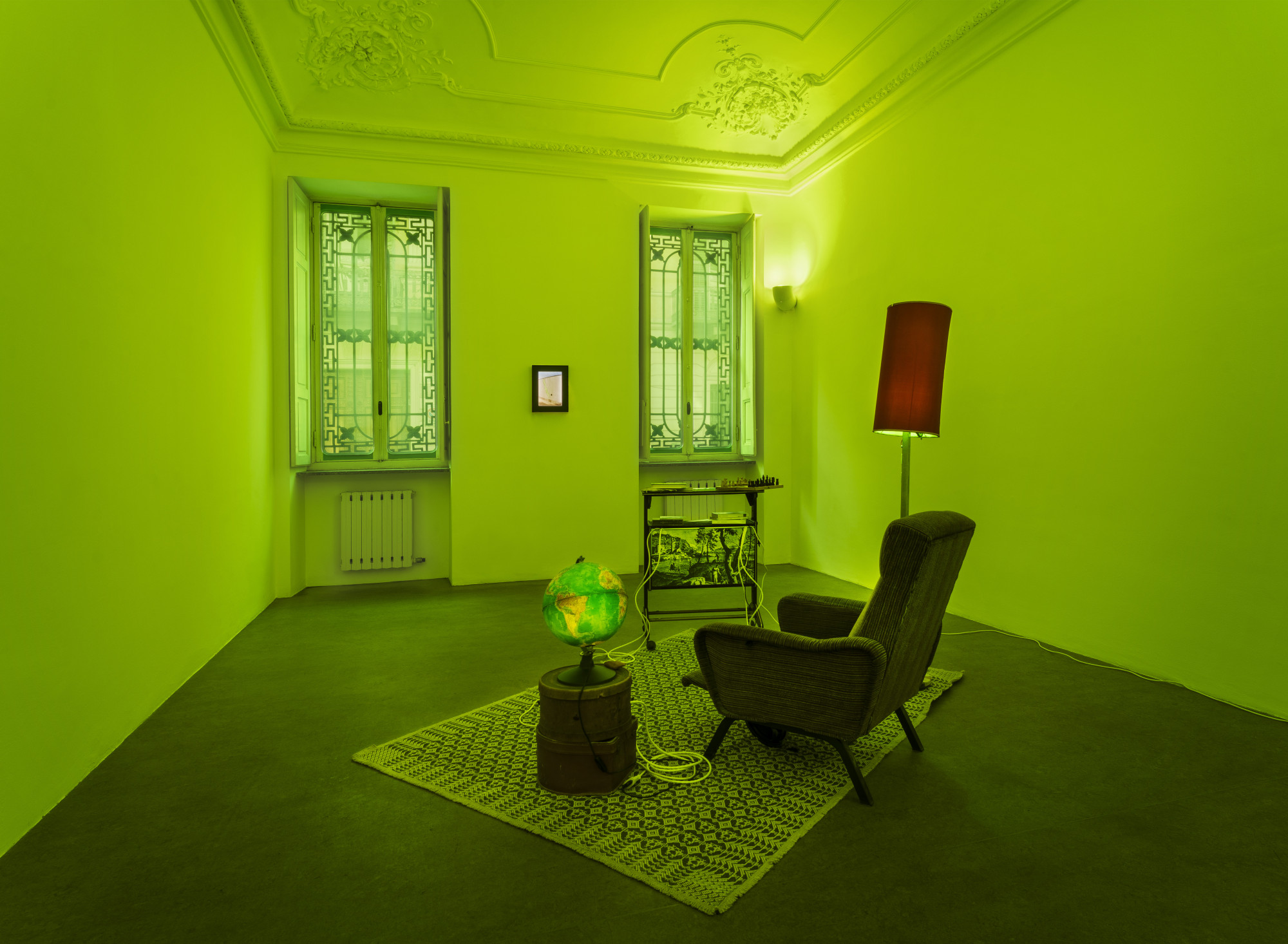
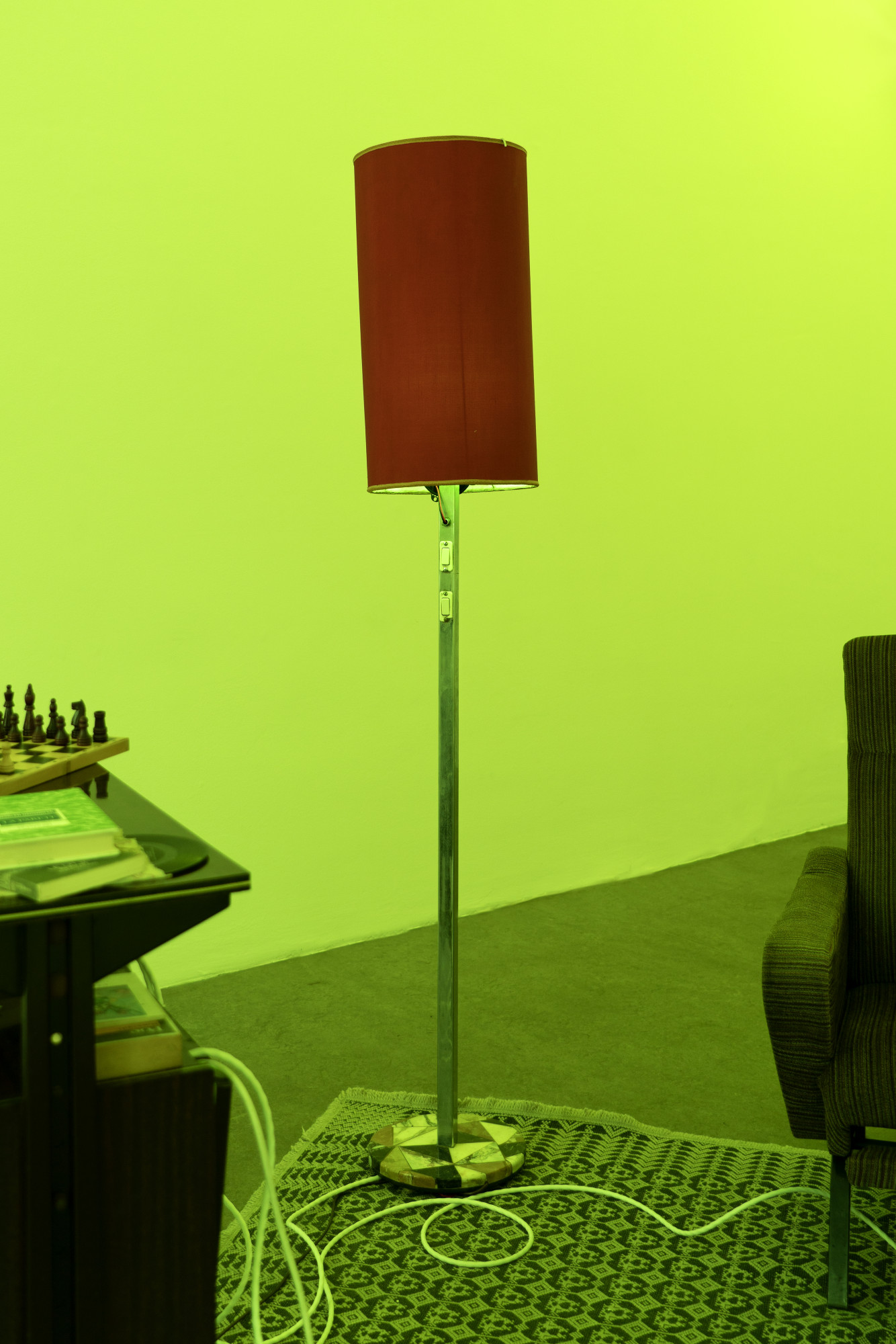
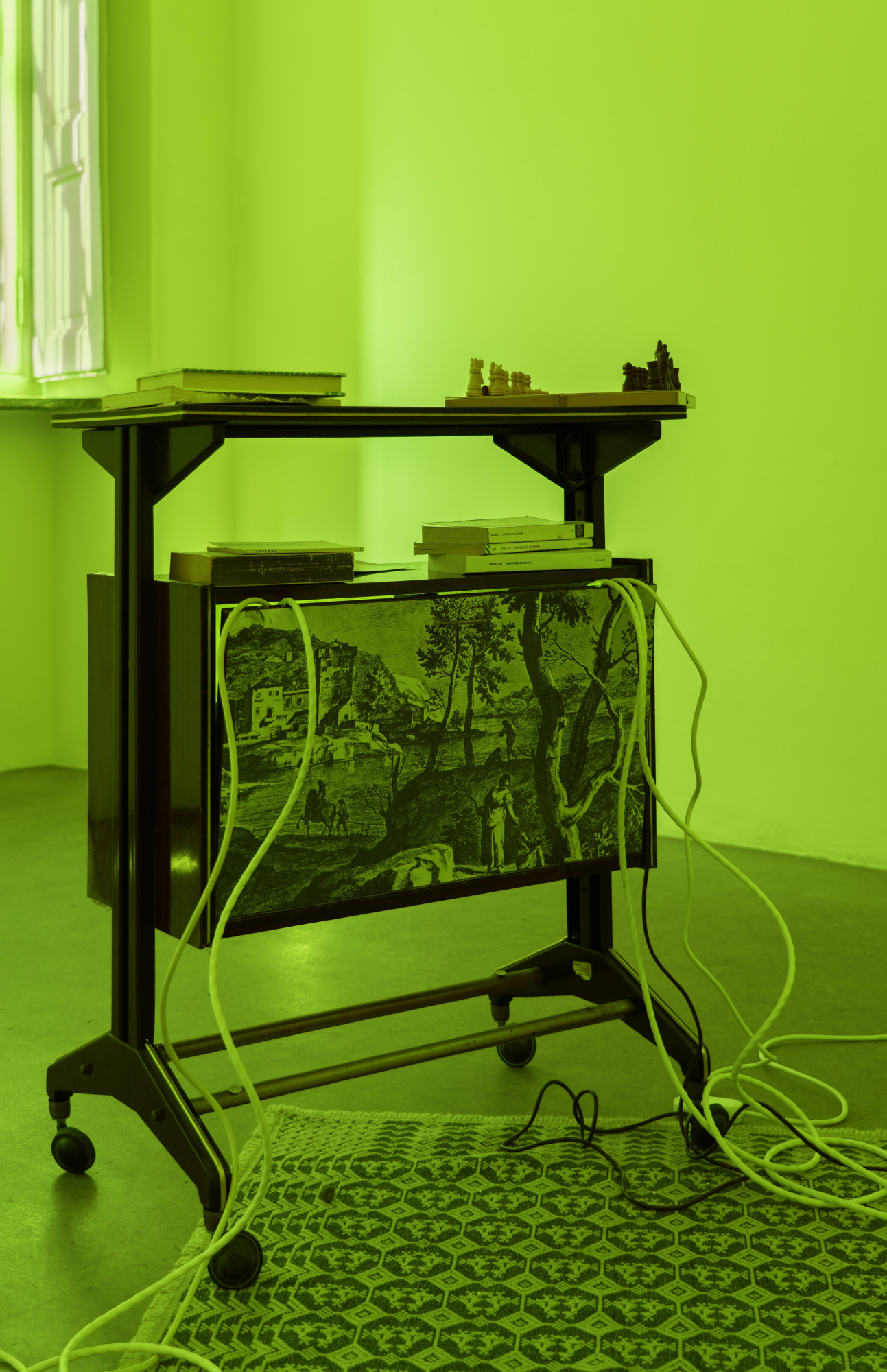
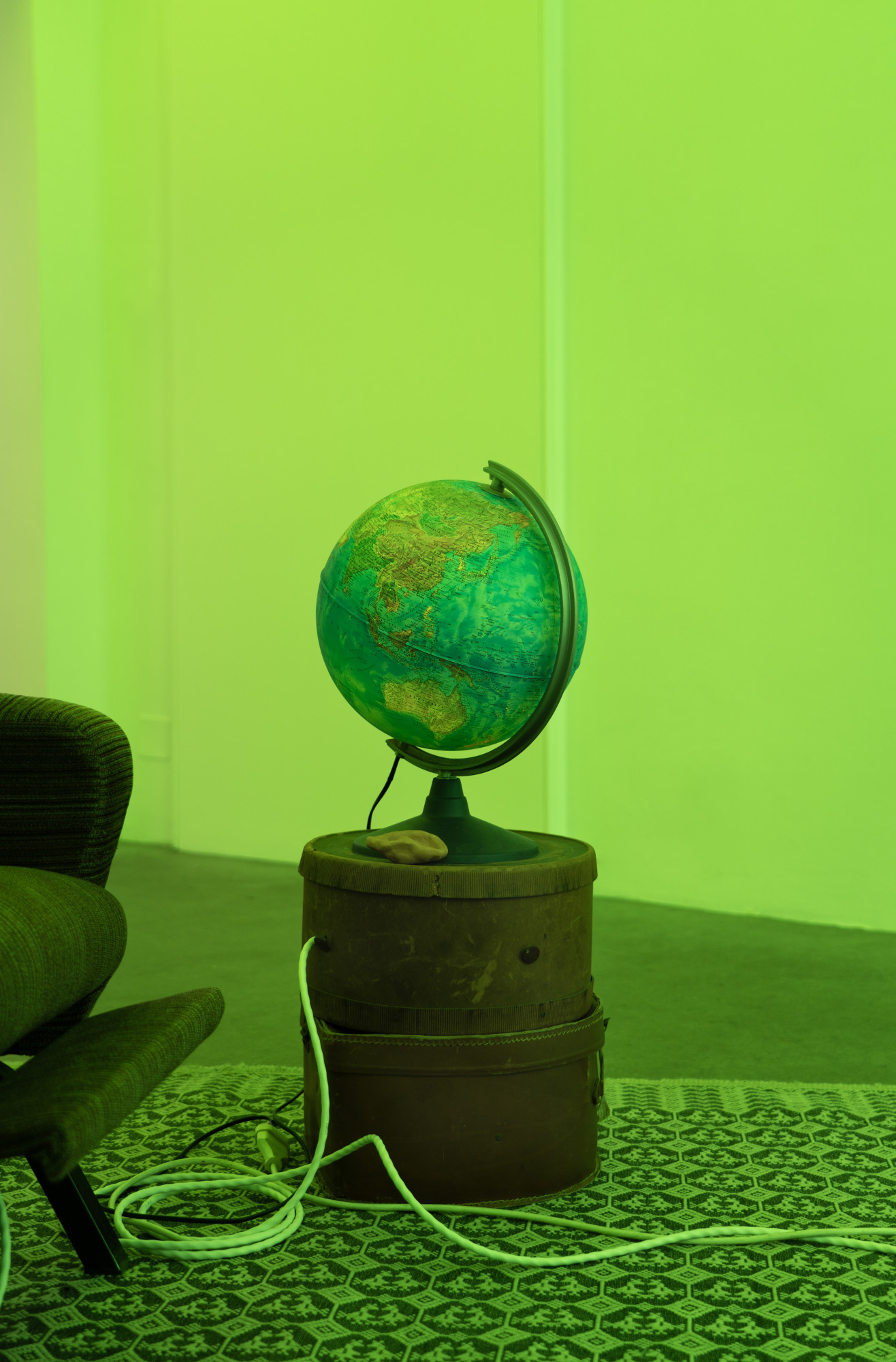
(2) From the Depths of the Earth is a new sound and environmental installation that transforms a domestic room into a haunted place. The objects that make up the work function as sound boxes for a single musical composition, created through the recording of marginal sounds coming from elements or devices that connect the (domestic) interior with the (global) exterior.
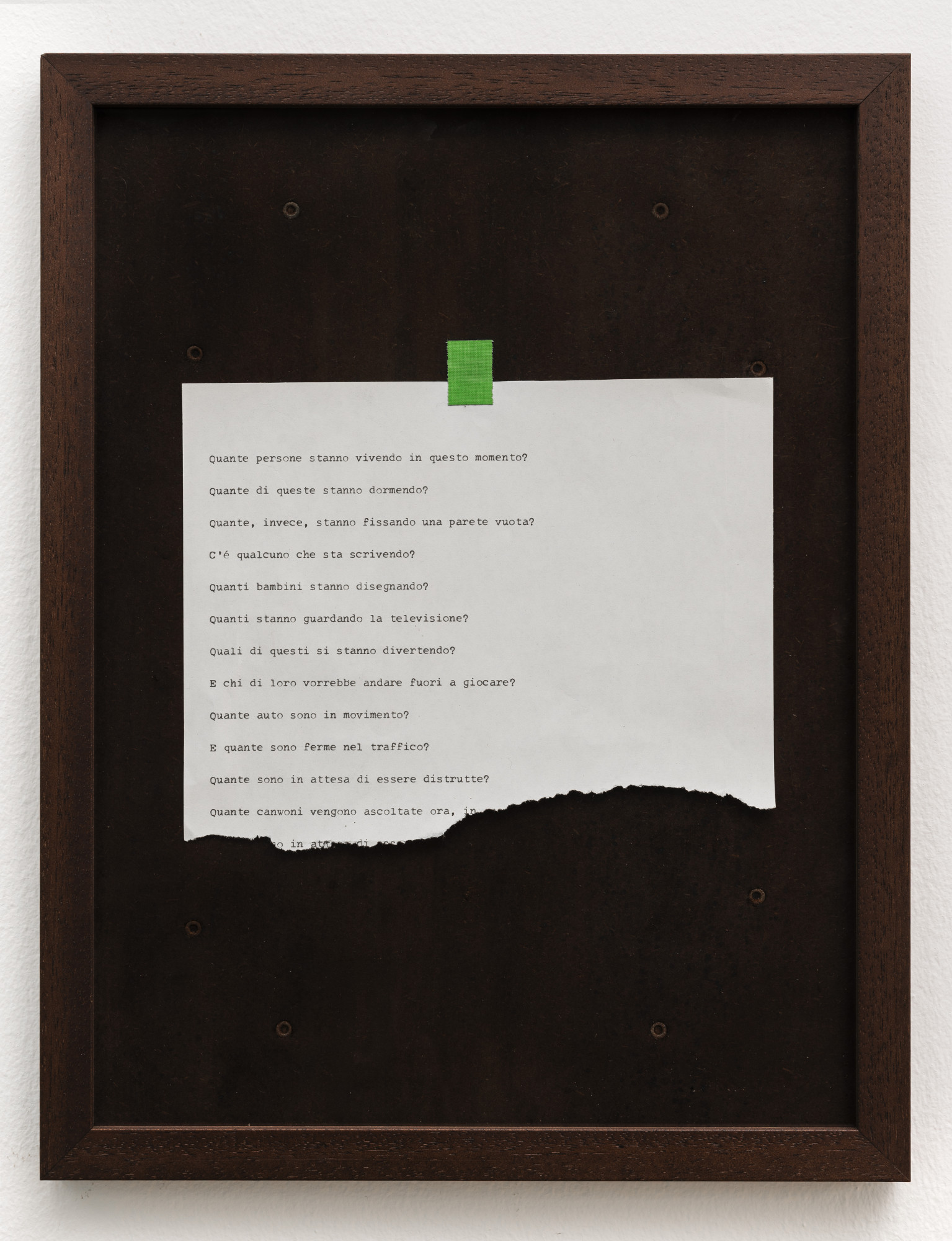
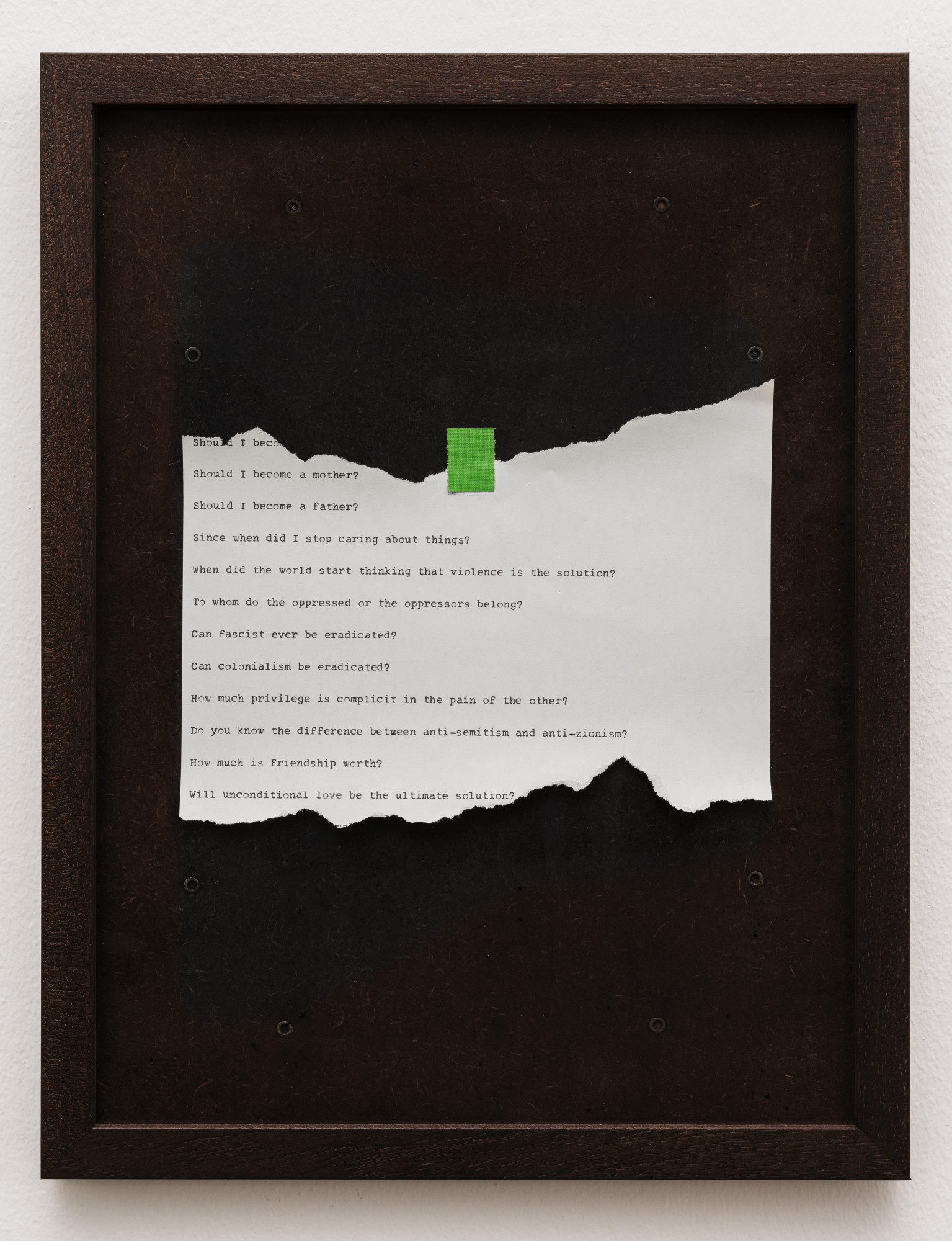
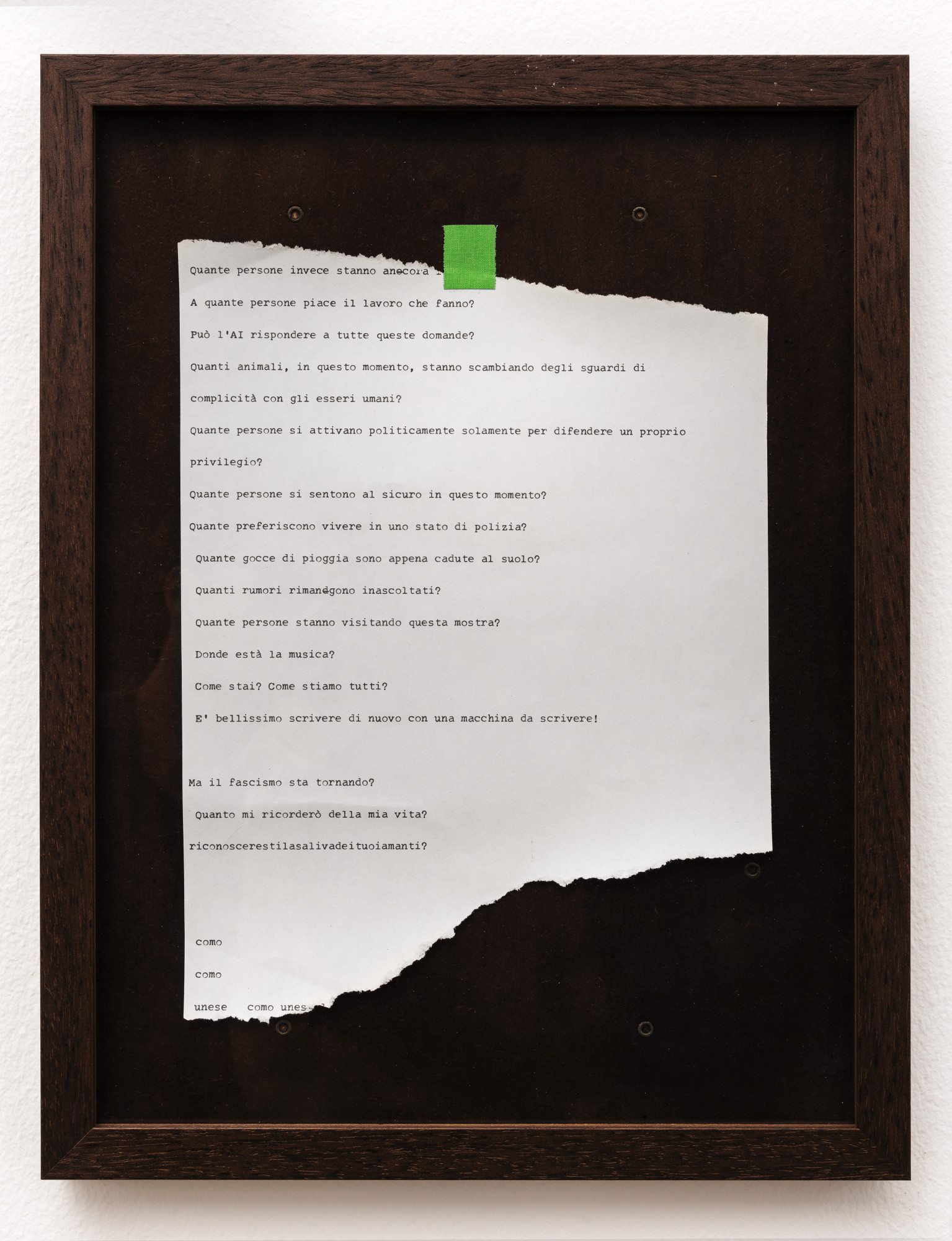
(3) The work Aleph (Milan-Berlin-Lisbon-Milan-Putignano-Turin) is a sculpture in progress, composed of a typewriter and a potentially infinite roll of paper. The sequence of questions, to which the public is invited to contribute, becomes a device for relating the individual present to the global one.
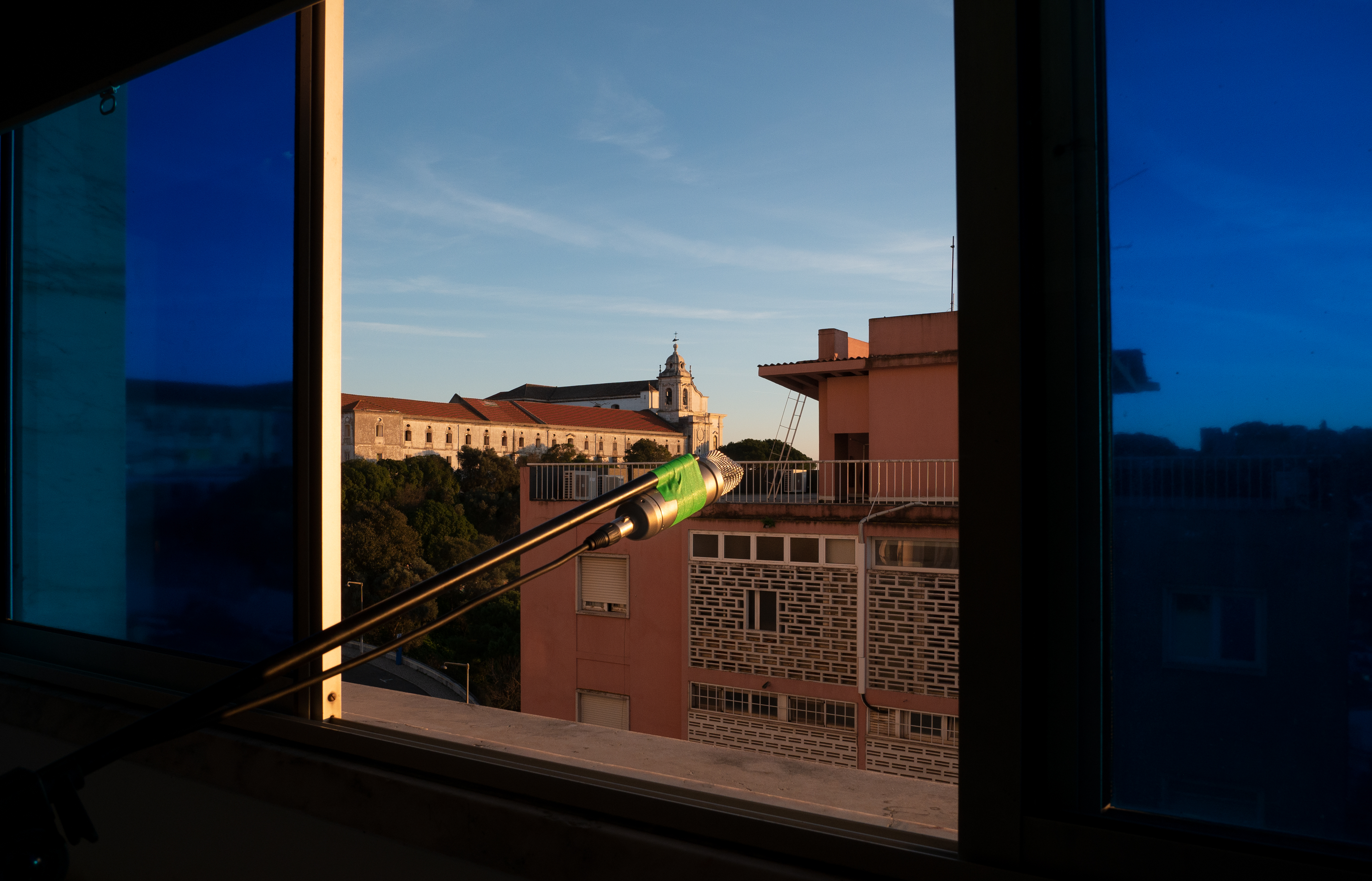
(4) The cracks are the protagonists of two works that open and close the exhibition: a work from the Disegni verdi series — in which the artist highlights a process of natural production and regeneration by tracing the folds of a worn sheet of paper — and Suggestion(Graça District, Lisbon), a photographic and luminous work that suggests a dissolution of the boundaries between public and private space.
