


A question cuts through Marin Preda’s novel Cel mai iubit dintre pămȃnteni (The Most Beloved of Earthlings) like a blade: what remains of the human being when everything around him seeks to deprive him of his freedom – politics, history, the very myth of progress? Victoria Stoian, whocarries a profound imprint of the culture conjured by Martin Preda, embraces this question and pursues it till it reaches the ground. Not a metaphorical or appeased soil, but a lively, mineral matter, capable of retaining the echo of hands, conflicts, everyday gestures and the scars of those who have been through it.
The exhibition begins here, at the crossroads between memory, the love for one’s homeland and the need to be in the world. The Most Beloved of the Earthlings is the mirror of a society where the individual is made to constantly face the shadows of power. Victorian Stoian starts from this novel to recover its most profound lesson: a human being who searches within matter for a way not to disappear. There is no allegory in her works – there’s body. There is no distance – there’s burning closeness.
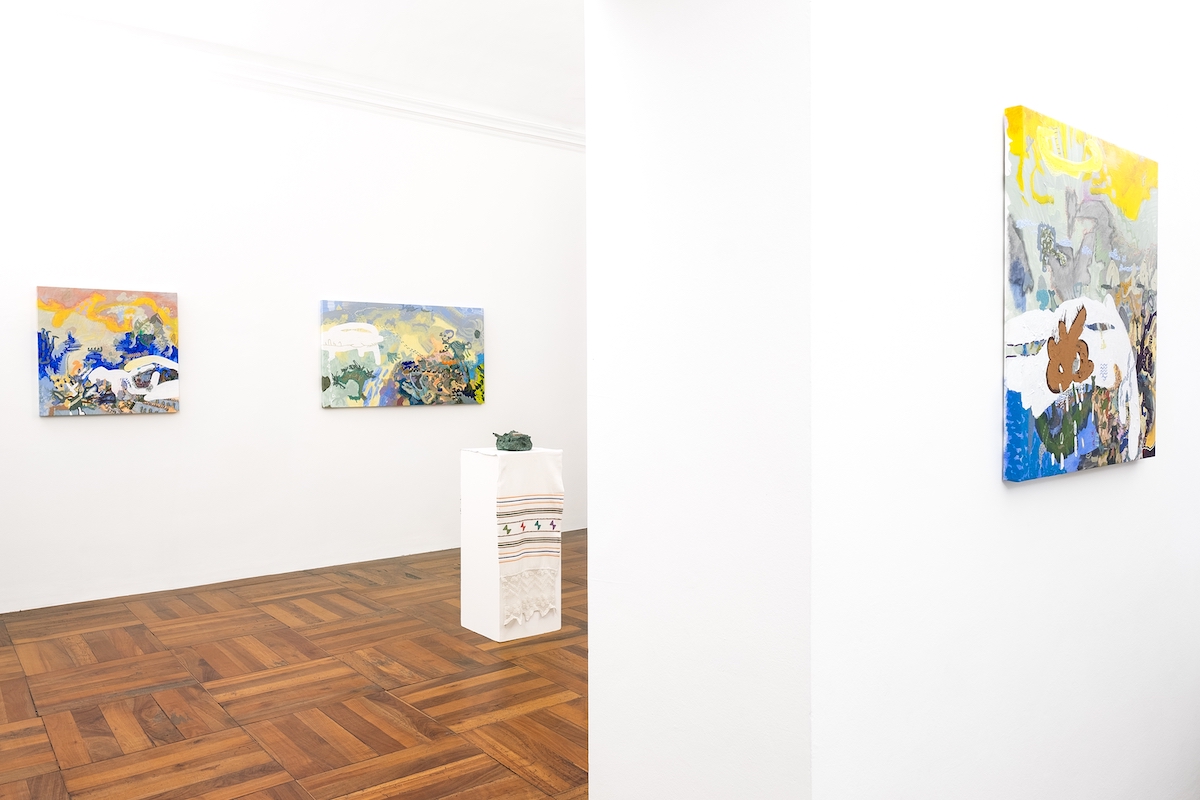
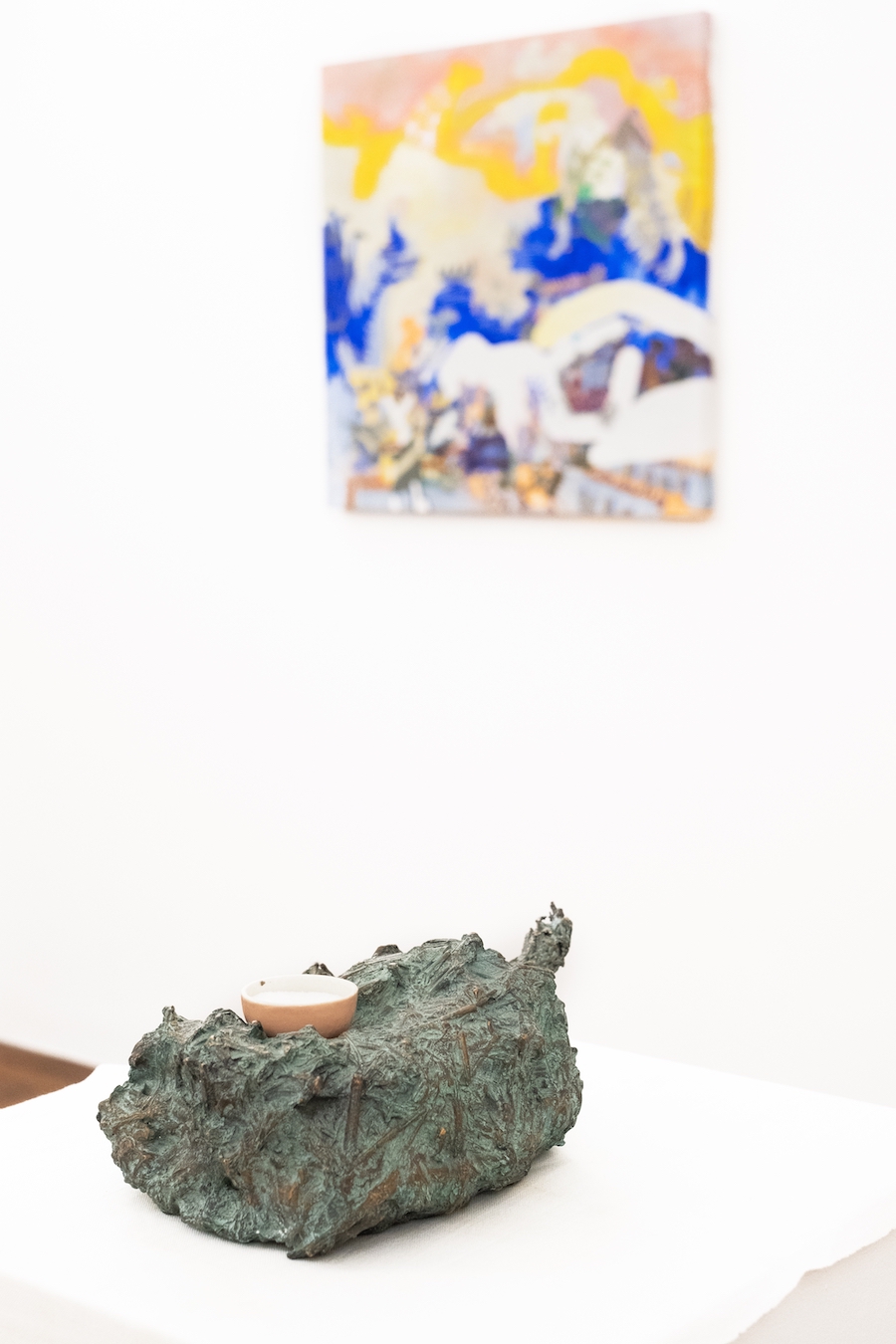
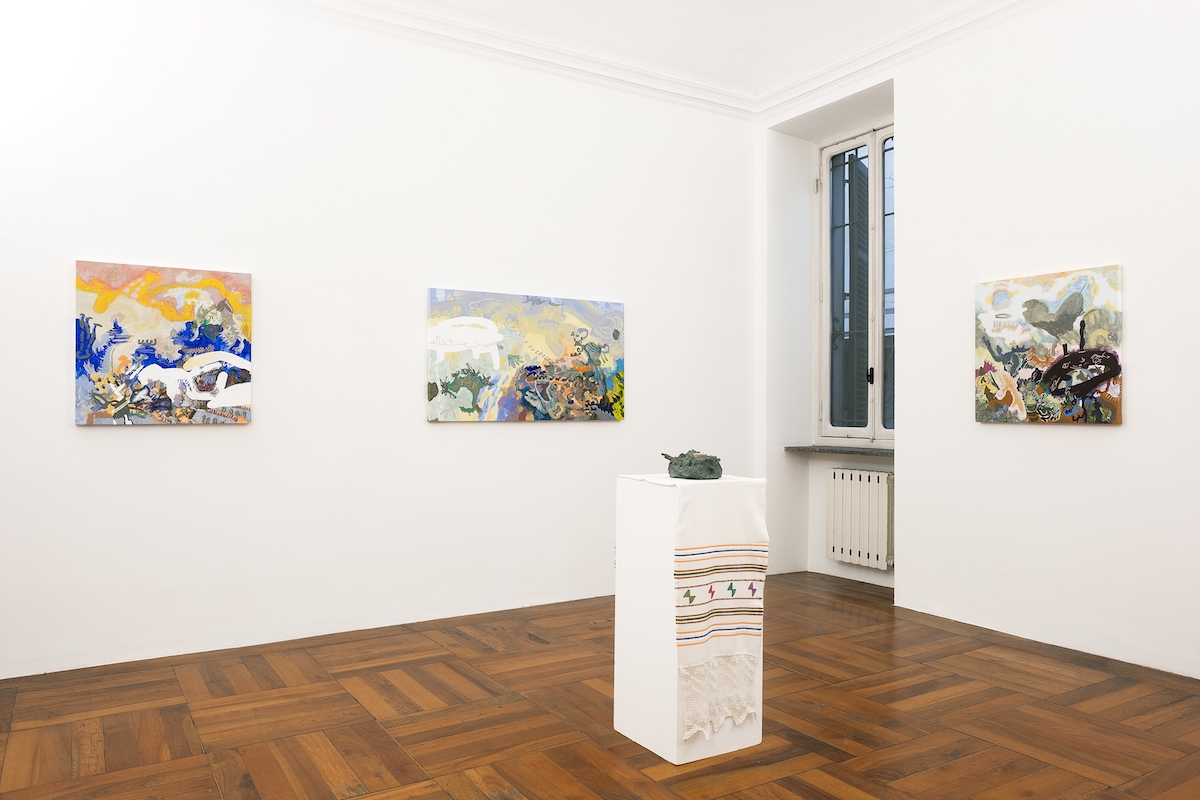
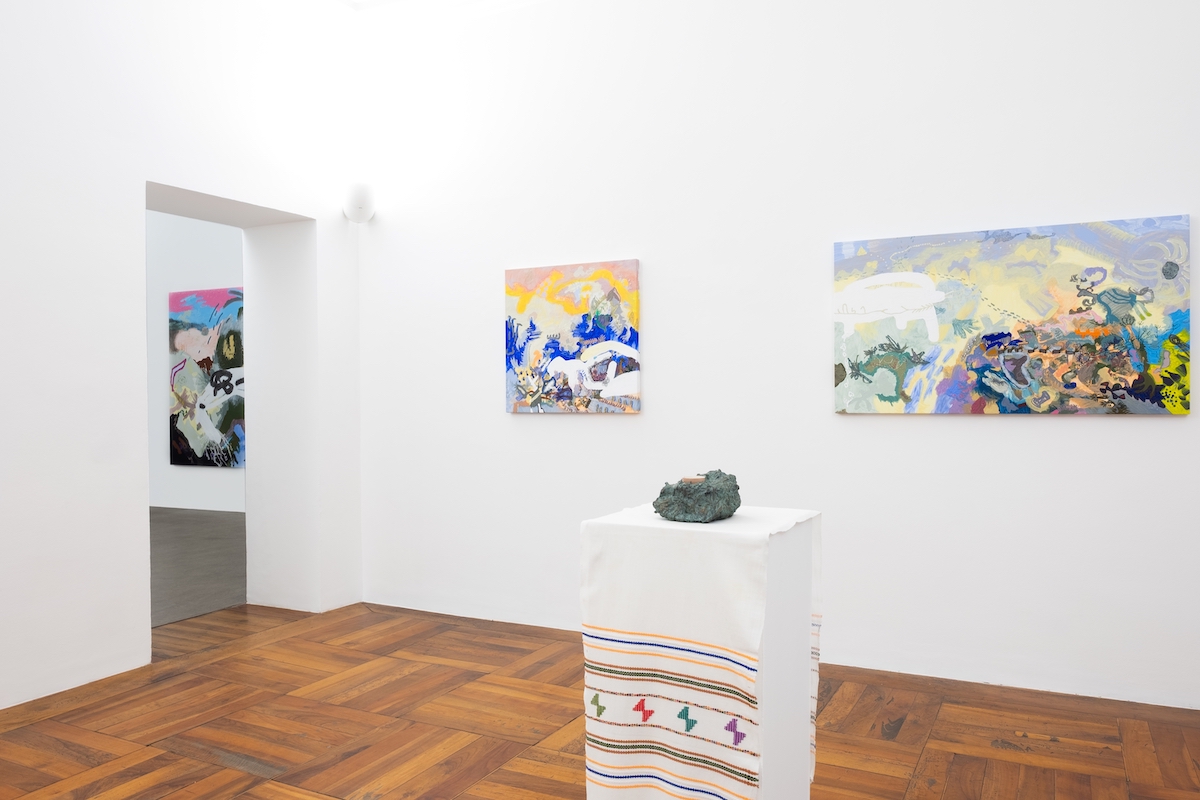
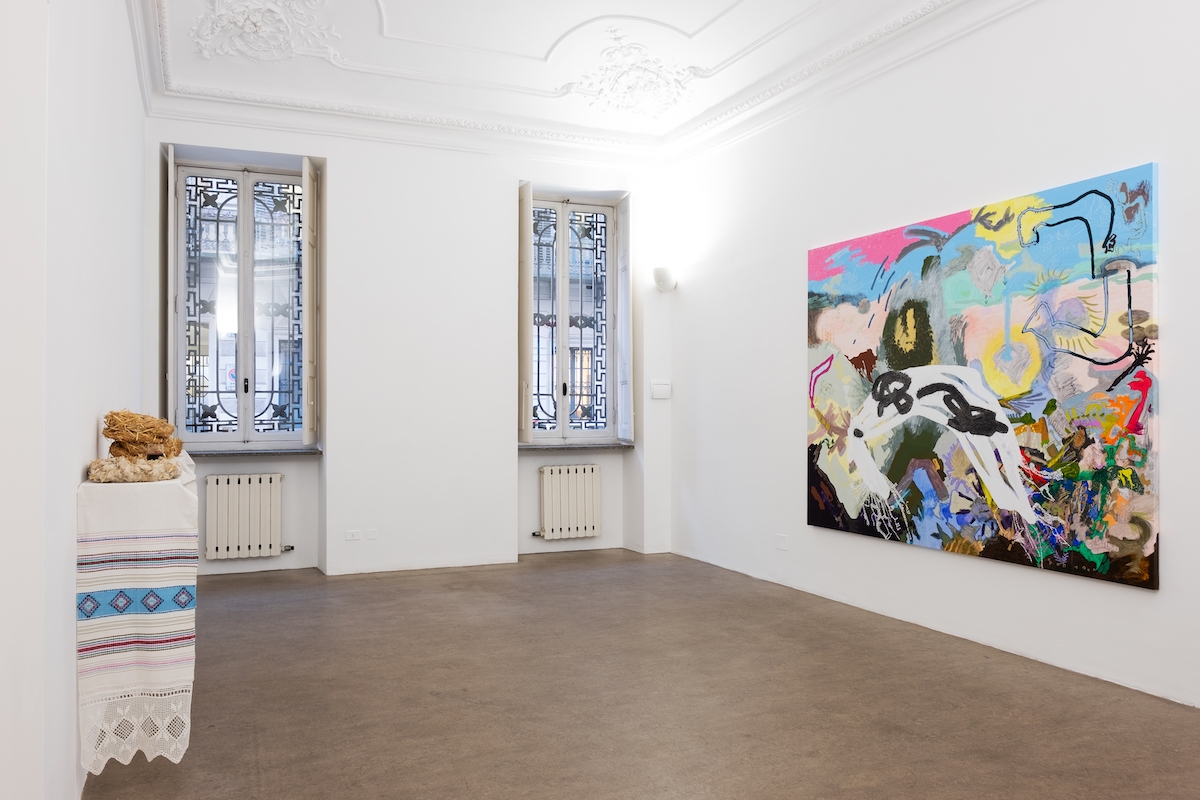
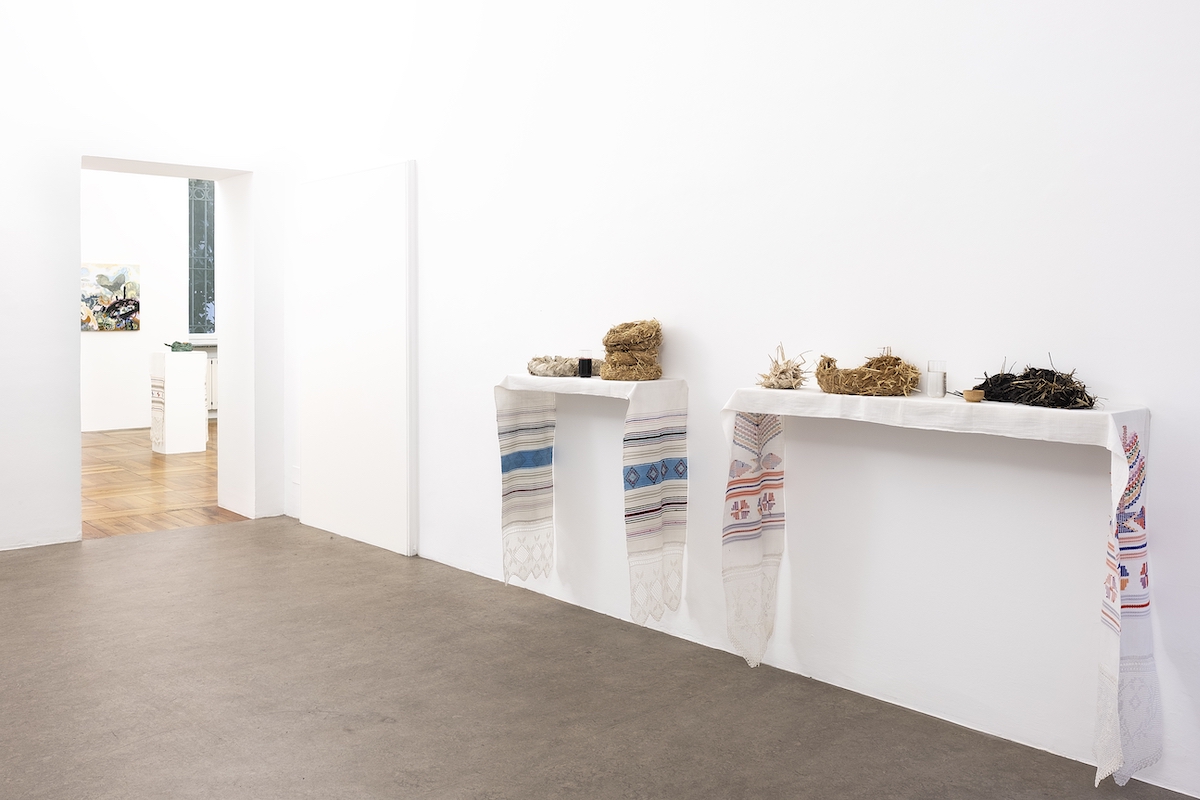
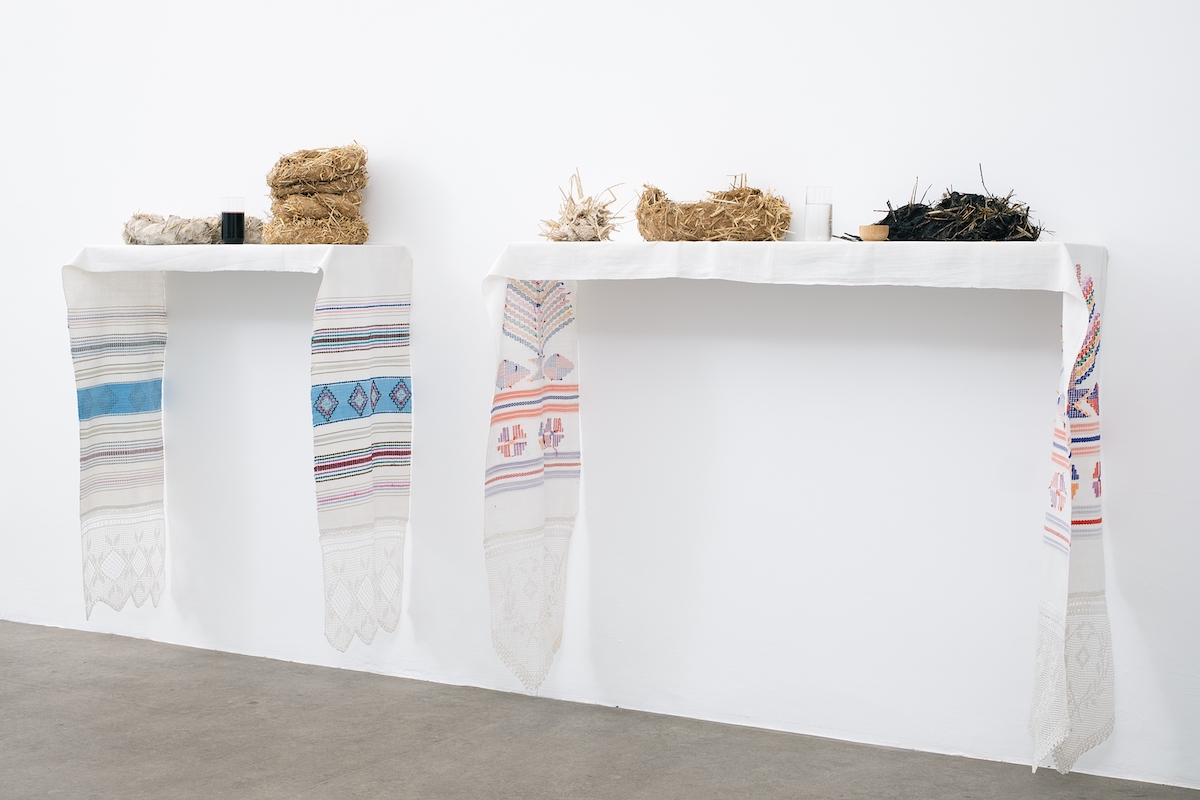
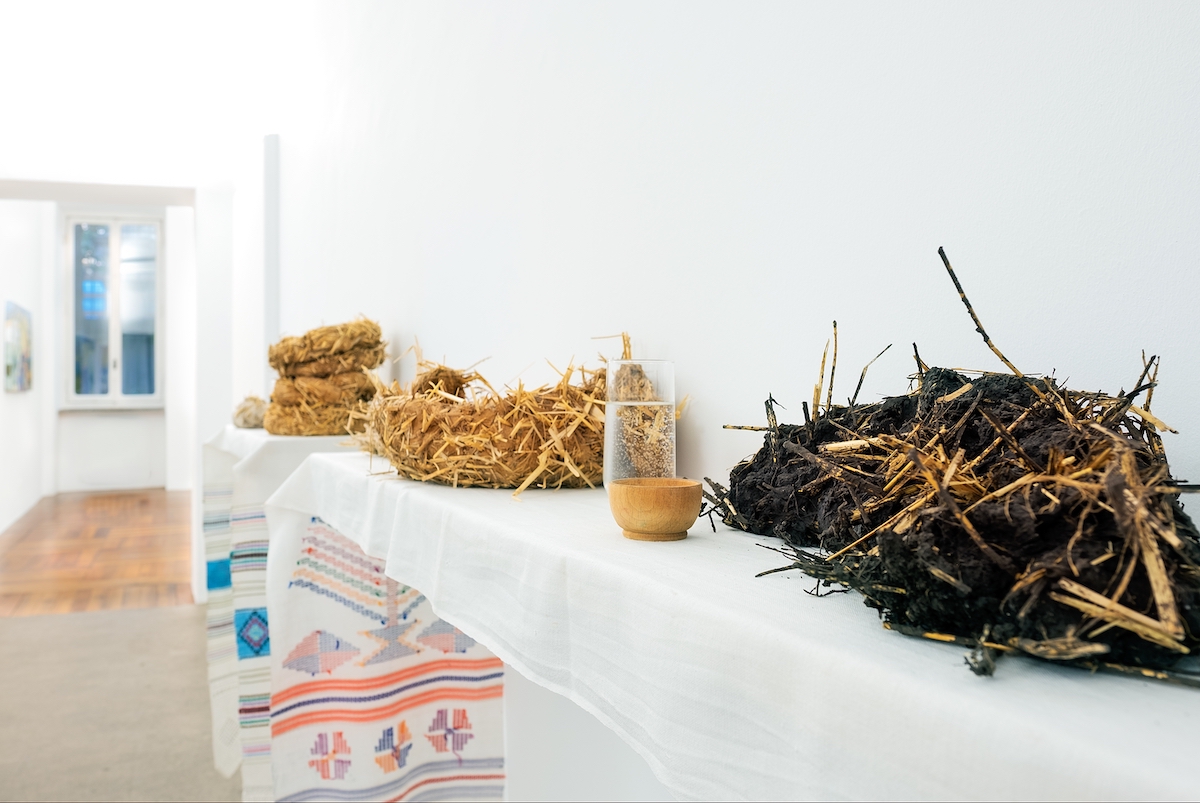
Her grandmother’s embroidered tablecloths, displayed as if they were geological surfaces, dialoguing with sculptures made of raw earth, embody this principle. Neither relics, nor sentimental memories, they are rather a past that still weighs and does not let it be romanticised. Their texture holds a daily stubbornness, a form of silent, feminine, domestic resistance, yet by no means docile.
They stand at the beginning of a genealogy that does not idealize the family but shows its materiality: pulled threads, worn out edges, gestures which become a language through repetition.
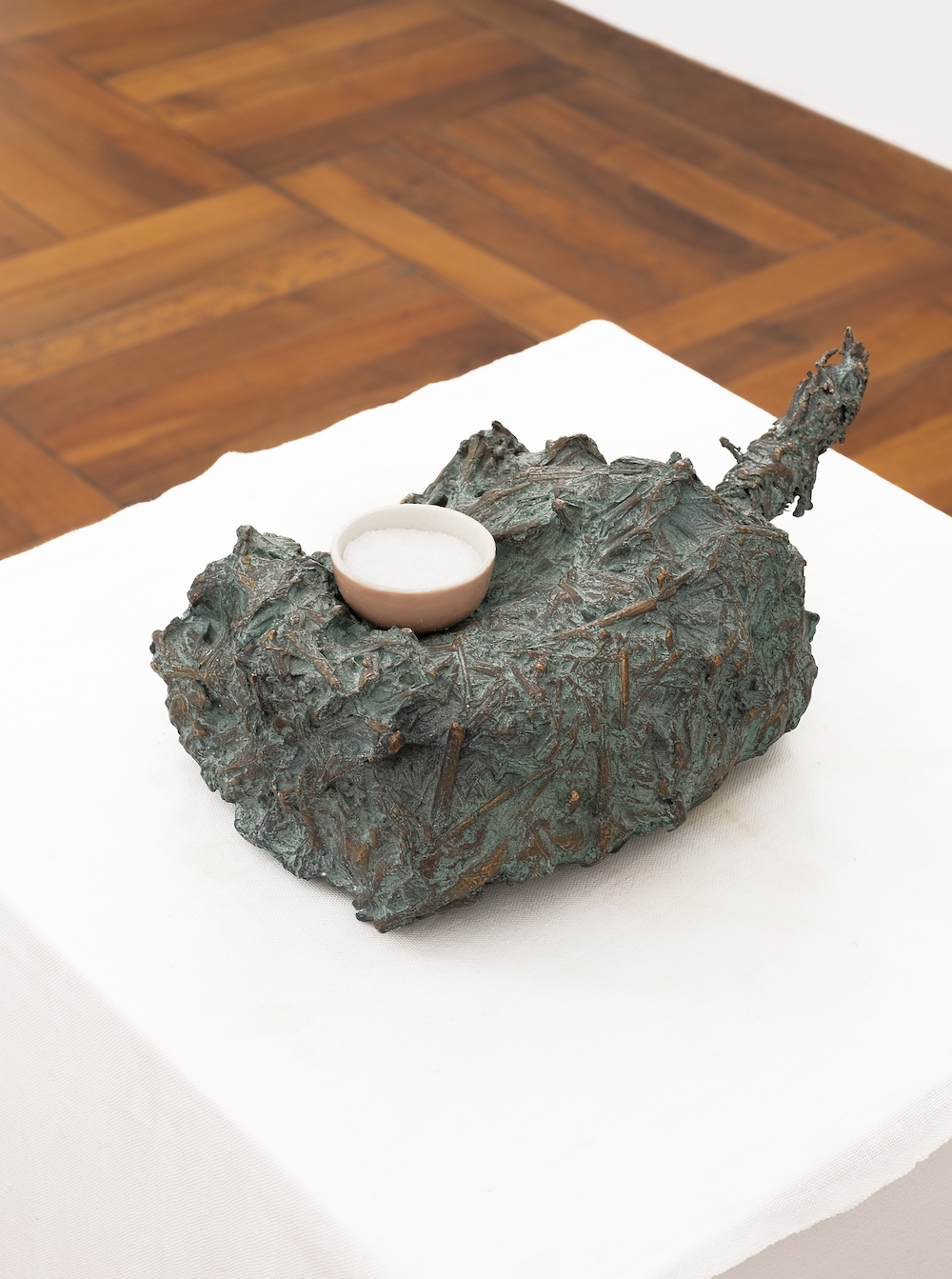
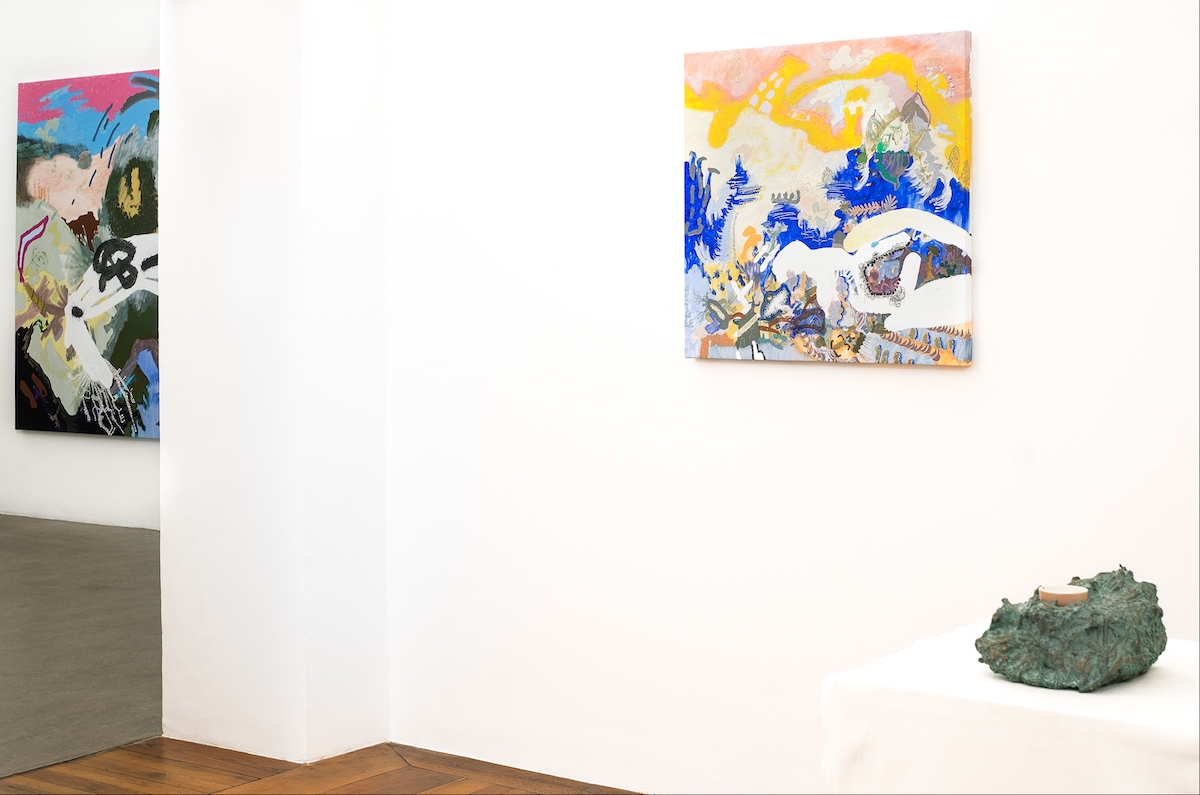
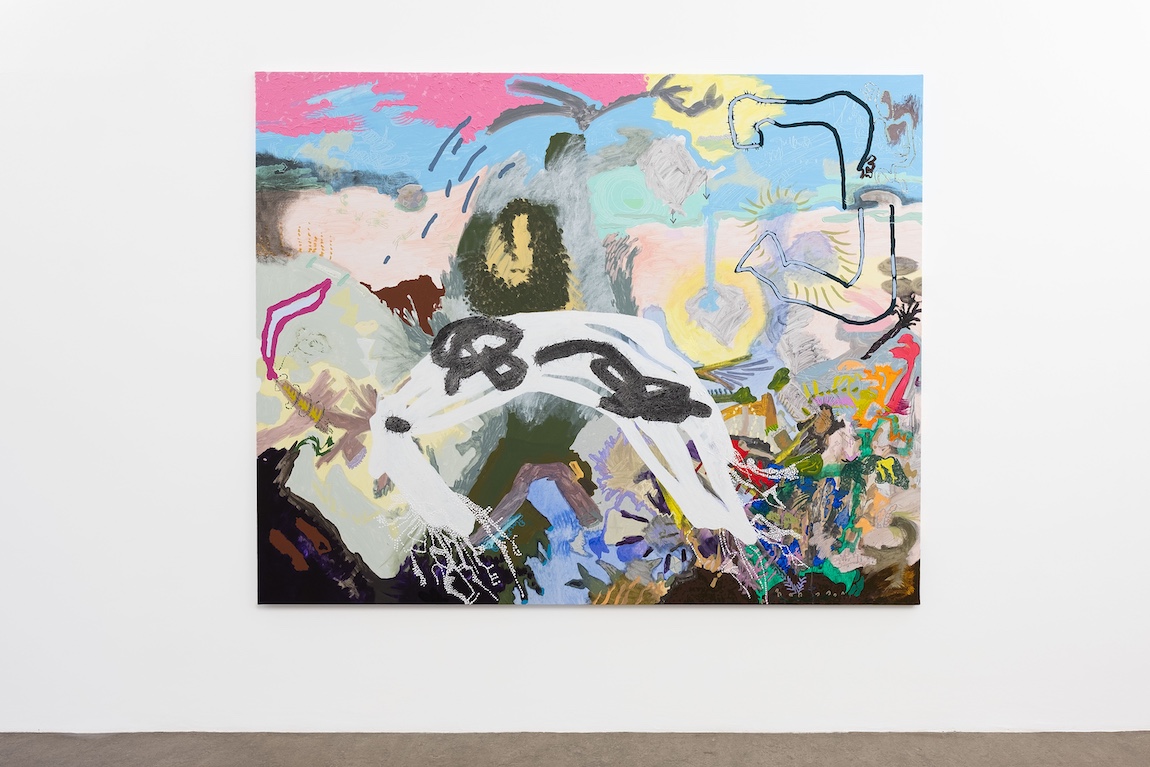
Then bronze enters the conversation, an ancestral material which imbues the new sculptures with rituals, symbols and forms rooted in the Moldovan traditions. The sculptures and the fabrics – both reinterpreted and transformed in the paintings – become motifs, totemic presences, fragments of an imagination shaped by communal customs, rural rituals, gestures handed down from generation to generation. This network of signs generates a visual language which serves as embodied memory: it changes over time but never dies out. Within them lies the first answer to the question in the novel: freedom is not a concept but a fibre.
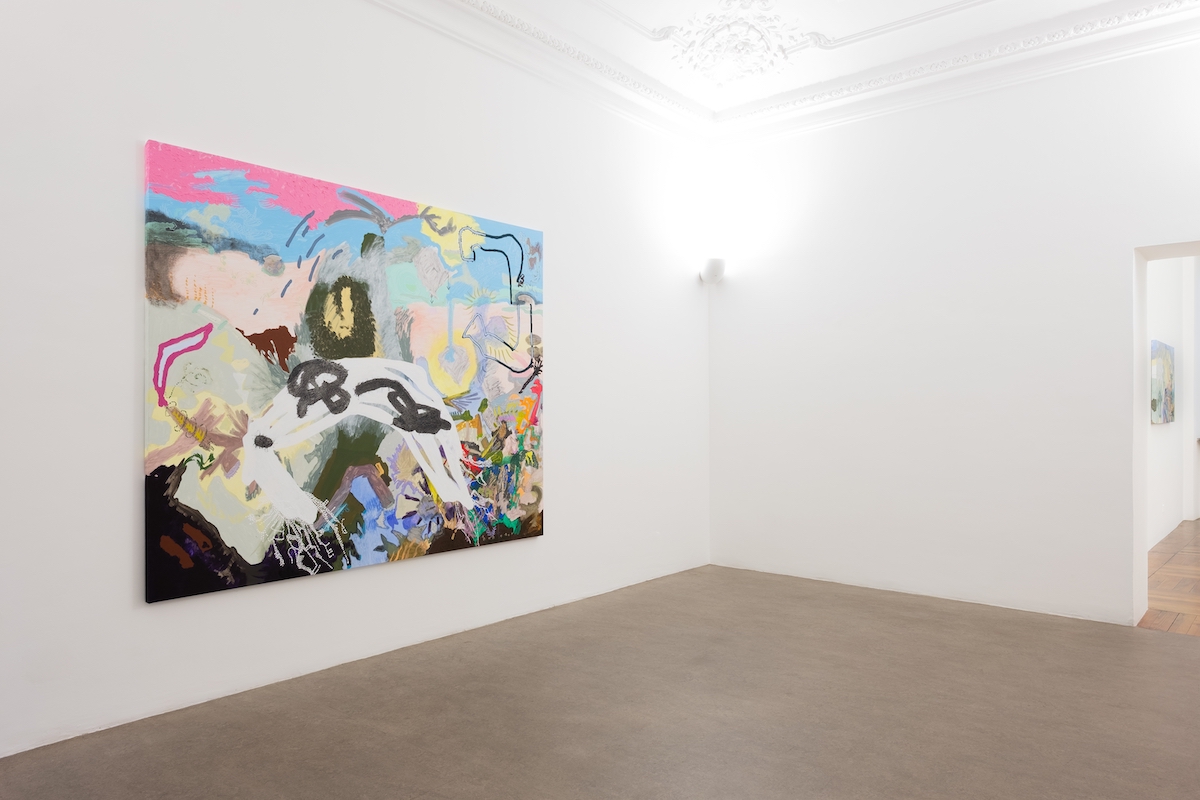
Freedom and love interweave, and by so doing, they hold together painting and sculpture, raw earth and sky - a sky which, in Stoian’s canvases, rejects any transcendence. It is not a medieval sky, nor sacred, nor metaphysical. It is an earthly sky, one that weighs. A Moldovan sky, pink and blue - in a shade the artist has never found again in any other horizon – crossed by the low light of the heights and the calm after the storms. A space that offers itself to the gaze but does not elevate it - it brings it back to the ground. It is the sky that, in his novel, Victor Petrini observes lying on the black earth, when he feels that the only promise of peace is the radical closeness to the world, not an escape from it. Stoian captures that very vibration and transforms it into painting: the sky not as a promise but as belonging. Hence the horizon appears for the first time in her paintings: that bond that holds together earth and sky, love and freedom.
Within the canvas, the written word appears and disappears. At times it is timbre, at other times it’s a wound; elsewhere it is deliberate erasure, a form of modesty or dissent. One sentence, in particular, recurs like an ancient intuition: “dacă dragoste nu e, nimic nu e…” – if there is no love, nothing is. Stoian lets it surface, then covers it with paint. All that remains is a ghost, an echo. In the novel, the protagonist’s conscience is compelled to question the meaning of ethics, of survival, of dignity; in Stoian’s works, the word becomes an emotional residue, something that exists even when it is no longer visible. As if the painting were saying: what is necessary remains, even if it is hidden.
The exhibition proceeds through stratifications: not chapters but zones of density. Each work is a fragment of a larger work, a stage in a journey that is not linear but circular, like memory itself. The figures, when they appear, have no defined identity: they are earthlings, pământeni, beings that carry the soil on their faces and in their hands. They are the earth that falls and rises again, like Preda’s characters who are made to confront the brutal logic of history.
What emerges is politics without slogans, a politics of the living. The canvases hold the tension between body and power, between being rooted and uprooted, between the possibility of being and the obligation to adapt. However, through this material tangle, Stoian constructs a way out that is not ideological: it is affective. In her oeuvre, love is not a romantic feeling: it is a generative force, the necessary condition for any idea of equity. Love as the possibility of acknowledging the others, listening to their voice even when they stammer, and safeguarding their vulnerability.
This is why its surfaces are so physical, so imperfect, so full of traces: because love, which in the novel appears as the last stand against dehumanization, here becomes pigment, gesture, texture. It manifests itself as an act of responsibility: if love is missing, the world is missing; if love is withdrawn, no freedom is possible.
In Pământeni, Victoria Stoian does not illustrate Preda. She extends him. She brings his thought into the present, where the forms of coercion have changed but not disappeared, and where the earth—real, political, symbolic—remains the place from which to begin to imagine another possibility of existence. A fragile but essential possibility: that of finally being earthly.
