

Through rêverie, one enters an alternate dimension where rationality gives way to imagination, and daydreaming becomes a space to engage with reality more freely. It is a porous territory that surfaces, transforms, and resonates inwardly, where the boundaries between interior and exterior, real and surreal, become fluid. This form of daydreaming is extensively discussed by the philosopher Gaston Bachelard in The Poetics of Reverie (1960), where he writes: “Rêverie places us in the state of a soul that imagines,” describing a way of inhabiting the world through representations rather than concepts. Rêverie does not explain or demonstrate - it evokes.
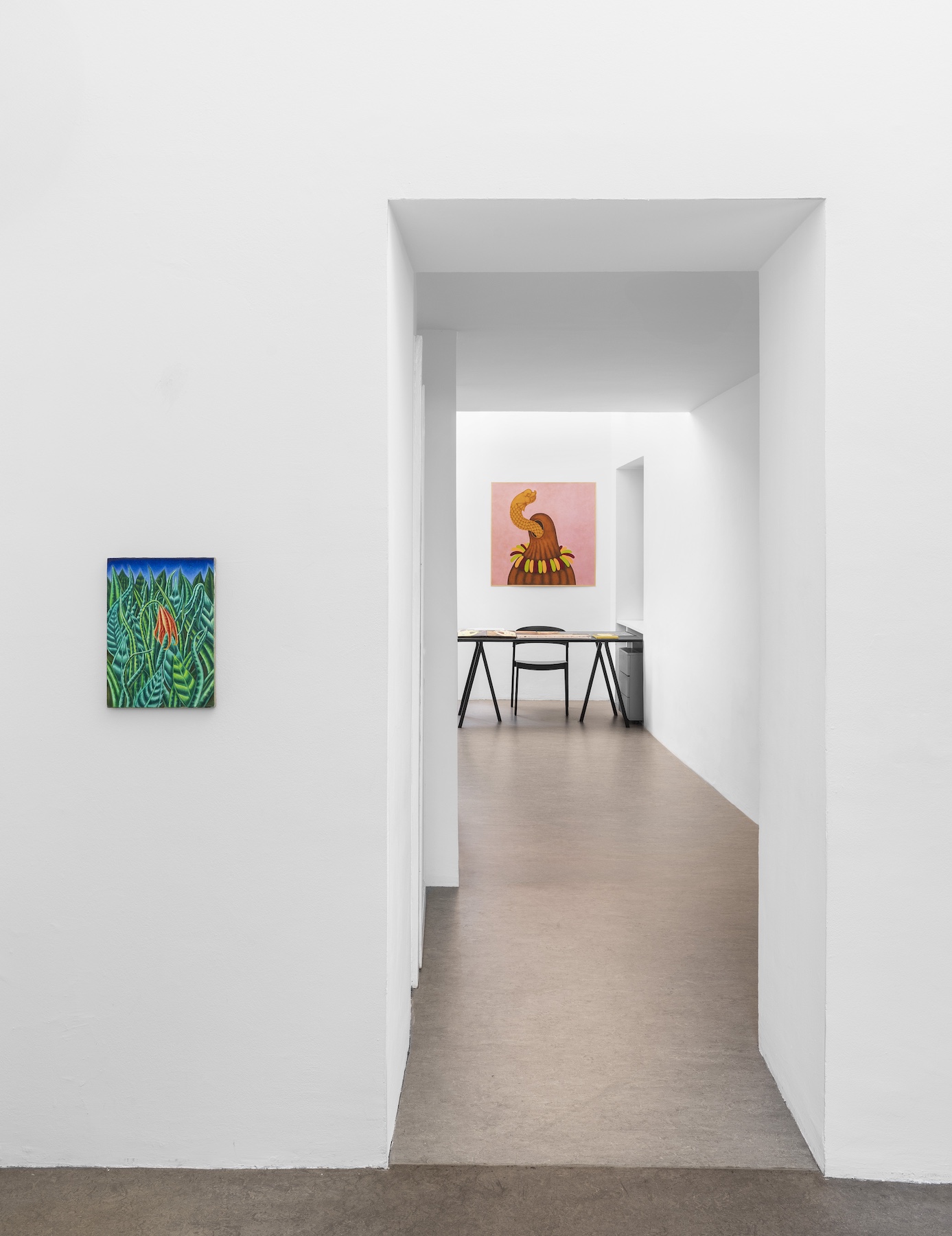
Inspired by this notion, the exhibition is dedicated to new horizons in painting, characterized by anticipation and attentive observation, by silences that invite the gaze to linger and drift. Natural elements, animals, figures, and dreamlike atmospheres form the core of the exhibition space. The works on display occupy an intermediate threshold, where minimal gestures and solitary practices unfold within an expanded sense of time. In rêverie, the image does not seek to be deciphered but experienced.
In this context, animal symbolism takes on a meaningful role: a universal and ancient language, traditionally associating human, divine, or moral qualities to different species, reflecting culture, religion, and human fears. At the same time, vegetation transcends its mere representation, acquiring an autonomous presence. Animals and nature manifest themselves poetically and evocatively, having become capable of embodying metamorphosis and desire, and guide the viewer’s gaze through a space suspended between reality and imagination.
In Rêverie, the works of Chiara Baima Poma, Luca De Angelis, Olmo Erba, Giuseppe Mulas, and Morigen Yan enter a dialogue, creating a field of resonances rather than unambiguous meanings.
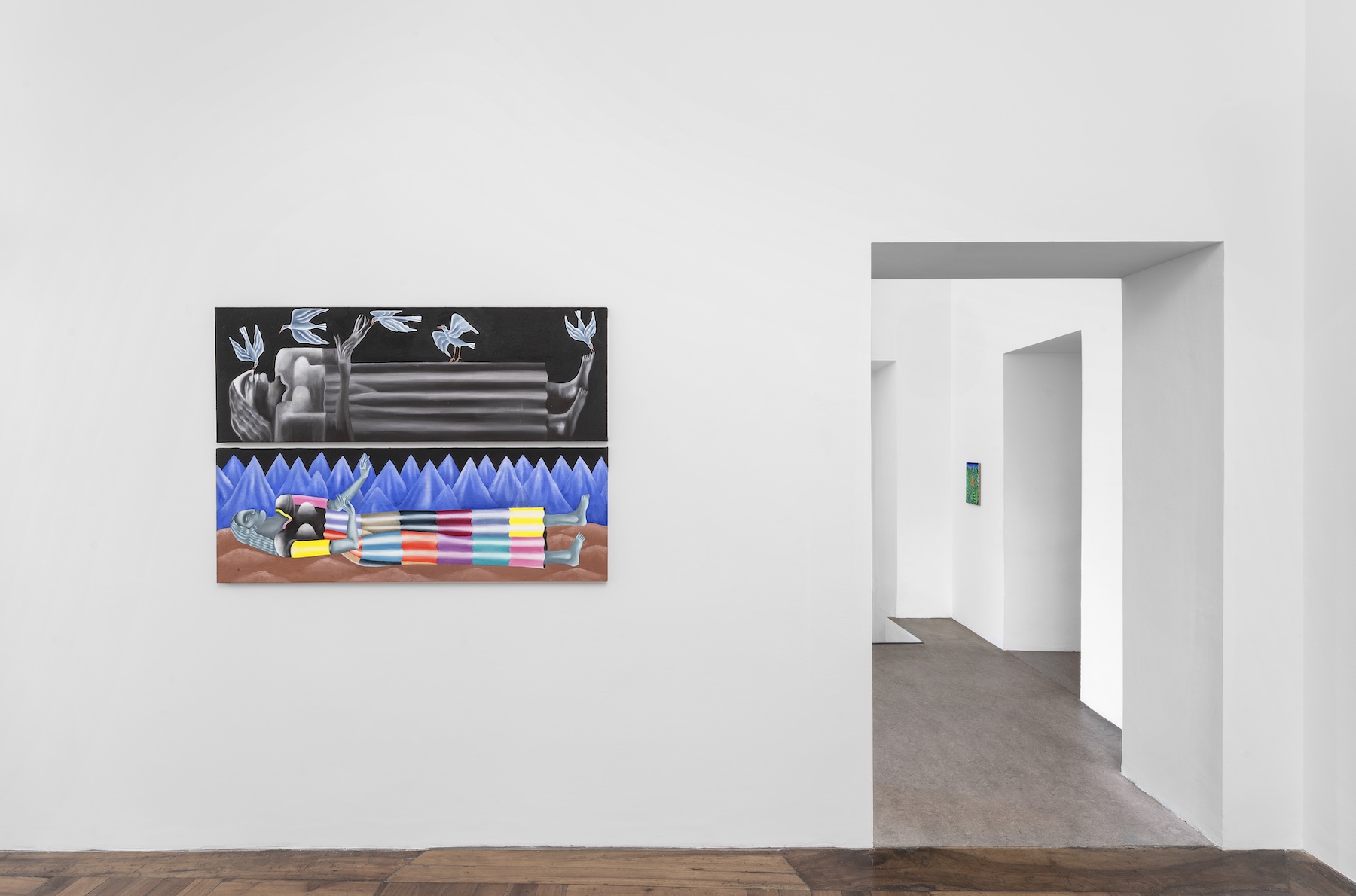
In her works Chiara Baima Poma (Turin, 1990) explores the potential of the fantastic, drawing on narratives of traditions, tales, proverbs, and legends, while placing the figure at the centre of her paintings. Time appears rarefied: past and present are no longer clearly distinguishable; everything is situated within a new potentiality of existence.
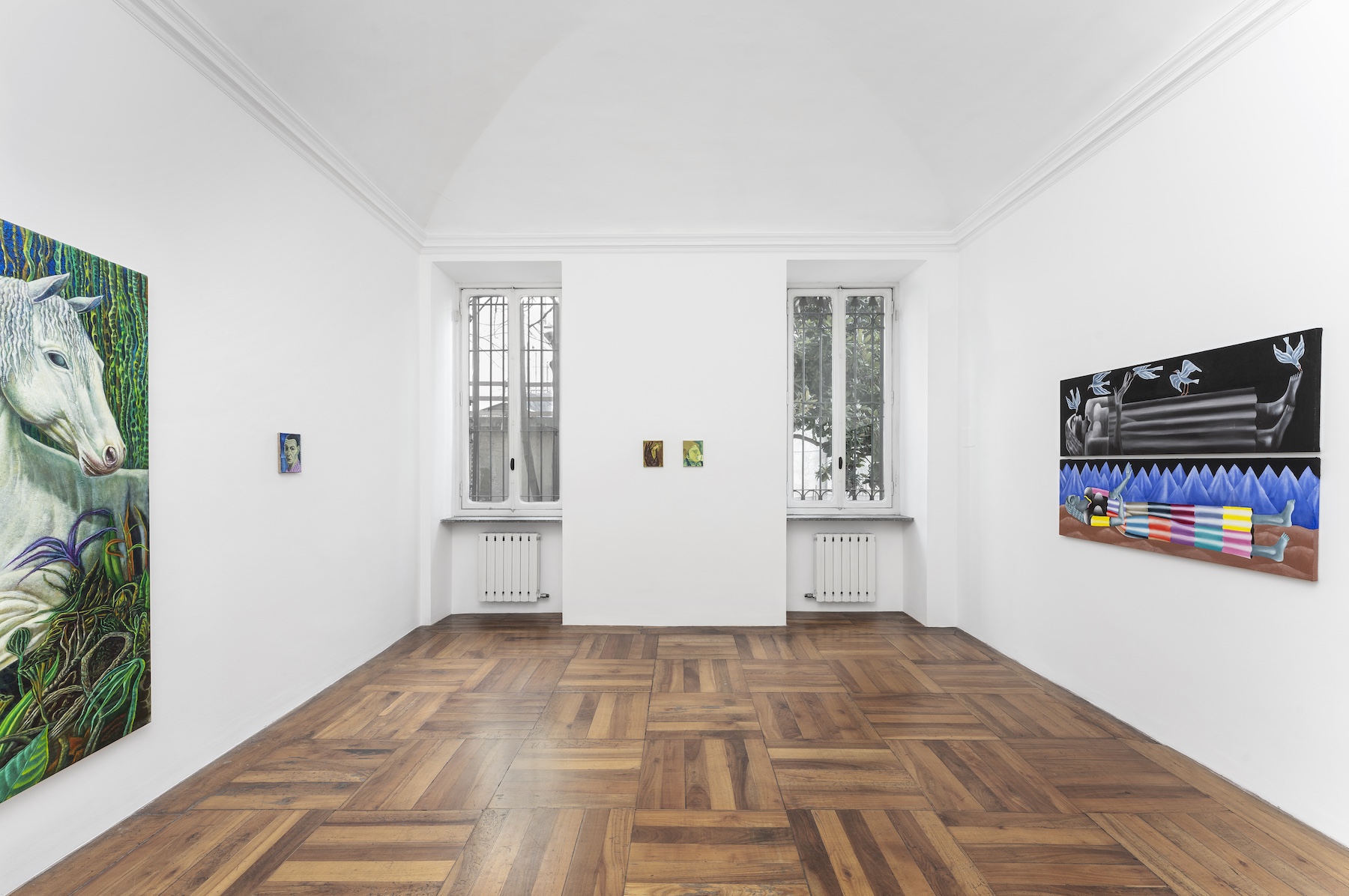
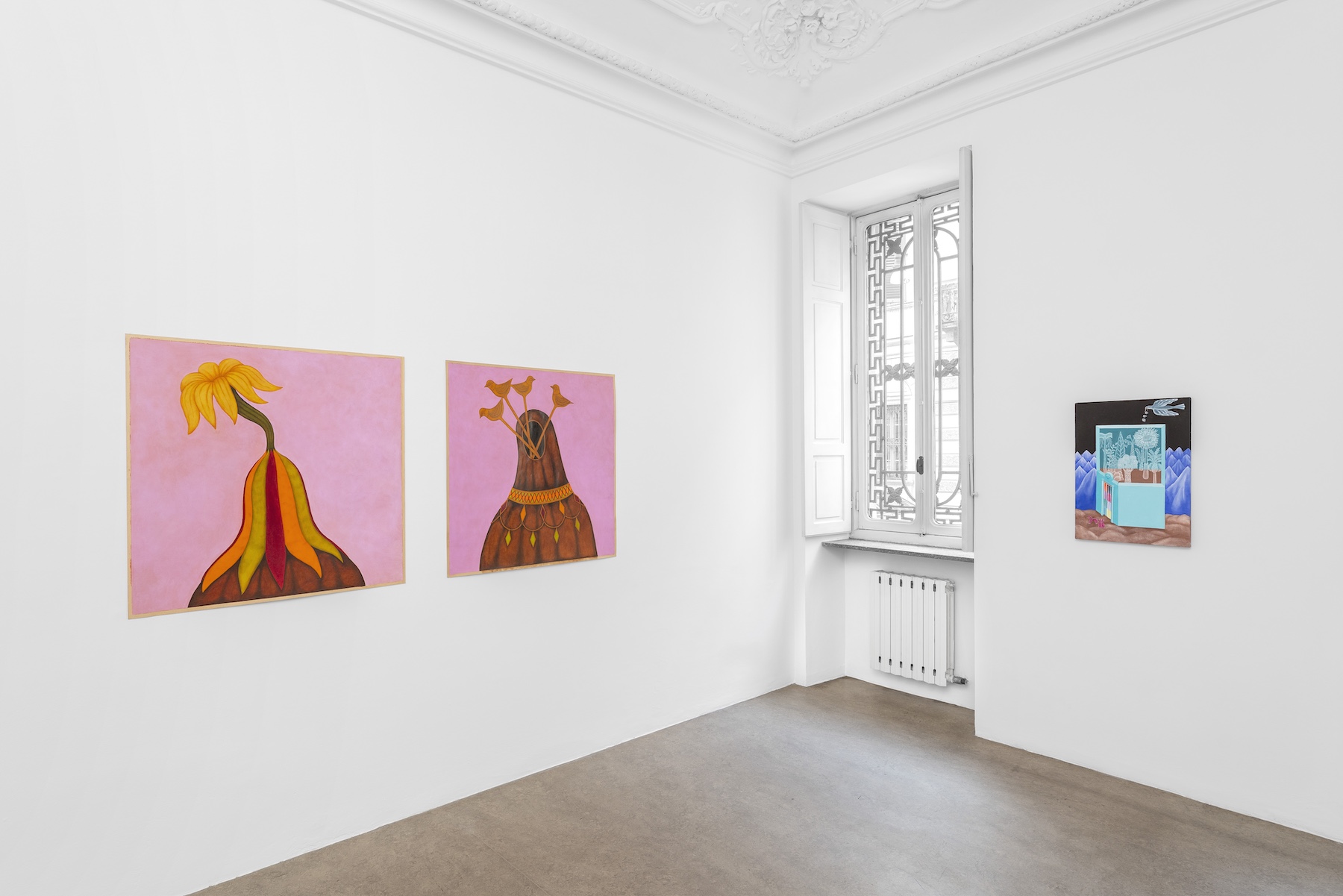
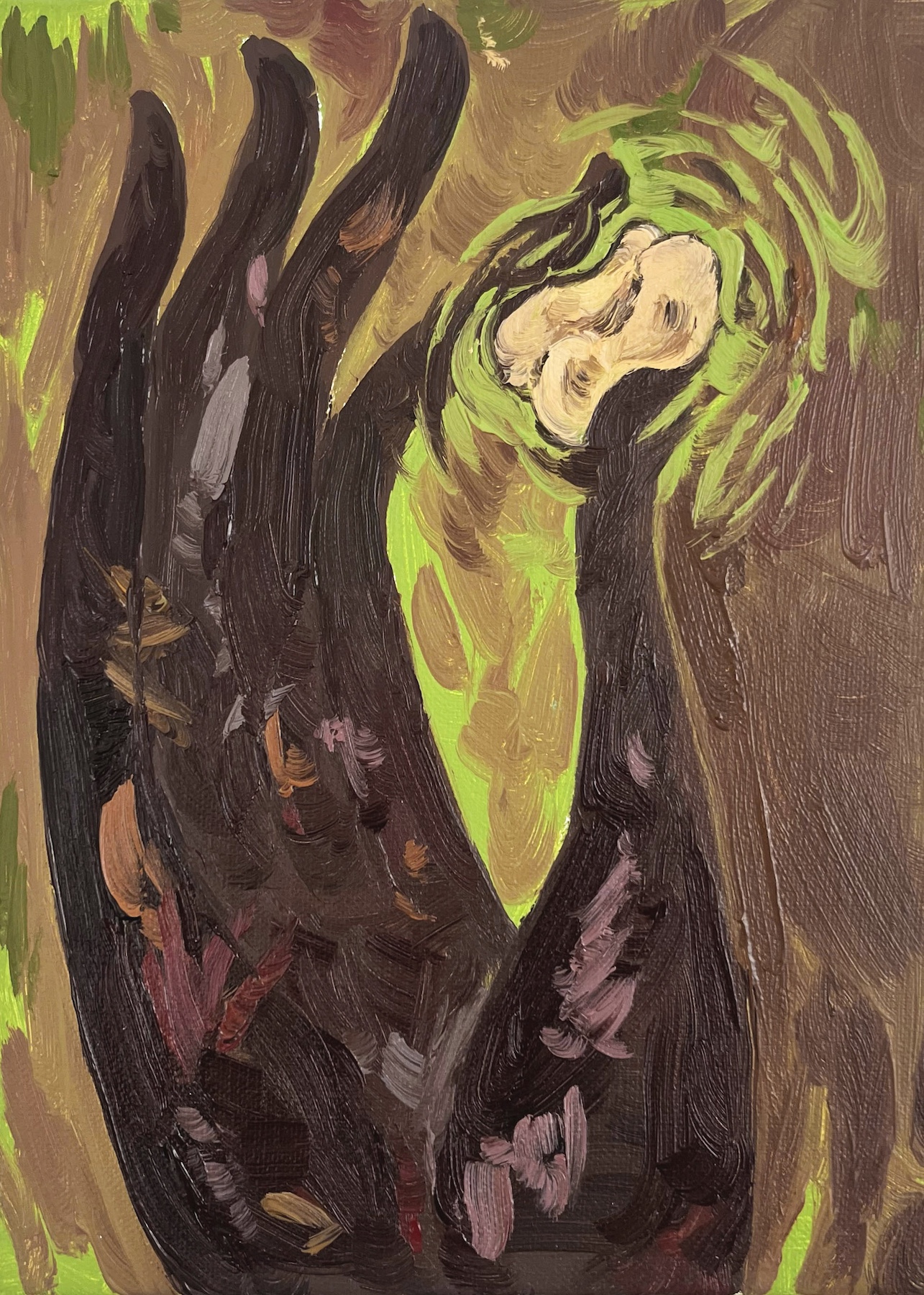
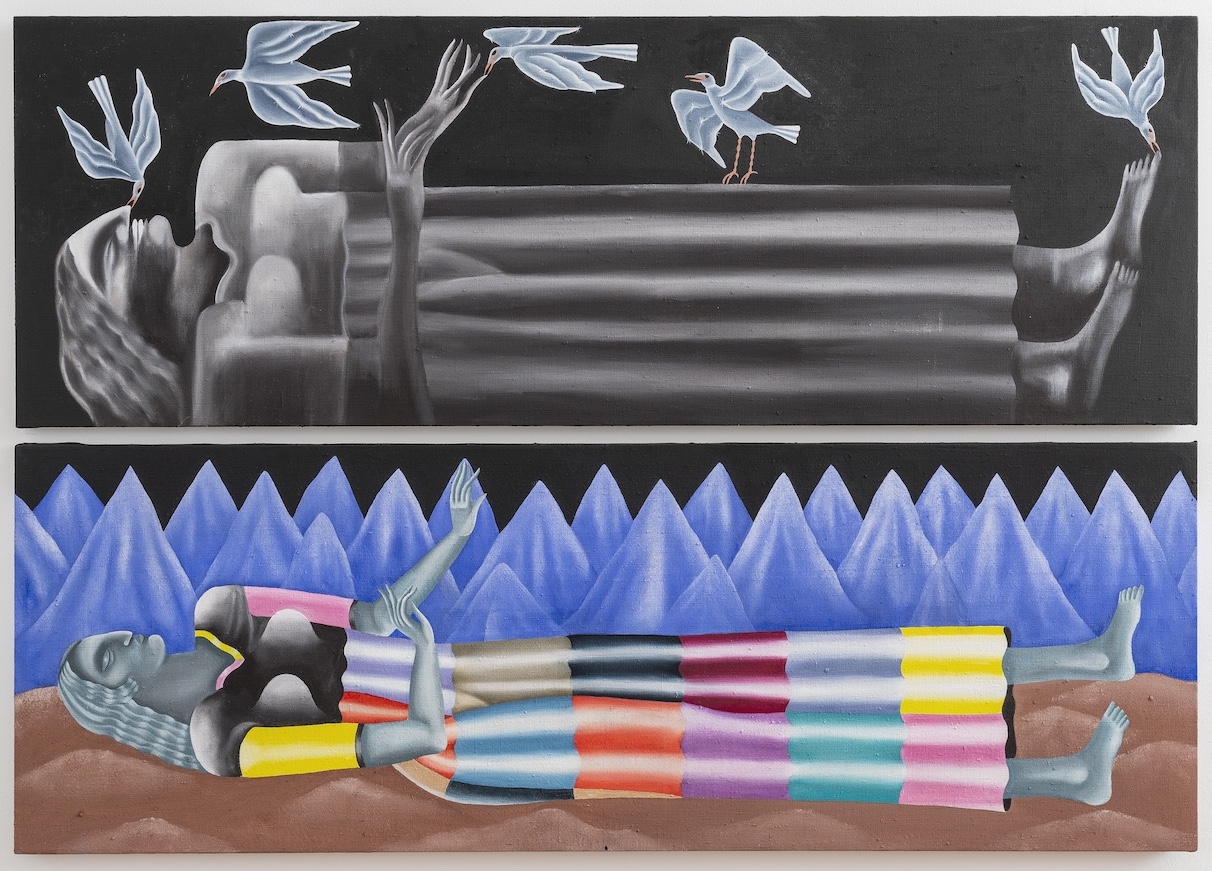
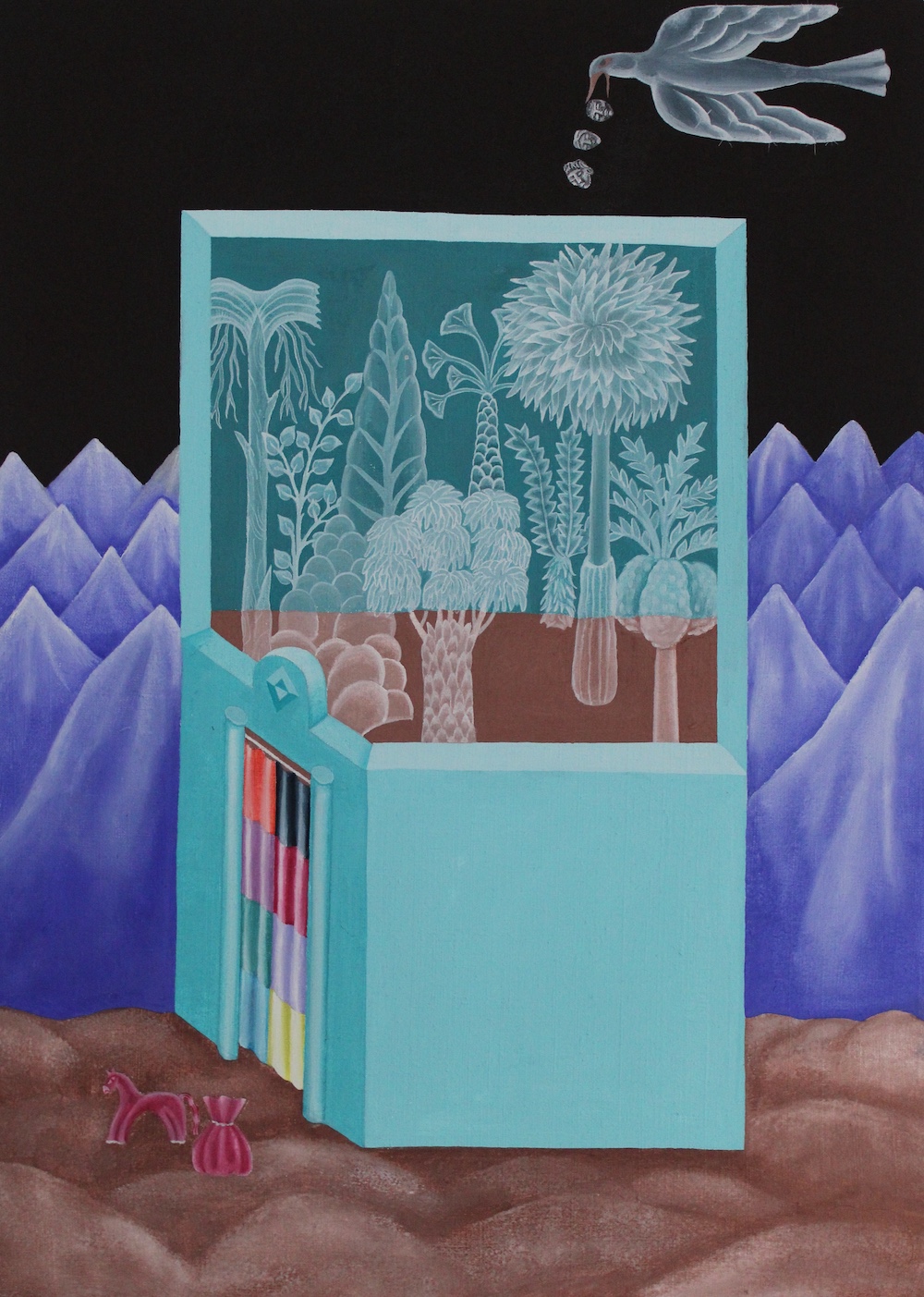
Her recent research explores the figure of the bird, an animal connecting earth and sky, embodying both a lightweight presence and a sign of transition. In Non ricordo (2026), a flock lifts a transparent figure into a germinal, abstract dimension of ideas, with the birds acting as symbolic vectors towards an immaterial world. A second figure lies in a semi-awake state, its corporeality contrasting with the immateriality of the former, thus generating a tension of opposites and a duality of thought. In Crying horse (2026) the artist depicts an hortus conclusus, the medieval enclosed garden, from which nature appears as transparent presences. Within this place heads act as germinal agents, sowing ideas and initiating a process of free generation.
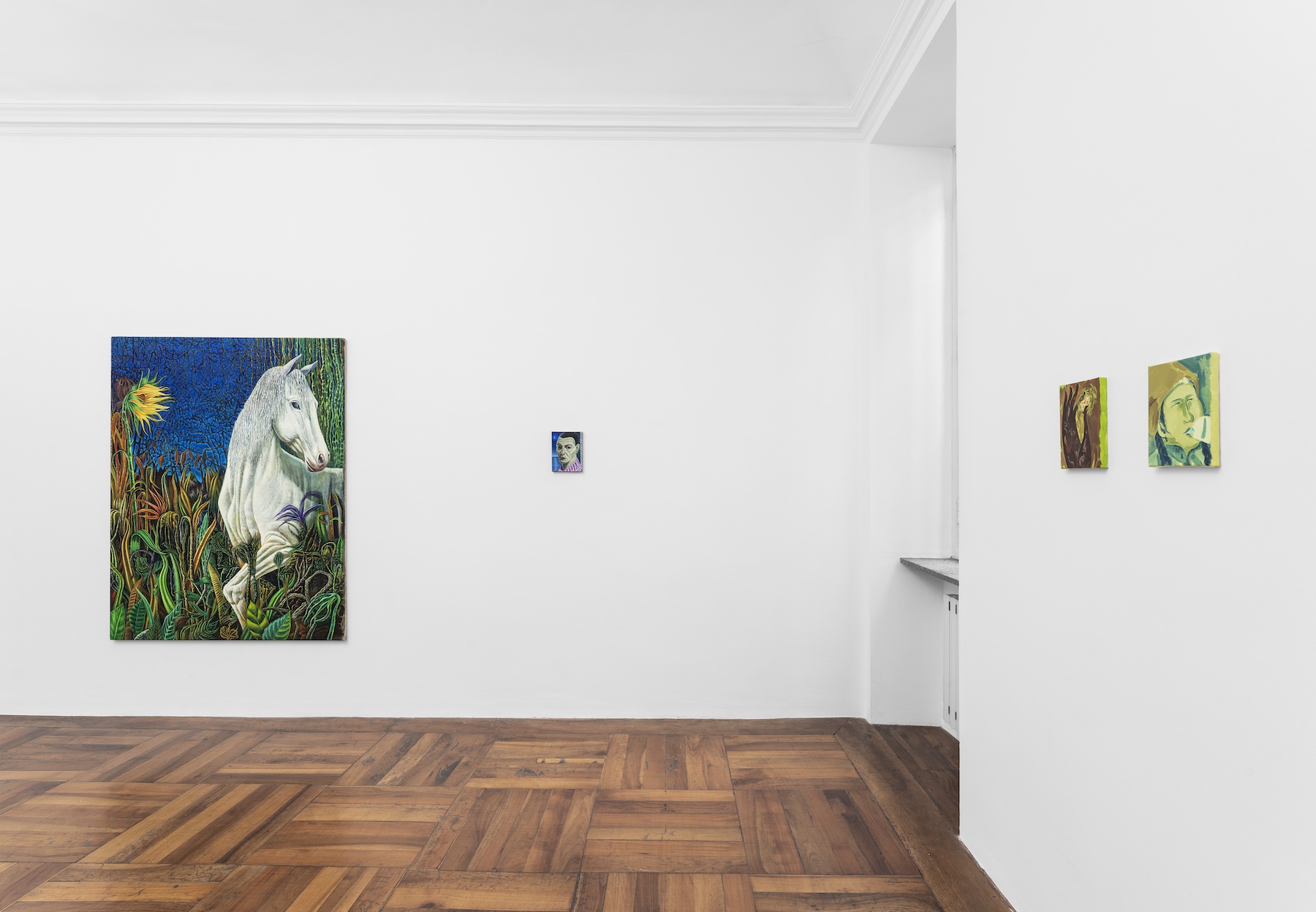
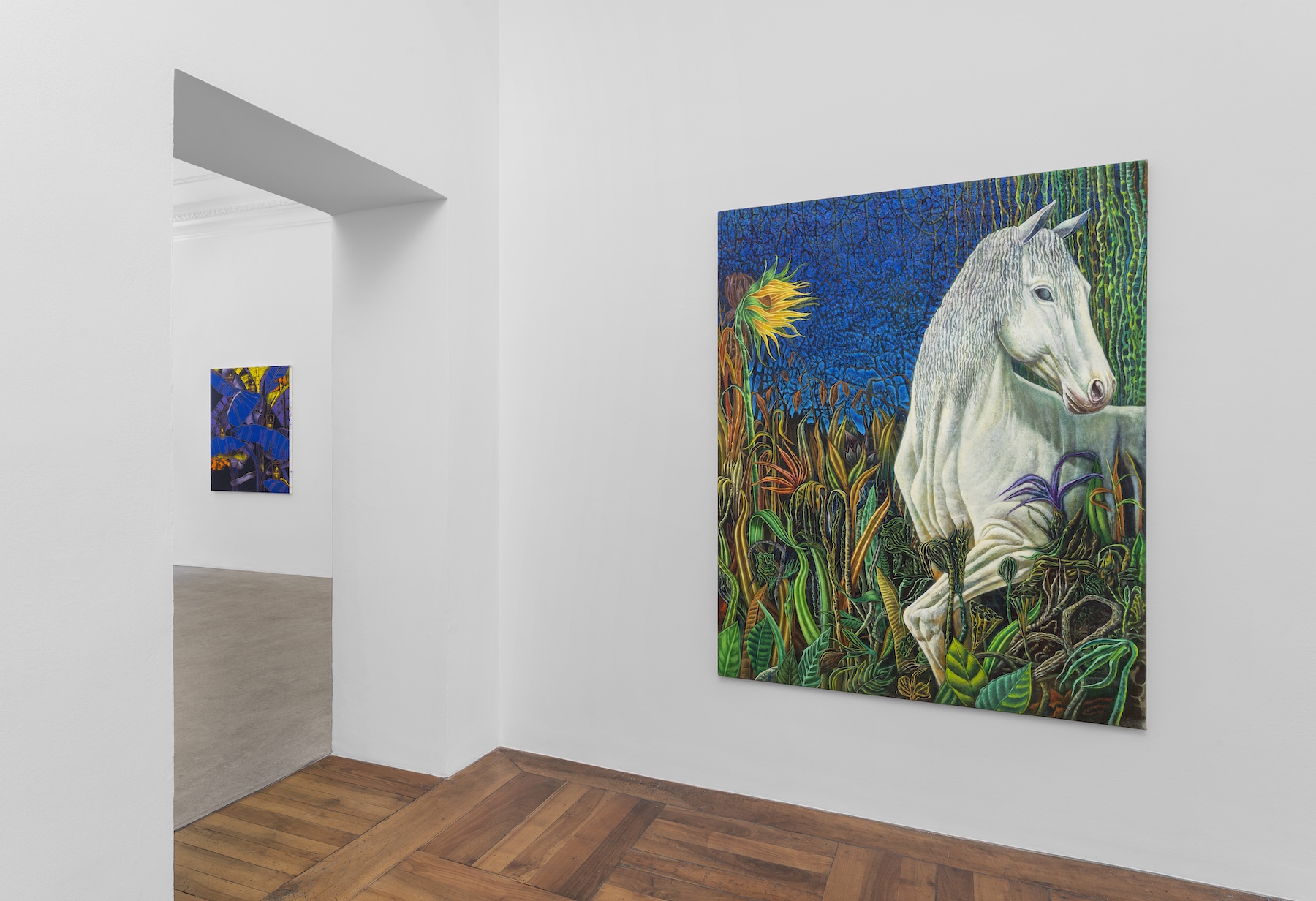
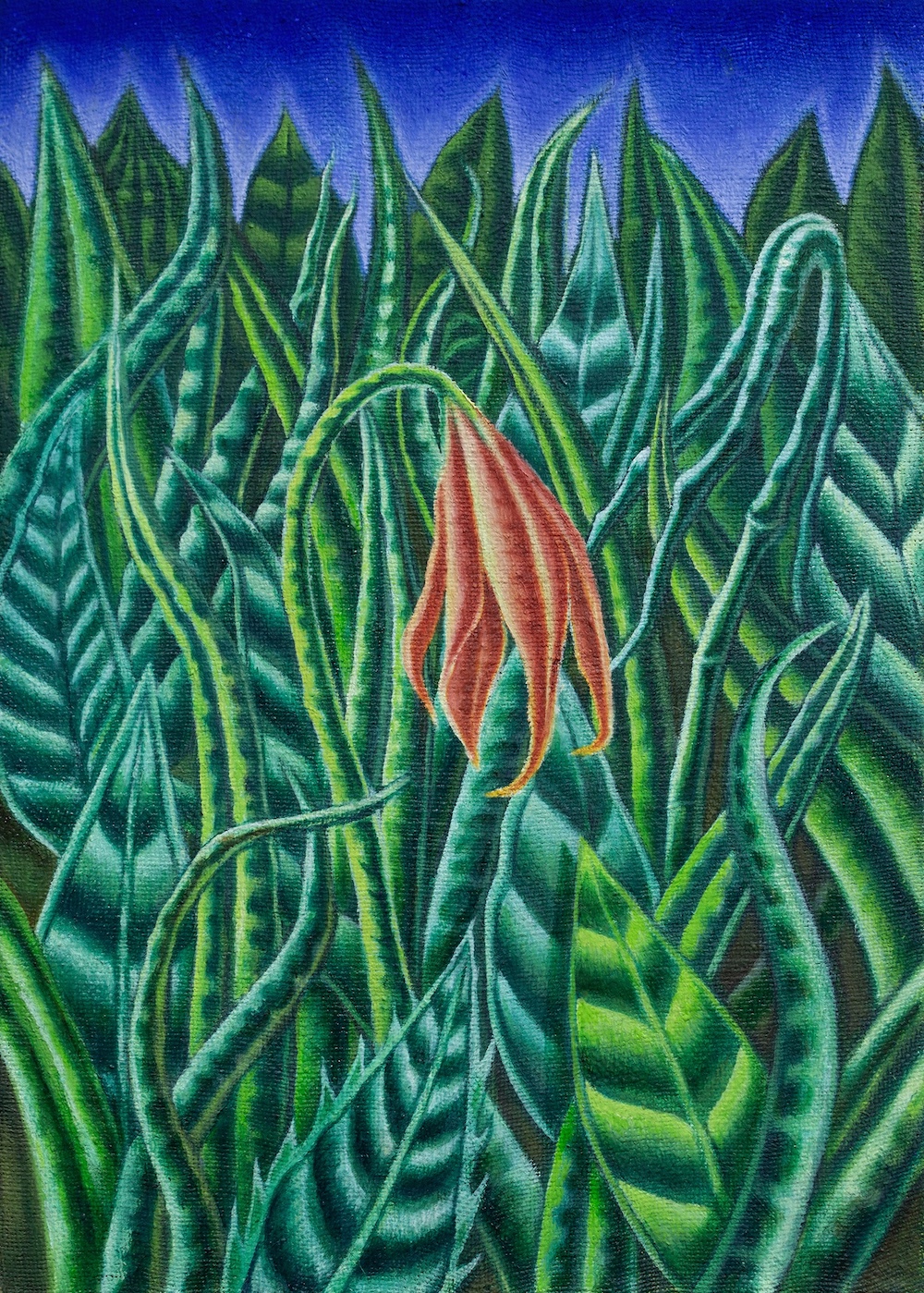
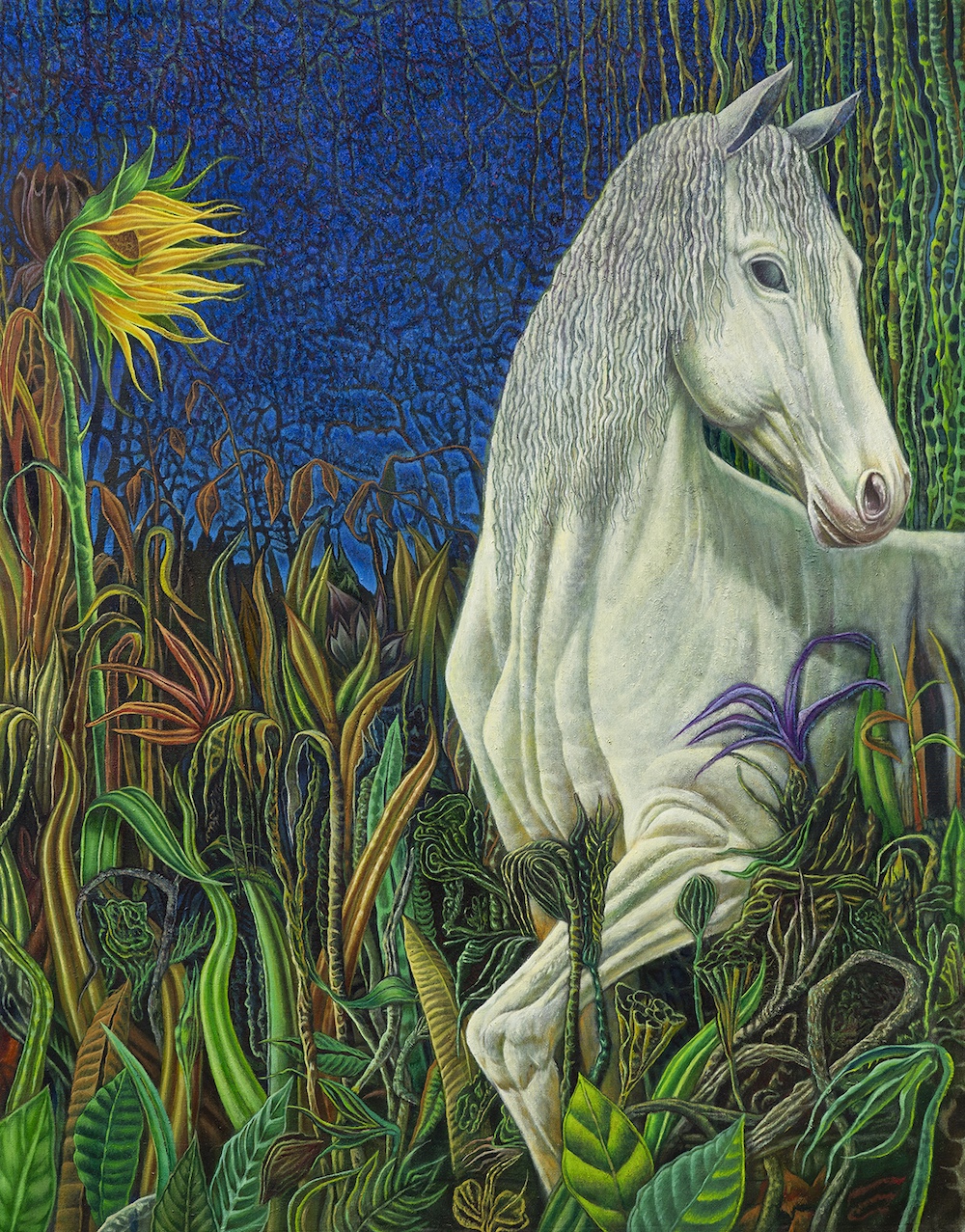
Luca De Angelis (San Benedetto del Tronto, 1980) creates landscapes in which the environment becomes the main subject of narrative. A Gothic sensibility and a timeless dimension generate depictions removed from rational representational mechanisms, revealing a primordial force. Vegetation appears both sinuous and penetrating, almost two-dimensional: it attracts and envelops while simultaneously concealing and repelling.
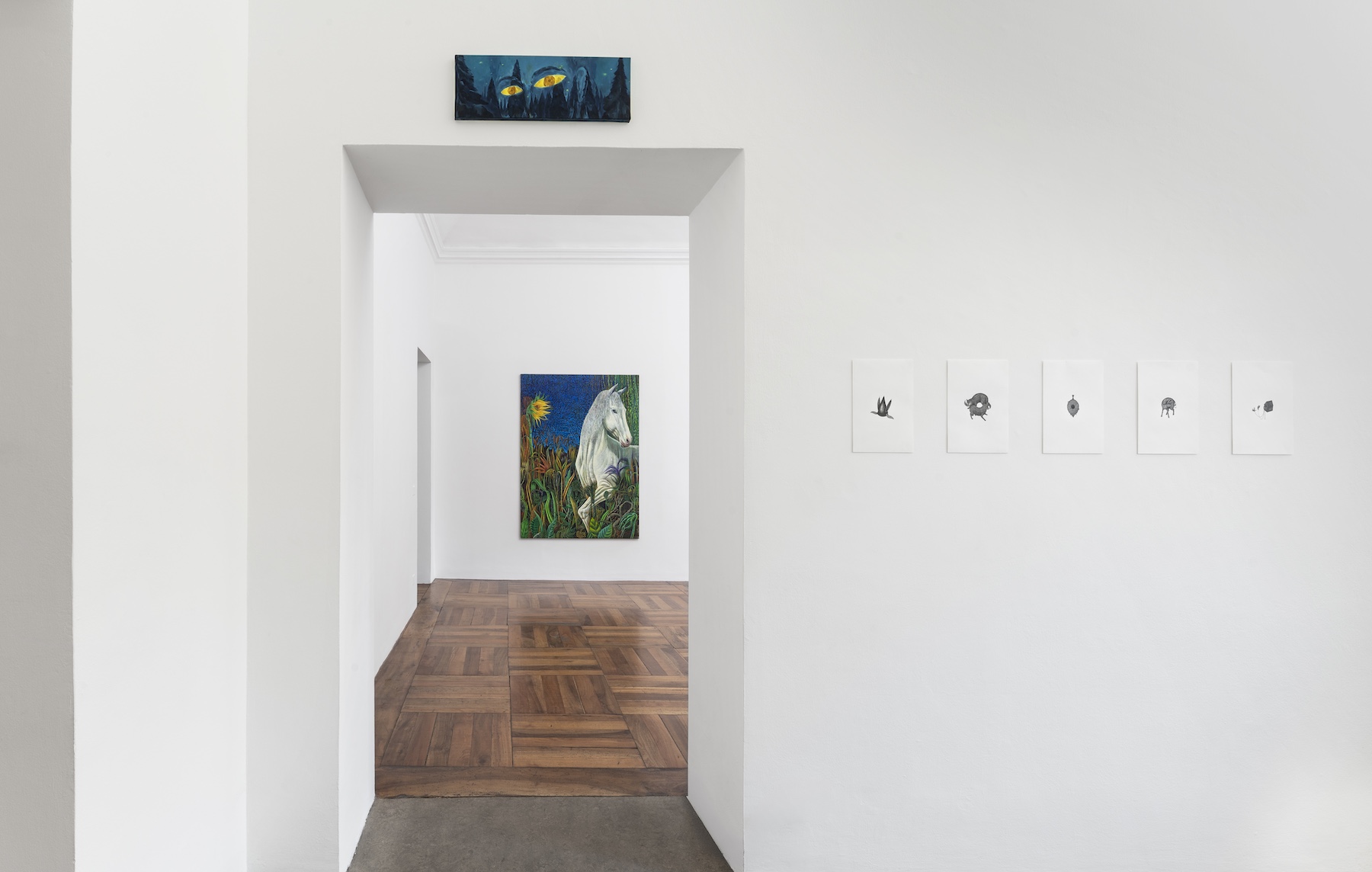
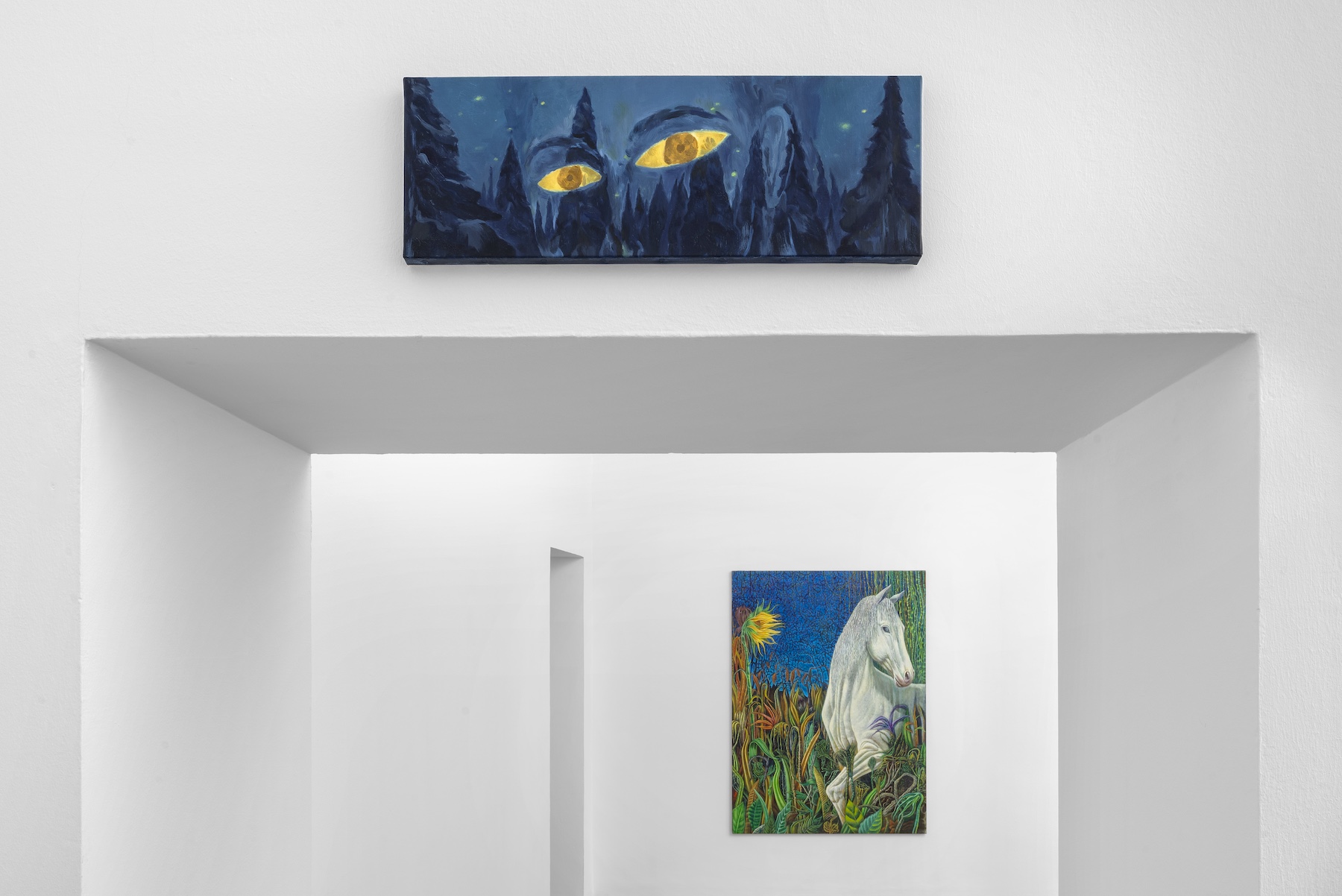
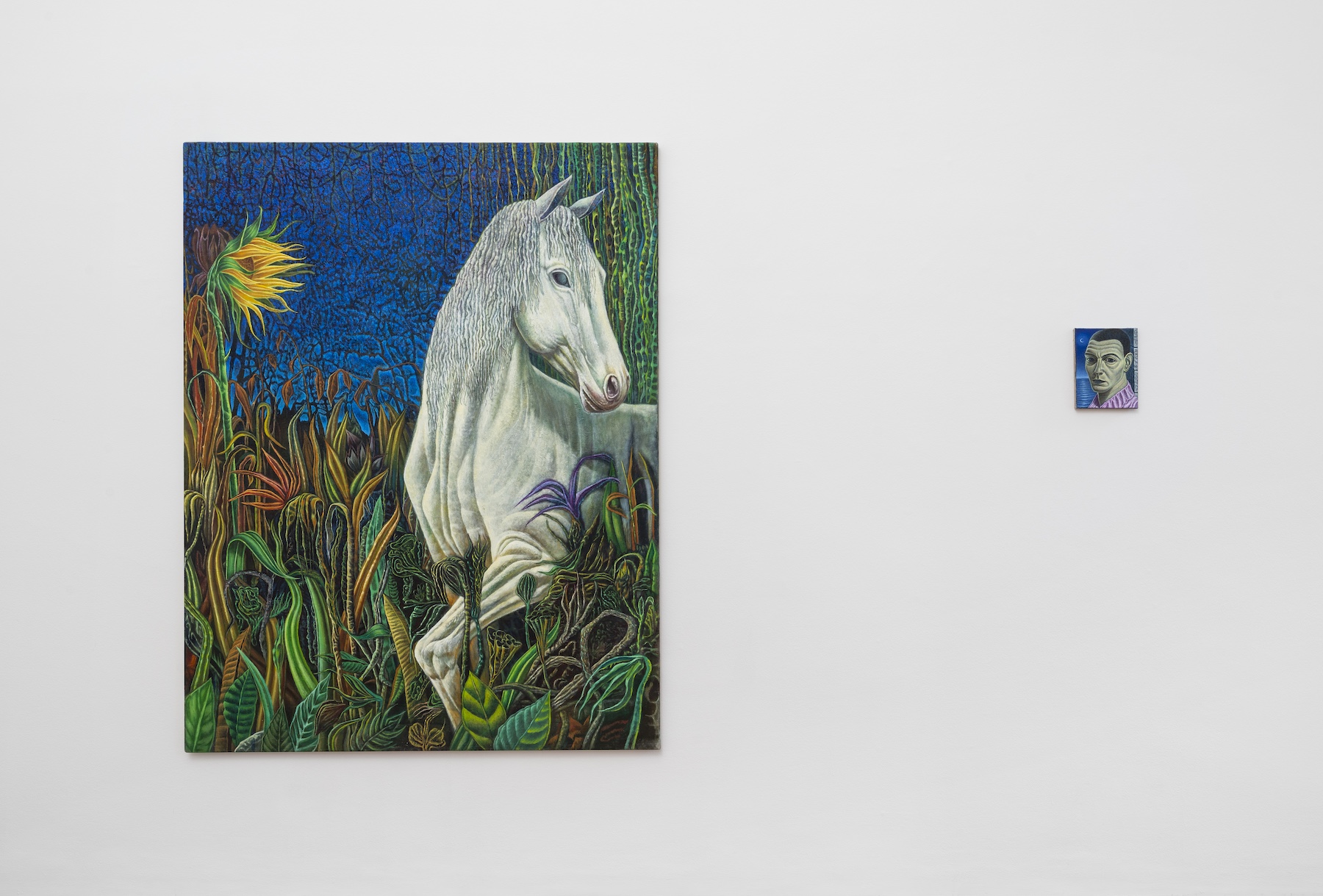
The artist’s privileged horizon is nocturnal, a moment of intimacy and profound self-relationship. Gli erratici itinerari della palude (2024) exemplifies this approach: the silence of the night is broken by the appearance of a white horse framed within lush, stirring nature. Smaller-scale works invite contemplation of nature itself, positioning the gaze low and oriented towards the sky, in a suspended, reflective state.
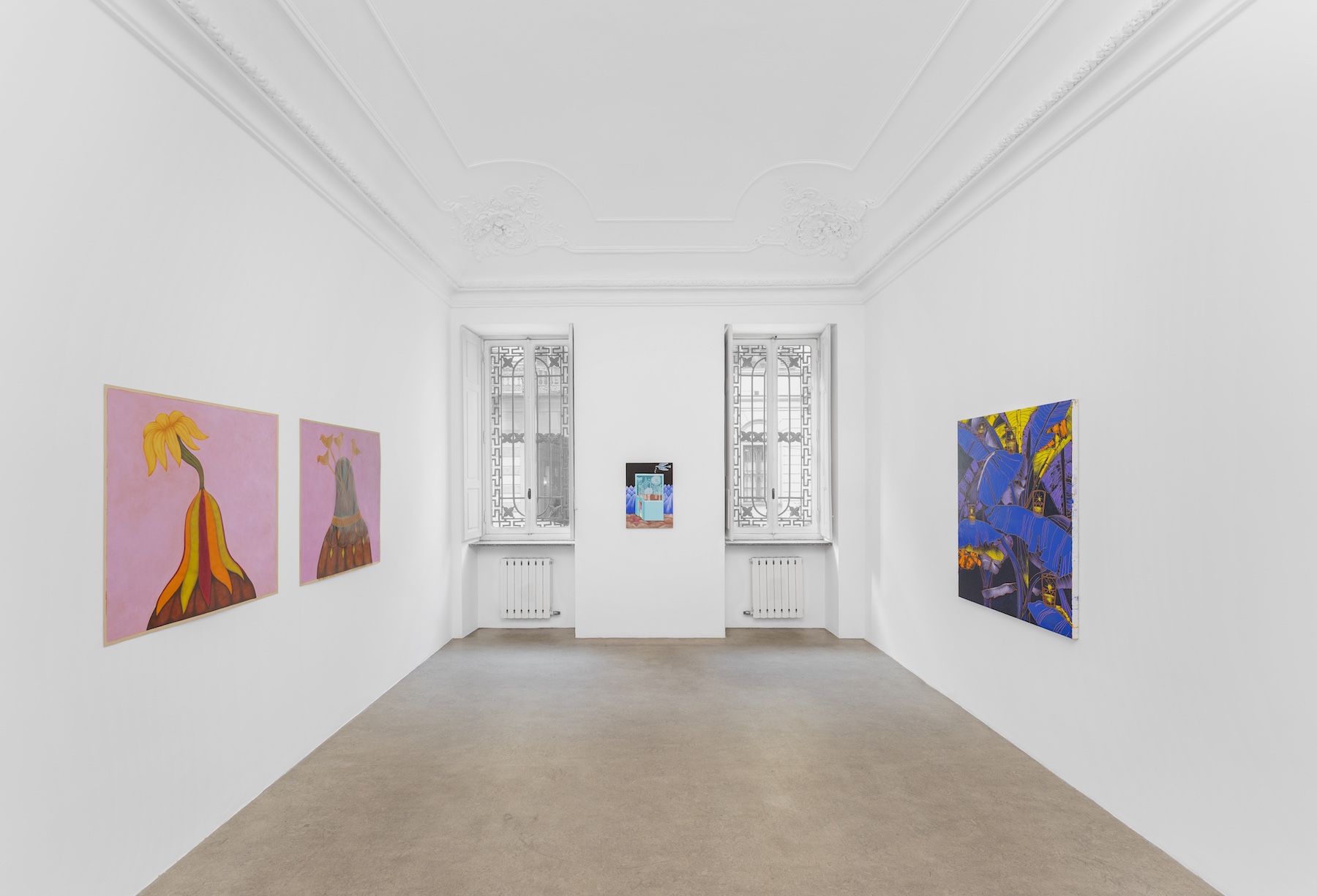
Olmo Erba (Bergamo, 1997) produces paintings through the reinterpretation and aggregation of heterogeneous components to evoke medieval-inspired scenarios and symbols. By recontextualizing reliquaries and symbolic elements, still lifes and human figures merge into a hybrid imaginary, giving rise to pseudo-anthropomorphic creatures. Characterized by a playful spirit, Erba employs irony to reflect on the present, identifying in the Middle Ages a lens for escaping the neurosis and nihilism of Western society.
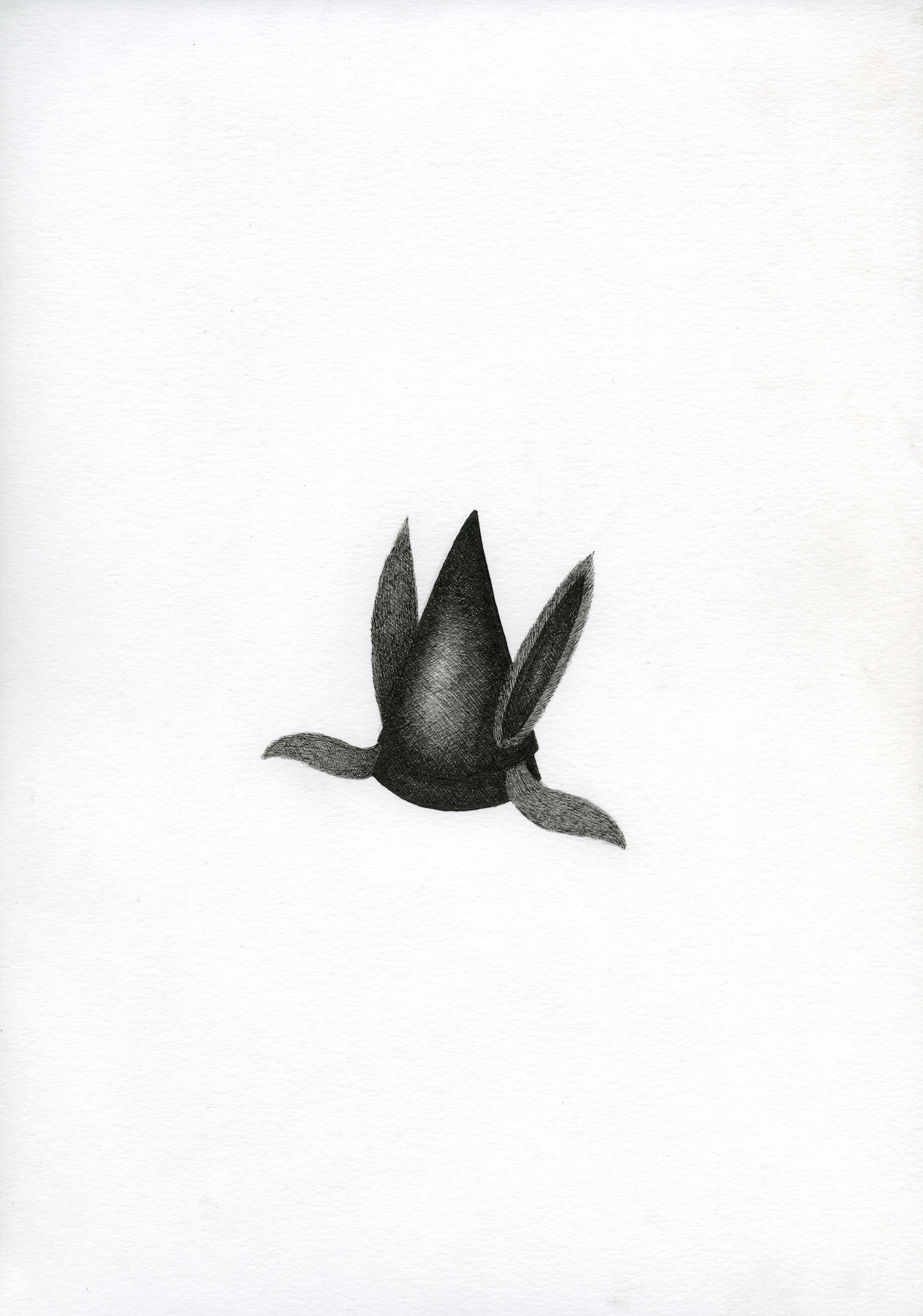
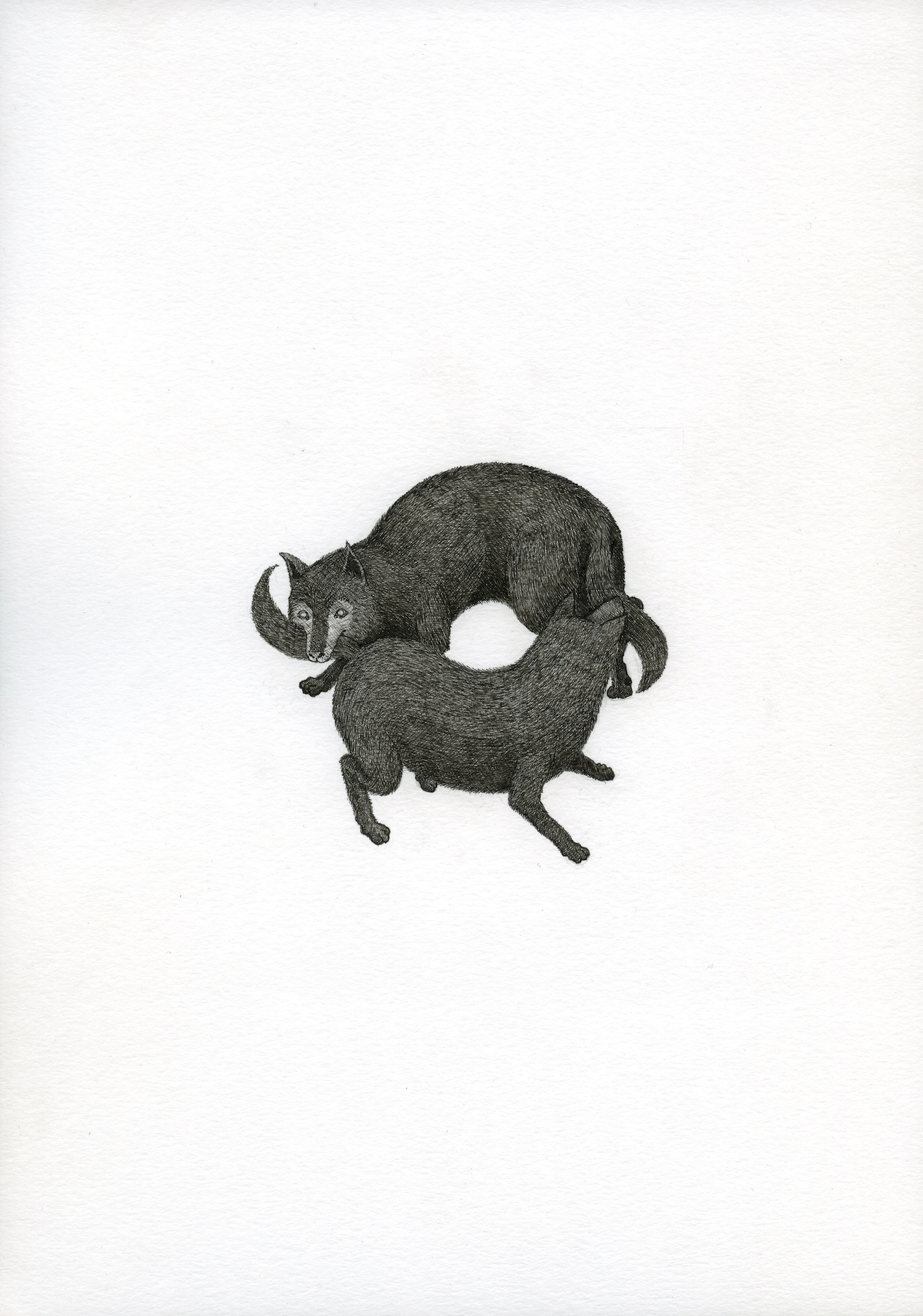
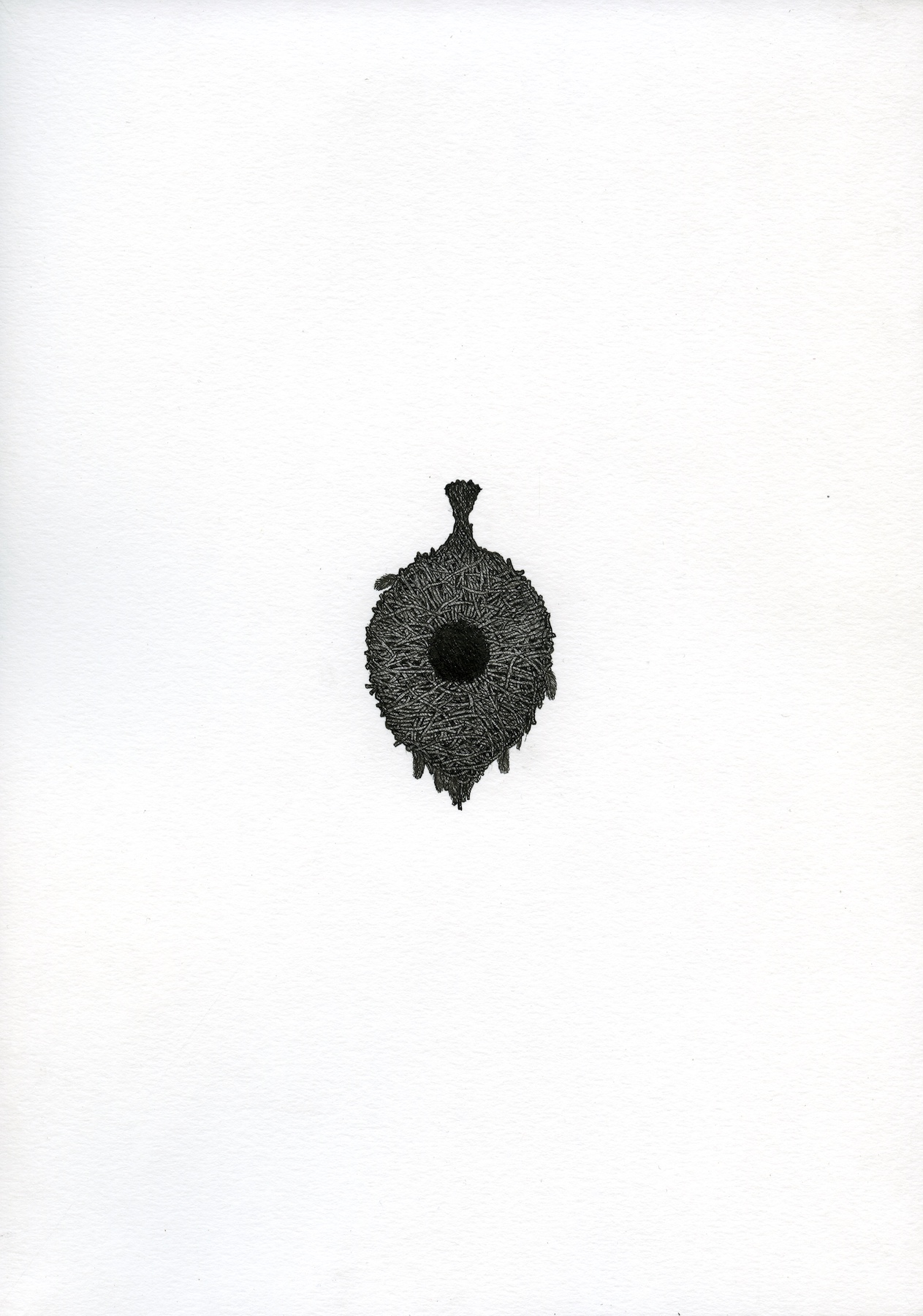
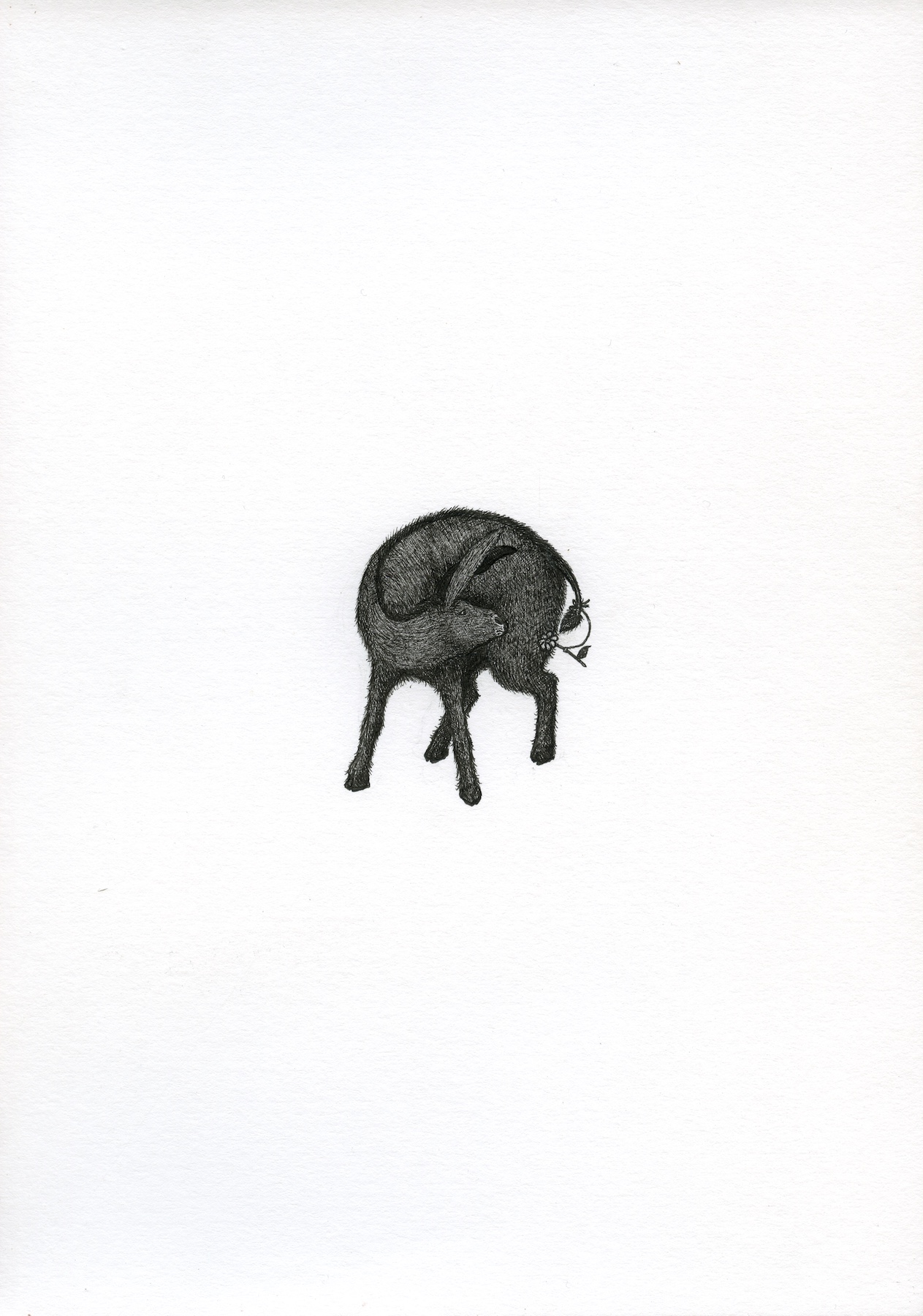
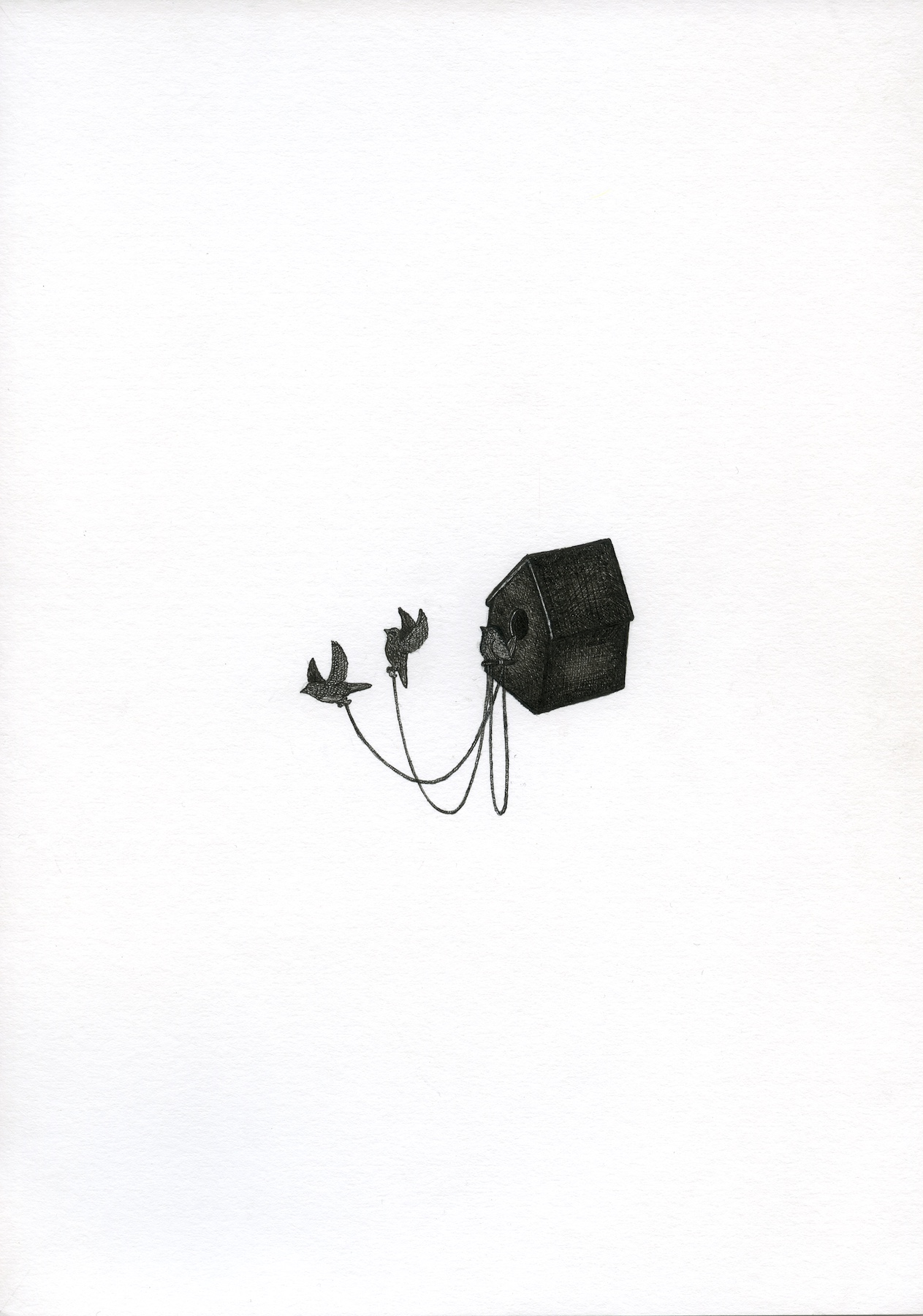
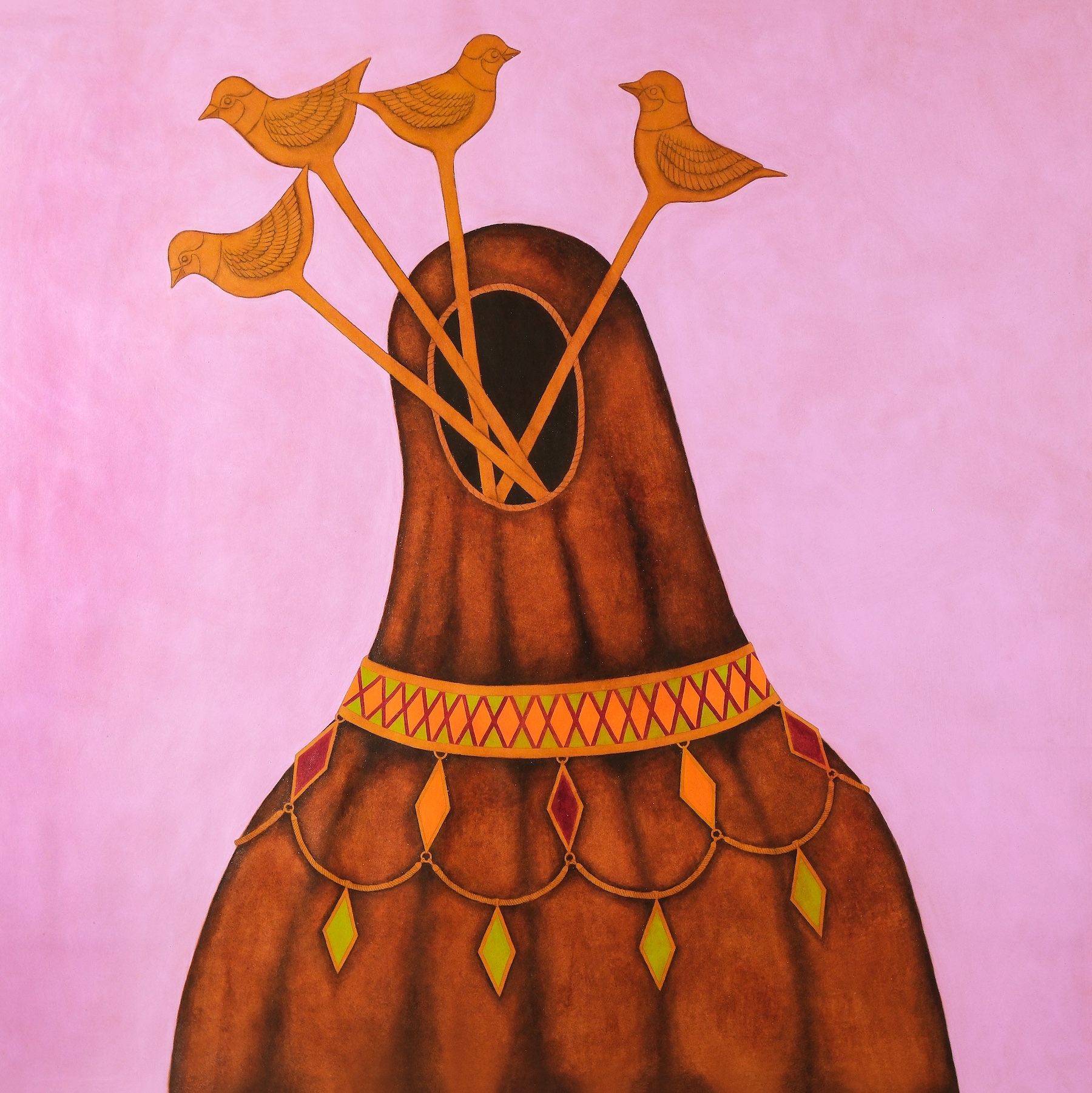
His series Il culto delle stelle (2024) recalls H. P. Lovecraft’s fictional characters from otherworldly universes. The subjects act as intermediaries between earth and sky, akin to wooden birds, radiating vital energy: metamorphosis and hybridization grant access to a personal yet universal creative realm. Olmo Erba also presents a selection of his delicate drawings, which act as miniature bestiaries: small animals emerge vividly from the blank pages.
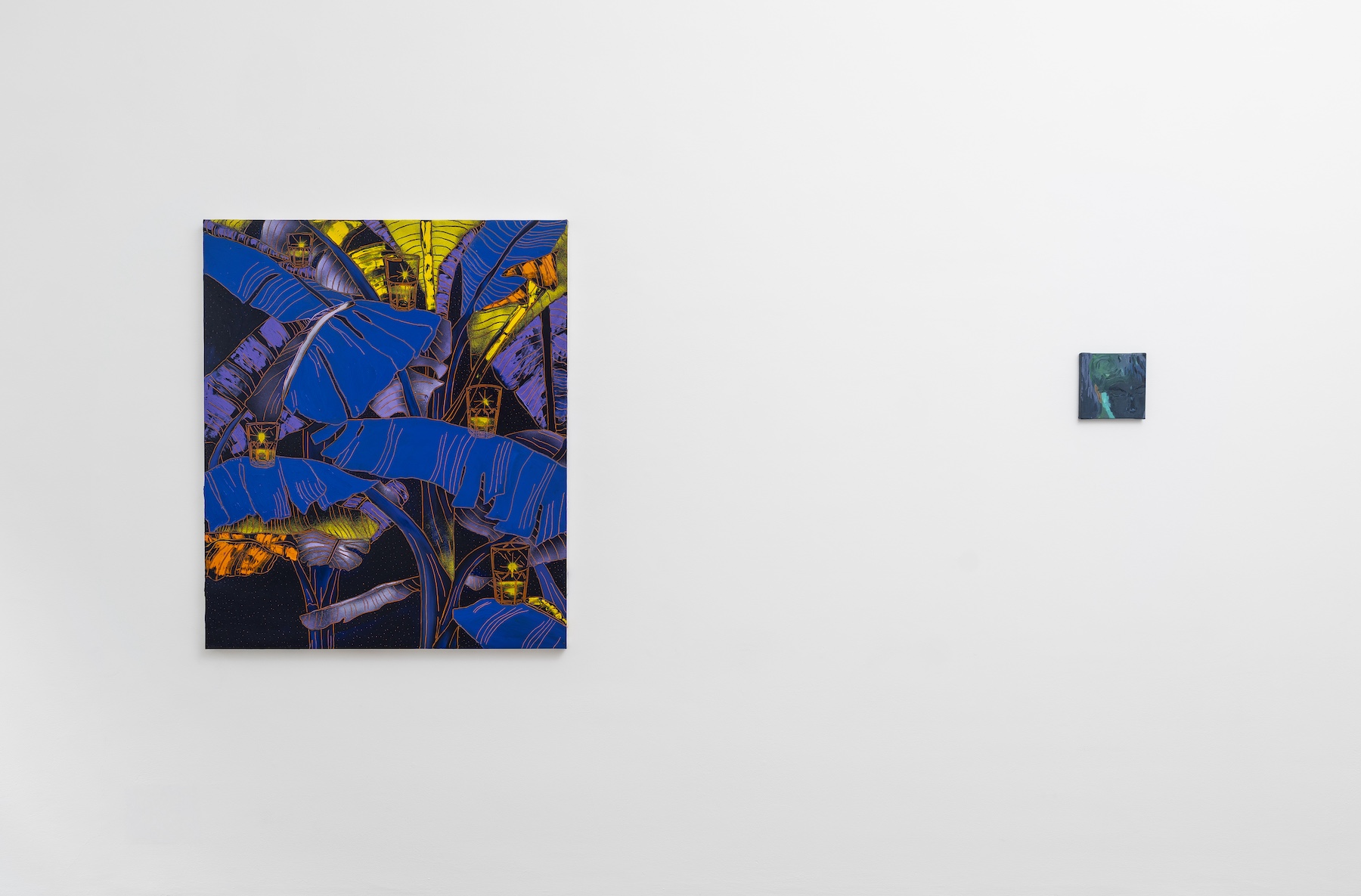
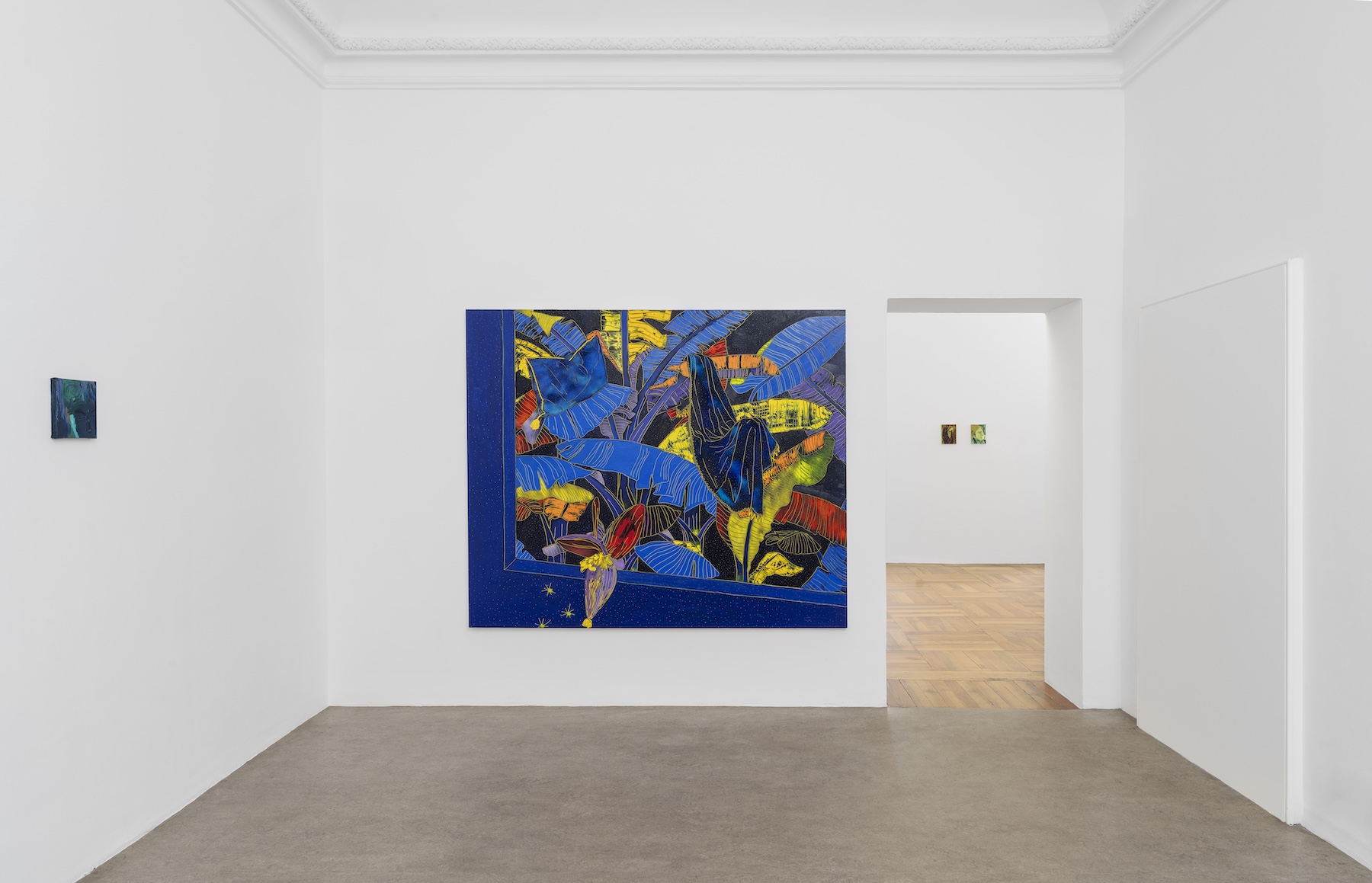
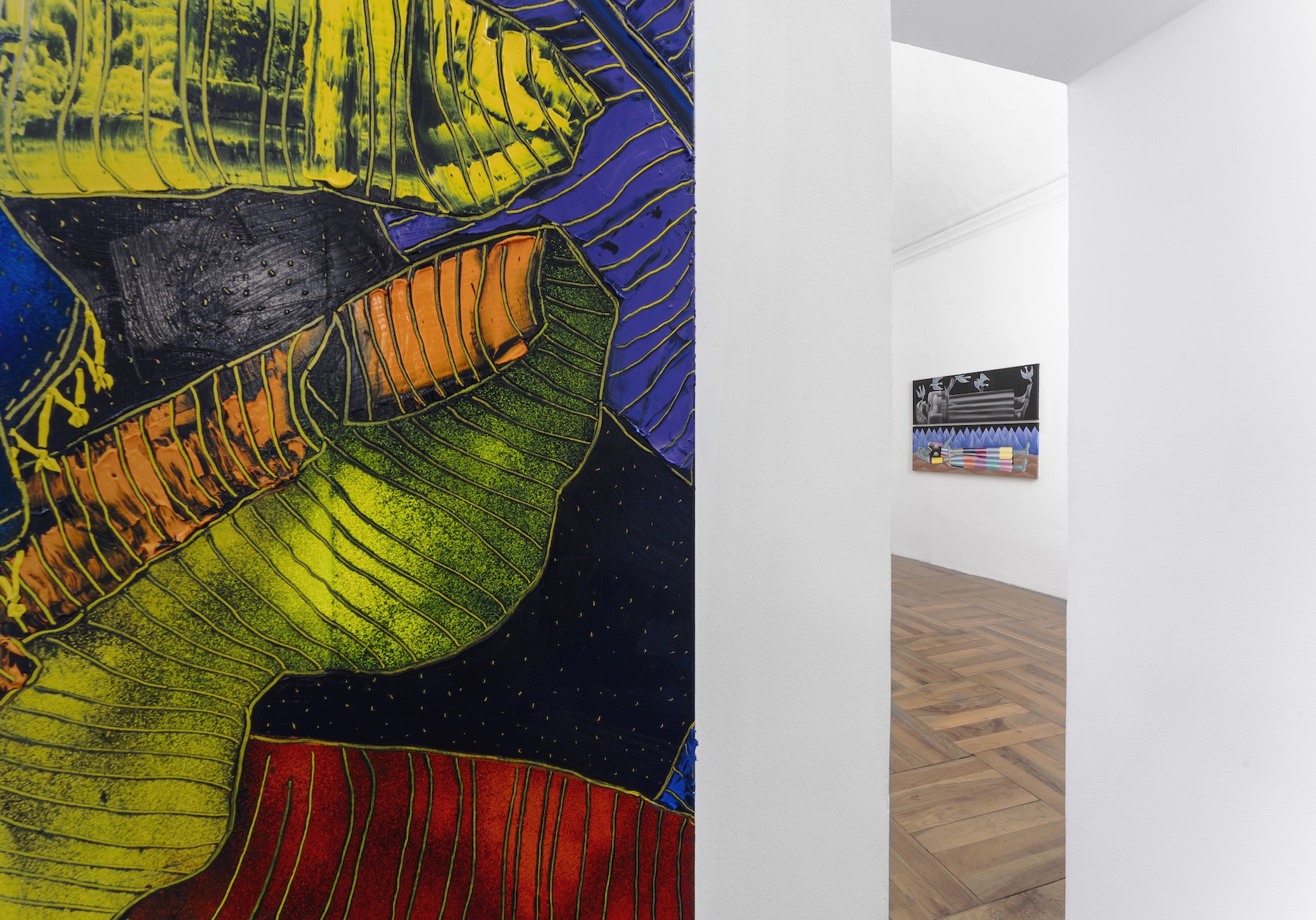
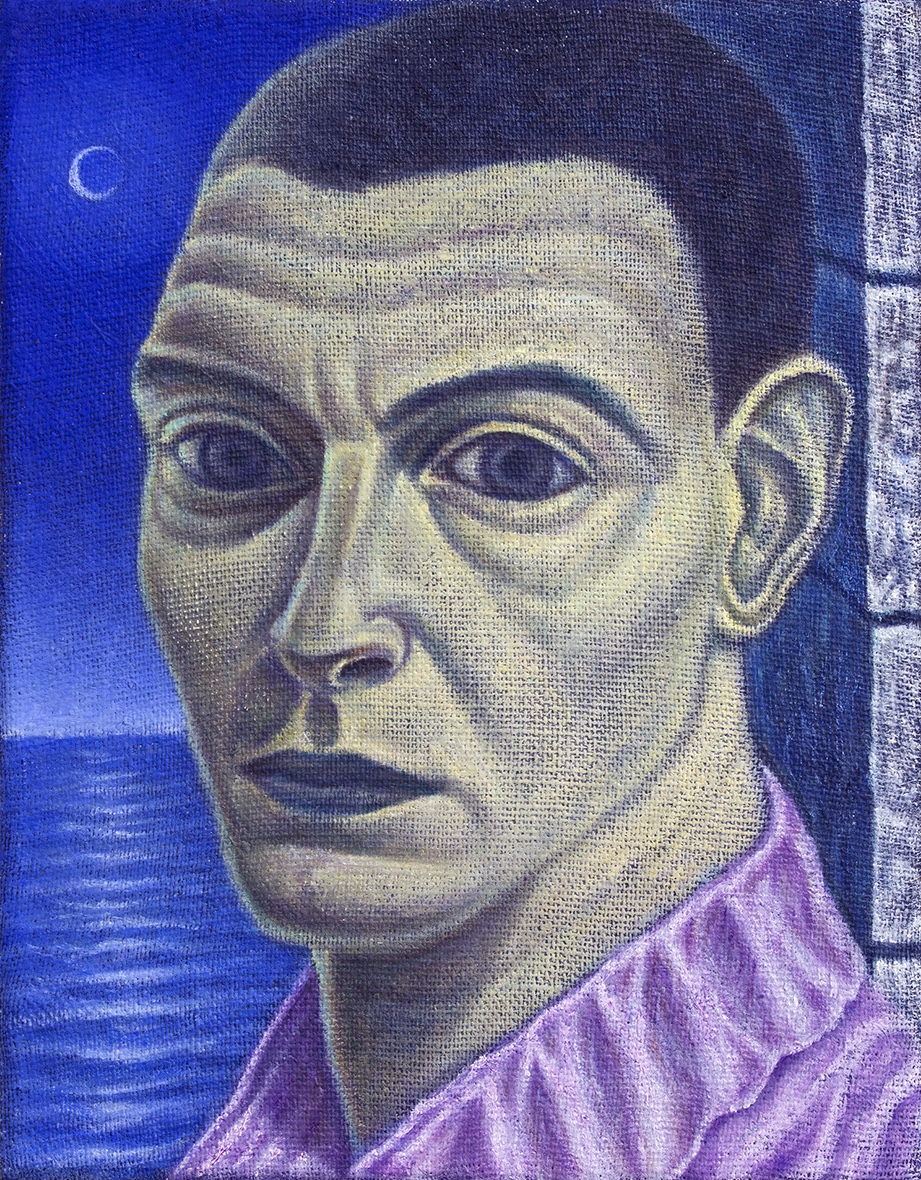
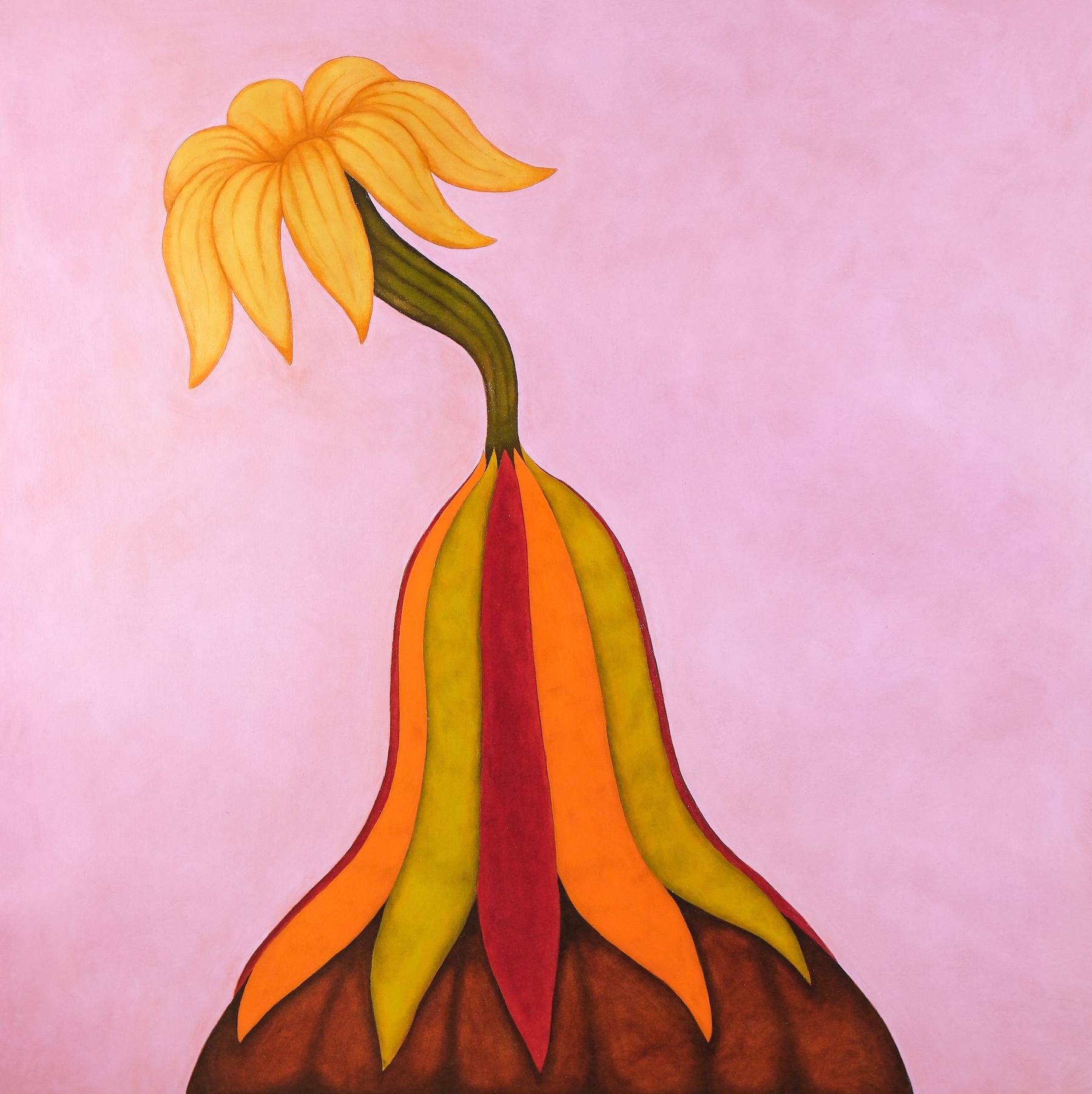
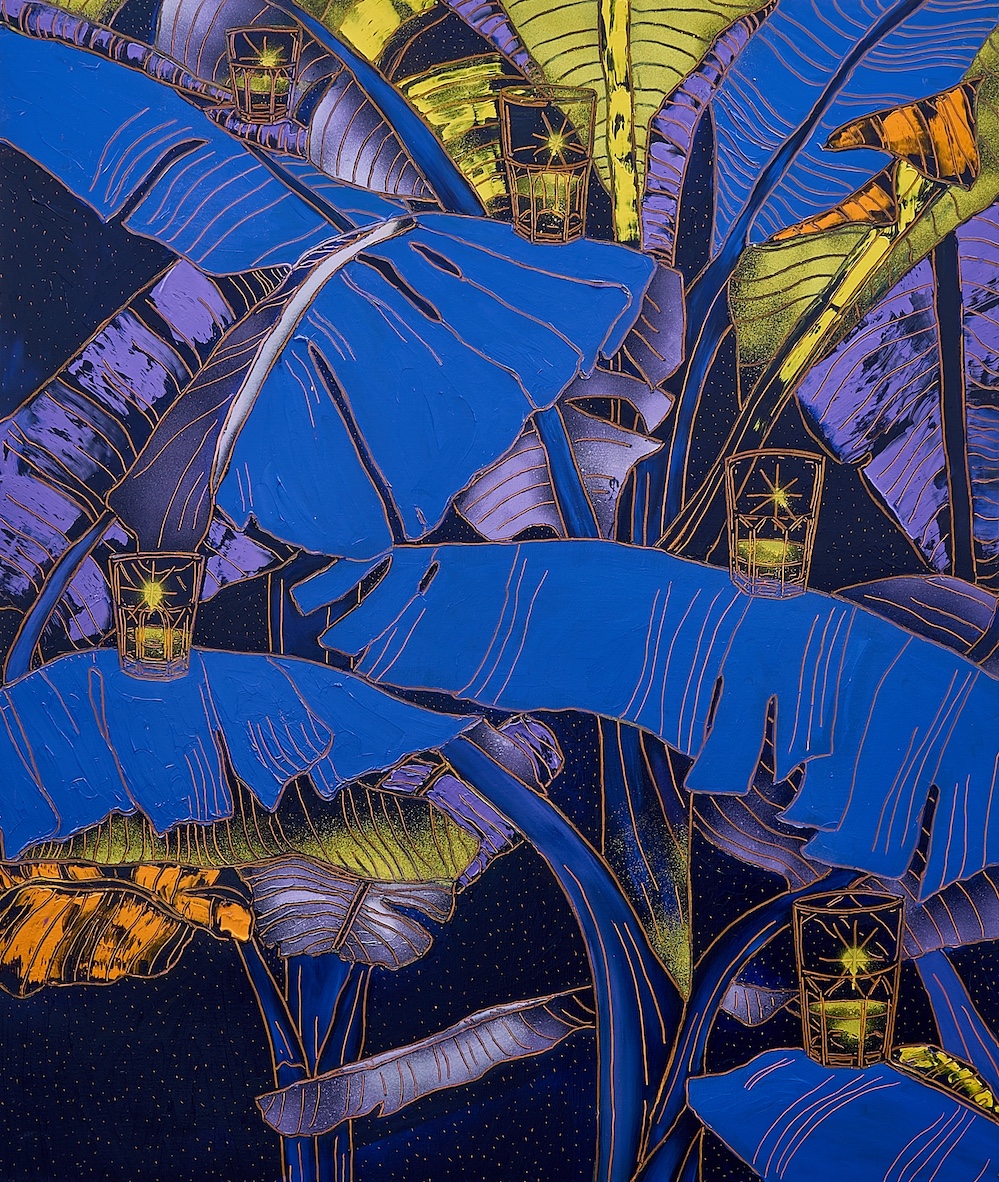
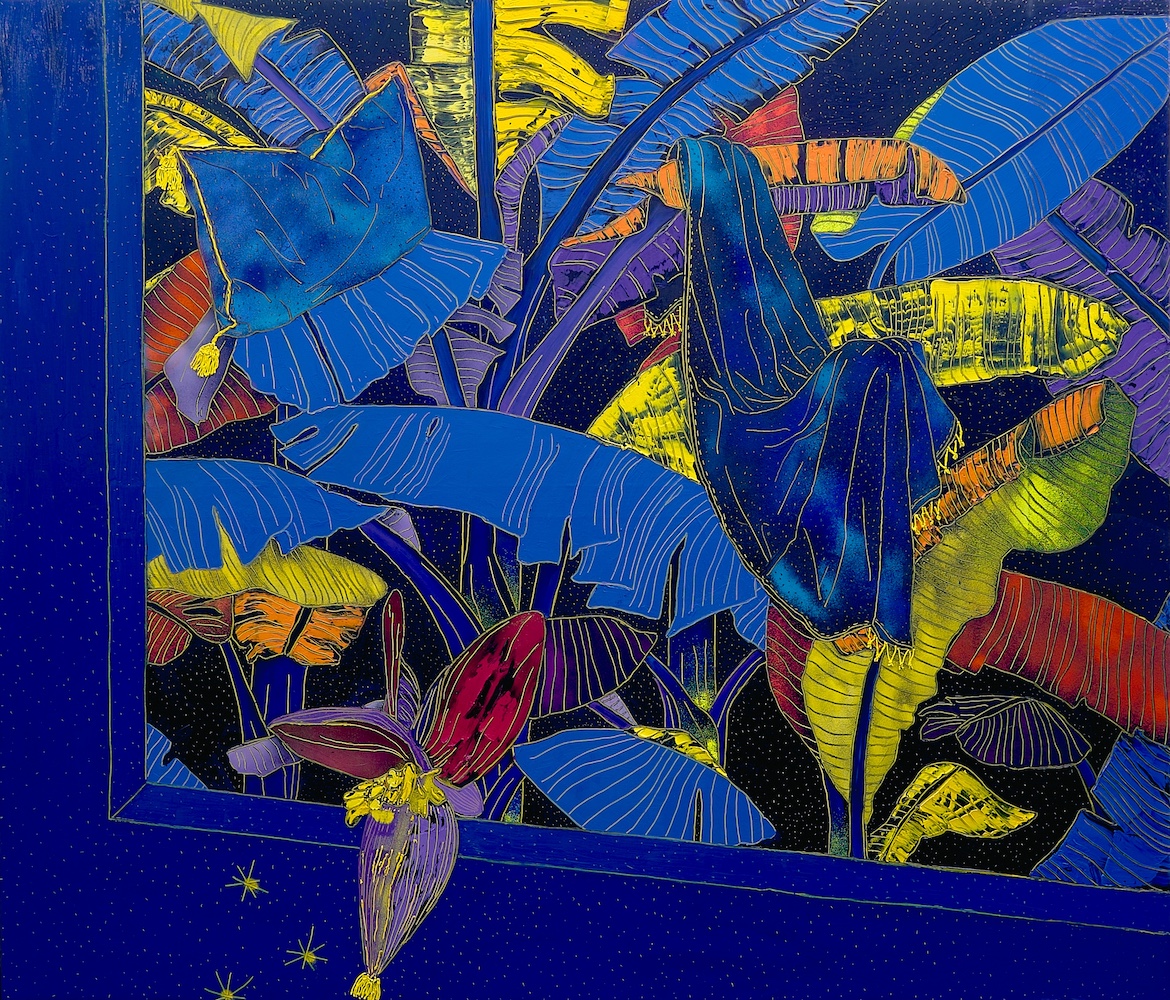
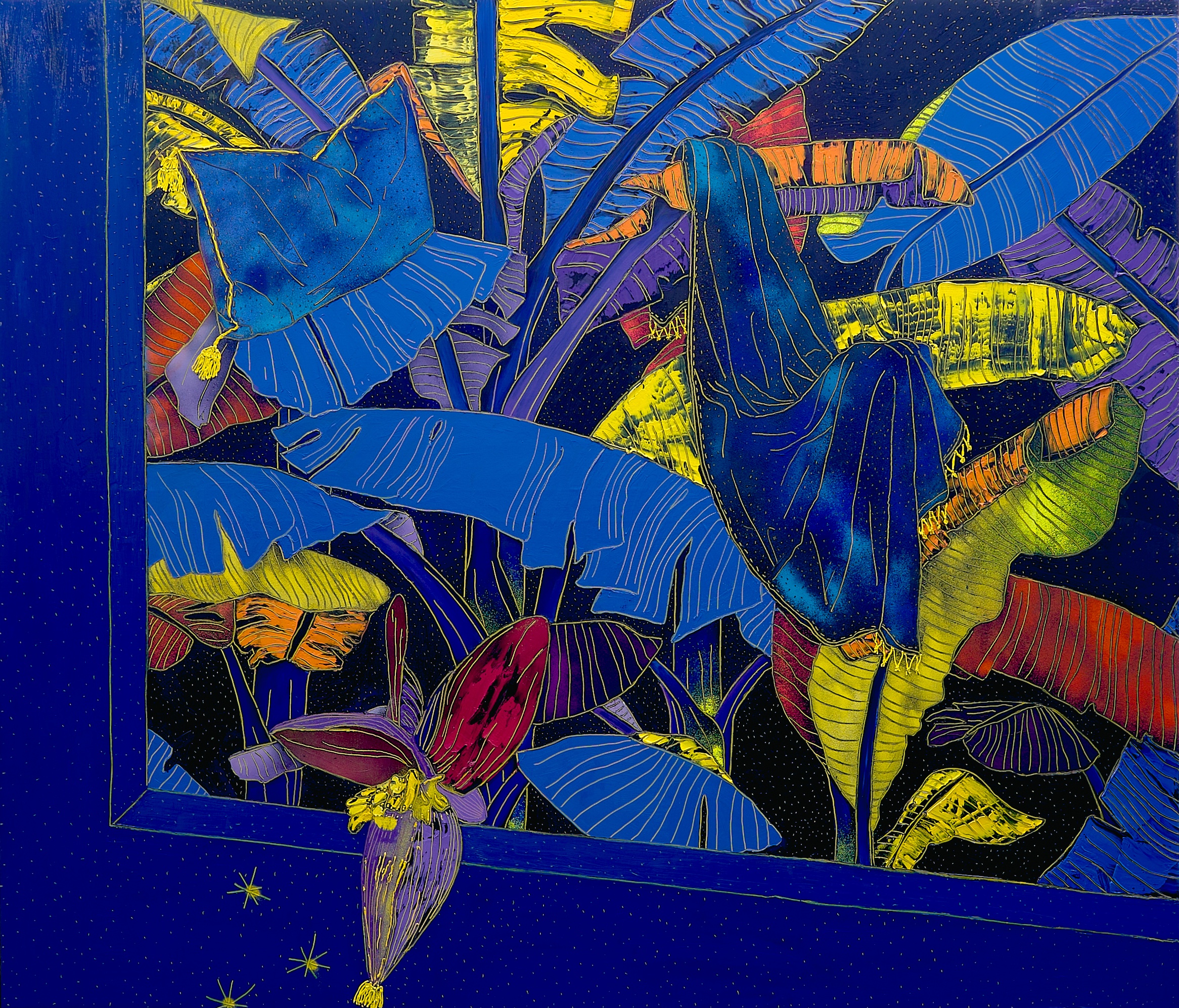
The practice of Giuseppe Mulas (Alghero, 1995) unfolds through nocturnal settings, exploring the universal human condition of being and the human’s need to find oneself in the other. Domestic interiors, glasses, windows, and plants become thresholds toward the starry sky. Emotions such as intimacy, sadness, and vulnerability find expression, yet simultaneously dissolve into the immensity of the night. This symbolism evokes an ancestral space, symbolically inhabitable by the individual. Mulas depicts domestic environments, investigating our relationships with everyday objects and the personal memories they hold, tied to the presence and passage of people. By subverting conventional relations with these elements, he challenges their apparent passivity: an ordinary window may become a generative locus from which a plant emerges. In Sognare la notte (2026), crying becomes a cosmic phenomenon, pouring from a banana flower in the shape of stars. The canvases do not present themselves to the viewer as subjects to be interpreted, but rather as presences to be listened to, relinquishing their materiality.
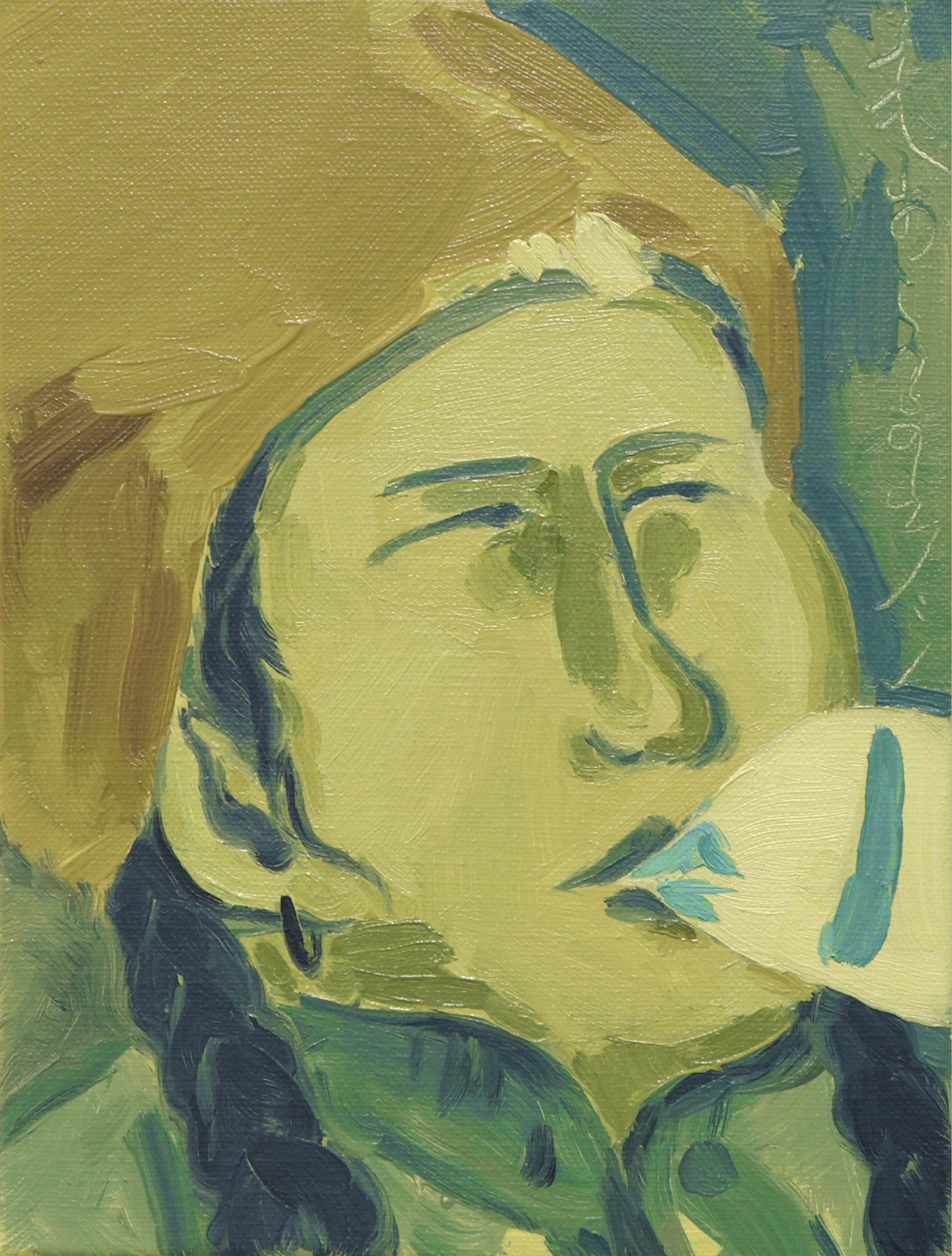
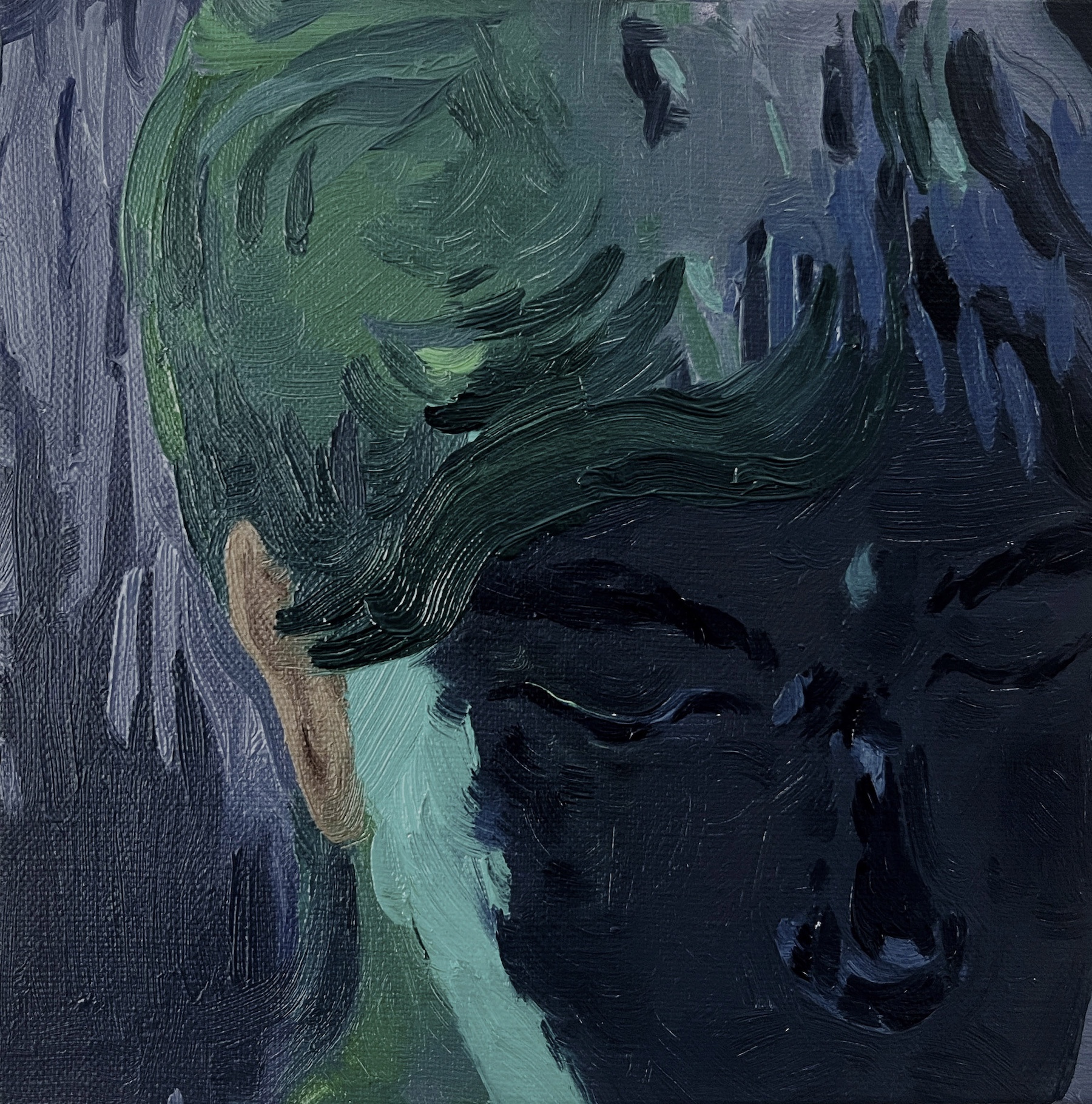
Morigen Yan (Jilin, China, 1996) is a young painter and currently a student at the Academy of Fine Arts in Bologna. His research unfolds through a constant dialogue between dream and migration, rooted in memories of the winter landscapes of Northeastern China. His family background encompasses diverse cultural traditions. Mongolian heritage, shamanism, and Tibetan Buddhism have deeply shaped his sensibility, offering ways to perceive nature, the soul, and the invisible dimensions of existence.
At the same time, portraits of travelers, together with elements and symbols of Chinese culture, converge within a visual language that unfolds across expanded spatial and temporal dimensions, where the inner and outer worlds coexist. The heritage of past generations, rooted in migration, emerges as recognizable traces within the works, as the protagonists seek to preserve and transmit a shared spirit, visual memories, and lived experience.
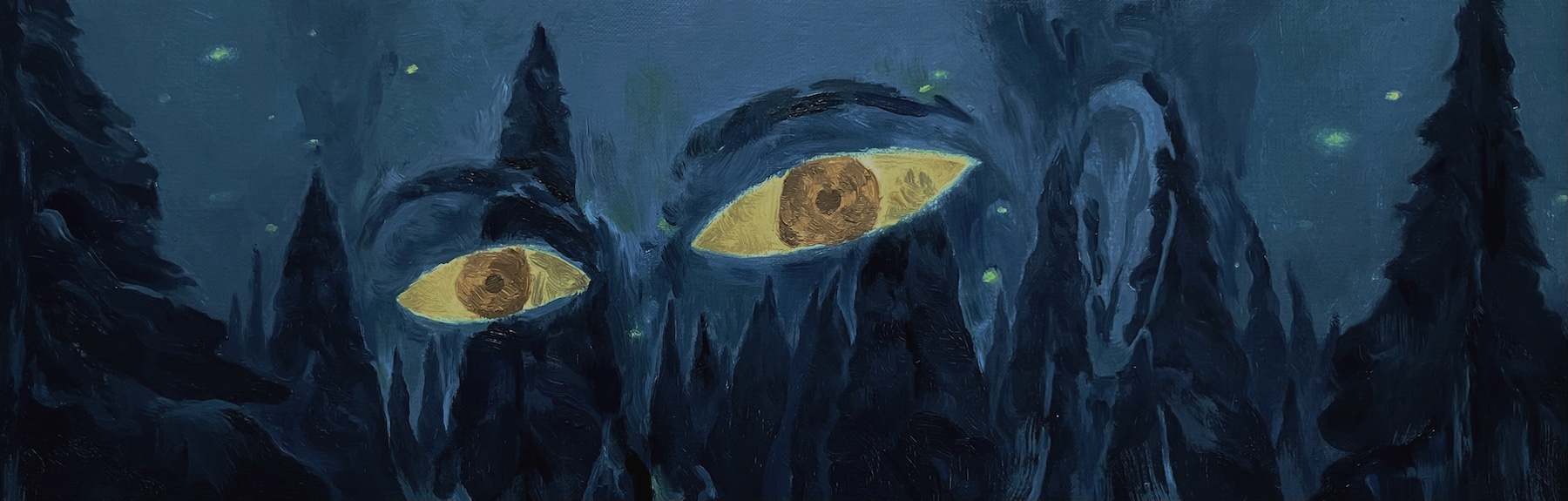
In Tempo di meditazione (2025), the forest of his hometown emerges at night: the figure dissolves, leaving only two luminous eyes, traces of a contemplative gaze.
Morigen Yan’s painting becomes a means of giving form to ancestral perceptions, memories, and personal experiences, weaving together cultural roots and lived experience into a bridge between heritage and contemporaneity, between East and West.
